
The NSF Seafood Engine in New England wins $15M U.S. National Science Foundation award to strengthen fisheries and aquaculture
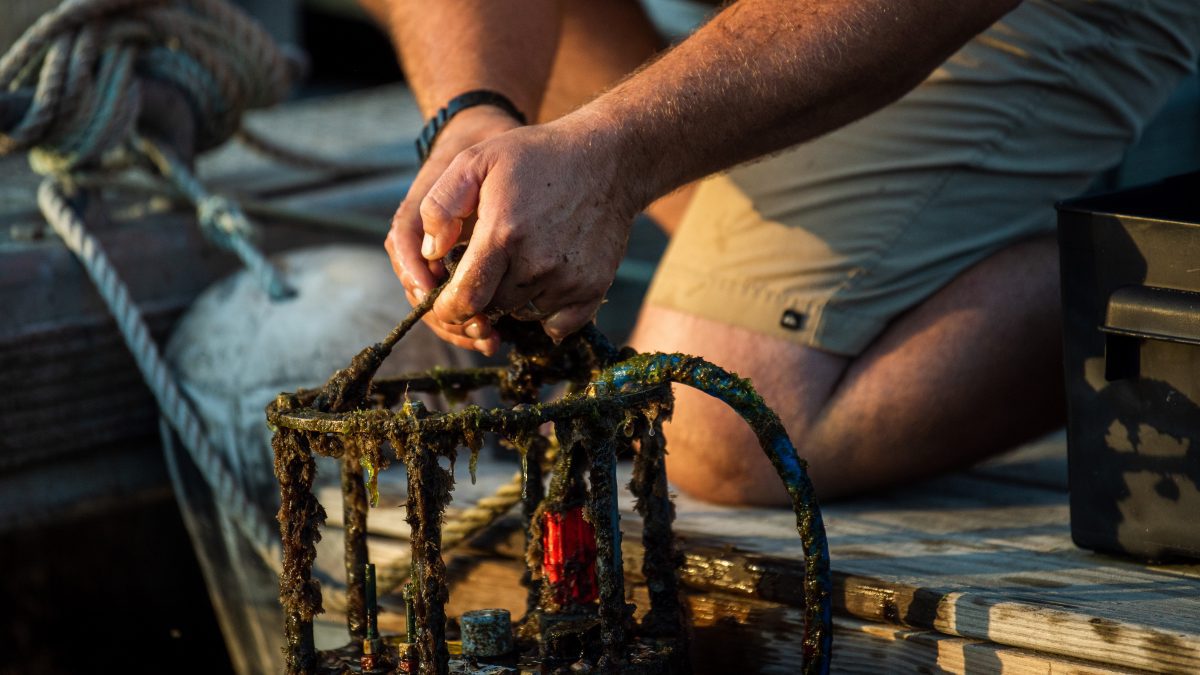 An Imaging FlowCytobot (IFCB) is pulled up from a shellfish bed at Ward Aquafarms in Falmouth, Massachusetts. The instrument takes up to 12 photos of plankton cells per second, and uses specialized algorithms to identify harmful algal species that produce toxins. (Photo by Daniel Hentz, ©Woods Hole Oceanographic Institution)
 July 14, 2026
Portsmouth, NH, July 14, 2026 – The U.S. National Science Foundation (NSF) announced a major new award to bolster the American seafood industry through the NSF Regional Innovation Engines (NSF Engines) program within the Directorate for Technology, Innovation, and Partnerships (NSF TIP). The NSF Seafood Engine in New England, led by the Portsmouth-based non-profit NERACOOS, is a collaboration of seafood industry, tech sector, government, and research partners across Maine, Massachusetts, New Hampshire, and Rhode Island, including the Woods Hole Oceanographic Institution. This innovation ecosystem aims to revitalize the seafood sector through cutting-edge technology. This award will position New England to lead the nation in meeting the goals outlined in the Executive Order on Restoring American Seafood Competitiveness.
“NSF Engines investments in critical technologies and future industries will transform America’s innovation infrastructure for decades to come," said Brian Stone, performing the duties of the NSF director. “The NSF Seafood Engine will leverage cutting-edge resources, including AI, advanced manufacturing, biotechnology, robotics, and more to strengthen the New England seafood supply chain, from harvesting to consumer delivery, supporting businesses up and down the coastline.”
The Seafood Engine will initially receive an award of $15 million over two years, with the potential to grow up to $160 million over ten years as it works to build an internationally competitive technology and innovation cluster. This core funding from NSF creates an unprecedented opportunity to leverage additional resources from public, private, and philanthropic sources to expand the partnership and scale its outcomes. The NSF Engine strives to enhance the competitiveness of fisheries and aquaculture, a pillar of New England's economy that accounts for 25% of the nation’s seafood value. The technological solutions can be rolled out nationwide, propelling the American seafood industry to a stronger position within the global market.
“Built on the ingenuity and steadfast determination at the heart of America’s oldest commercial enterprise, the Seafood Engine is ready to confront key challenges facing the industry with bold innovation,” said Jake Kritzer, Principal Investigator of the Seafood Engine and Executive Director of NERACOOS.
Over time, new R&D, Workforce Development, and Translation activities will work to reshore American seafood processing capacity and strengthen the full supply chain. Together, these efforts will bring new opportunities to small and medium firms across the New England coastline and cut into the $20B seafood deficit facing American businesses.
WHOI researchers will support these efforts through leadership in ocean observation, technical innovation, and workforce development. Physical oceanographer Glen Gawarkiewicz will partner with New England fishers to deploy a fleet of nine autonomous underwater vehicles from fishing vessels, collecting and analyzing high-resolution data on conditions that affect commercially important species. Marine biologist Michael Brosnahan will develop and deploy robotic systems for data-driven aquaculture management with colleagues from the University of New Hampshire and the University of Rhode Island. WHOI will also develop a two-week course for students in the WHOI-Cape Cod Community College Blue Economy Internship program to help develop future leaders of the regional blue economy.
“New England’s prosperity has always been tied to the ocean,” said Diane Foster, WHOI’s Vice President and Dean of Academic Programs and a member of the Seafood Engine Workforce Development Sub-team. “NSF’s foresight in establishing the Seafood Engine will not only strengthen the seafood supply chain with unparalleled innovation, it will also turn the region’s maritime economy into a powerhouse that will support blue innovation, national security, and economic prosperity nationwide.”
Government leaders from across the Seafood Engine region of service welcomed the news from NSF:
“Massachusetts' commercial fishing industry is powered by hardworking fishermen, family-owned businesses and coastal communities that have helped define our state for generations,” said Massachusetts Governor Maura Healey. “This investment will strengthen those communities by supporting innovation, expanding our workforce and helping to ensure our seafood industry remains competitive for years to come. Congratulations to the Cape Cod Commercial Fishermen's Alliance and all of the partners who made this achievement possible.”
“Our fishing industry has shaped Massachusetts' coastal communities for generations, and it's critical that we continue investing in its future,” said Massachusetts Lieutenant Governor Kim Driscoll. “This partnership brings together fishermen, researchers and businesses to develop new technologies, strengthen our seafood supply chain and create new opportunities for the next generation. We're proud to be part of this regional effort to keep New England at the forefront of the seafood industry.”
In early summer 2024, the Seafood Engine submitted one of nearly 300 letters of intent in response to the second NSF Engines funding opportunity. The preliminary proposal was selected as one of 71 to advance to the next round of competition. Following a merit review, the Seafood Engine was one of 29 teams to share a detailed presentation about their proposed NSF Engine. From this process, 15 finalists were selected to participate in two-day site visits with NSF staff and external experts. The Seafood Engine is one of 12 NSF Engines award winners selected from among these finalists.
###
About the Seafood Engine
The NSF Seafood Engine in New England, led by the Northeastern Regional Association of Coastal Ocean Observing Systems (NERACOOS), is working to revitalize a legacy industry by leveraging advanced technologies that reduce the national seafood deficit and strengthen every level of the seafood supply chain.
Learn more at seafoodengine.org
Woods Hole Oceanographic Institution
Woods Hole Oceanographic Institution (WHOI) is a private, non-profit organization dedicated to marine research, engineering, and higher education. Founded in 1930 and based in Cape Cod, Massachusetts, WHOI’s mission is to understand the ocean and its interaction with the Earth system, and to communicate the ocean’s vital role in the global environment.
At the outset, the Seafood Engine will:
- Support an exciting portfolio of R&D projects that bring together seafood harvesters, academic experts, and tech companies aimed at building ocean intelligence through state-of-the-art sensors deployed from fishing vessels and aquaculture farms.
- Form a consortium of regional seafood apprenticeship programs at the center of the Engine’s Workforce Development strategy through which new entrants can participate in R&D projects and operationalize their innovations.
- Provide funding to blue tech companies that have passed the R&D phase and need support to bring products to commercialization through the Translation of Innovation to Impact strategy.