
Expedition captures first detailed imagery of Robert Falcon Scott’s last ship, Terra Nova, using cutting-edge Canadian Voyis 3D technology
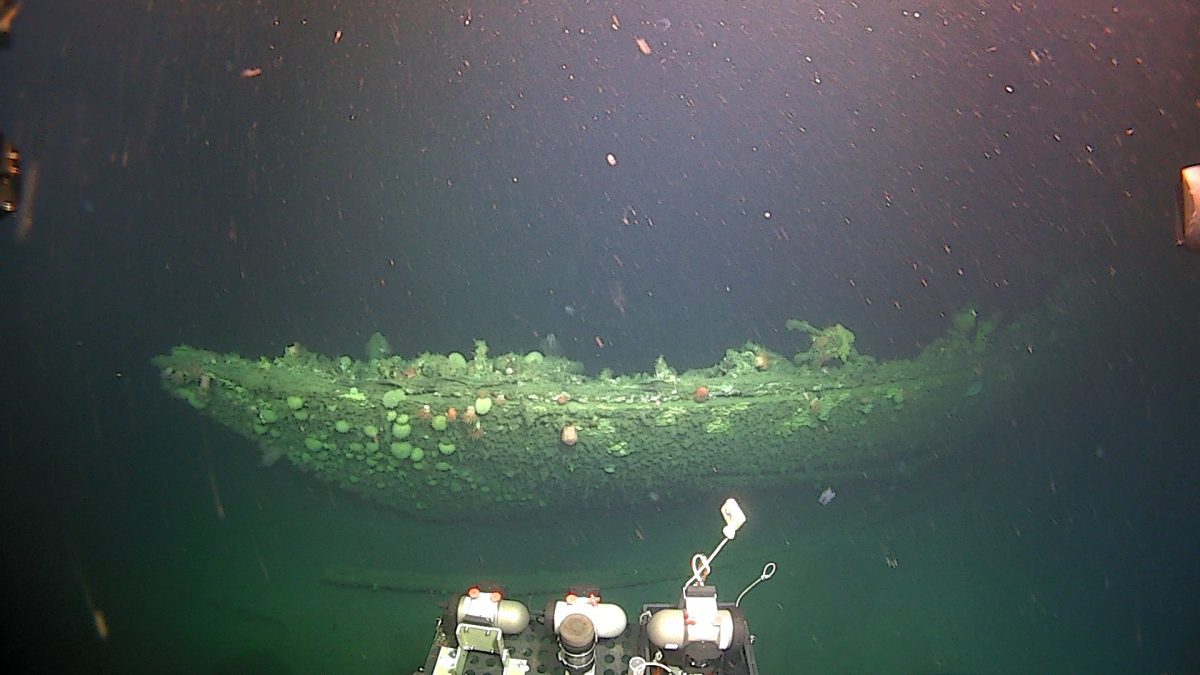 The port bow of Terra Nova shot from video cameras on the human-occupied submersible Alvin. Credit: Canadian Geographic and WHOI
 July 14, 2026
The Heroic Age Expedition, led by the Royal Canadian Geographical Society in partnership with Woods Hole Oceanographic Institution, reveals the famed Antarctic explorer’s last ship, Terra Nova in stunning detail
Still photographs available here.
Embeddable video available here.
LABRADOR SEA NEAR QAQORTOQ, GREENLAND, July 14, 2026 – An expedition led by the Royal Canadian Geographical Society (RCGS) in partnership with Woods Hole Oceanographic Institution (WHOI) has obtained the first 3D images of the wreck of Terra Nova, the last ship of famed Antarctic explorer Captain Robert Falcon Scott. The wreck is located about 10 nautical miles off the southern tip of Greenland. The images were obtained by WHOI’s Falcon ROV equipped with Canadian Voyis technology, and DSV Alvin, the first submersible to visit the wreck of Titanic 40 years ago.
The ship carried Scott and his crew on the British Antarctic Expedition of 1910, which aimed to be first to reach the South Pole. Scott did reach the pole on January 17, 1912, but discovered Norwegian explorer Roald Amundsen had beaten him by 34 days. Scott and all four members of his South Polar party died on the return journey. Journals and papers found with their bodies detailed their struggle for survival. Terra Nova carried news of their deaths to the world and went on to have a long career in the Newfoundland seal fishery.
Heroic Age Expedition leader and RCGS CEO John Geiger was amongst the first to see the wreck with his own eyes on Monday. Last week, the expedition completed the first comprehensive visual and scientific survey of Quest, the final ship of Sir Ernest Shackleton, Scott’s former colleague and rival.
“Seeing Terra Nova, a ship that is so tied with the tragic deaths of Captain Robert Falcon Scott and his polar party, as well as to Canadian and Newfoundland history, brings these important stories to a new generation. Through cutting-edge Canadian Voyis 3D imaging technology, it is now possible to recreate the wrecks of Terra Nova and Quest before these historic ships are lost to the seabed,” said Geiger.
Terra Nova, a wooden-hulled three-masted ship, was built in 1884 in Dundee, Scotland. The ship was purchased by the Bowring family of St. John’s in 1898 for sealing. Three years later, the ship was acquired by Britain’s Royal Navy as a relief ship for Scott’s first Antarctic expedition aboard Discovery. The ship returned to the Bowrings after 1906, then was reacquired by the Royal Navy for Scott’s second foray into the Antarctic. After retrieving the survivors of the expedition, Terra Nova returned to the Newfoundland fleet and went back to the fishery.
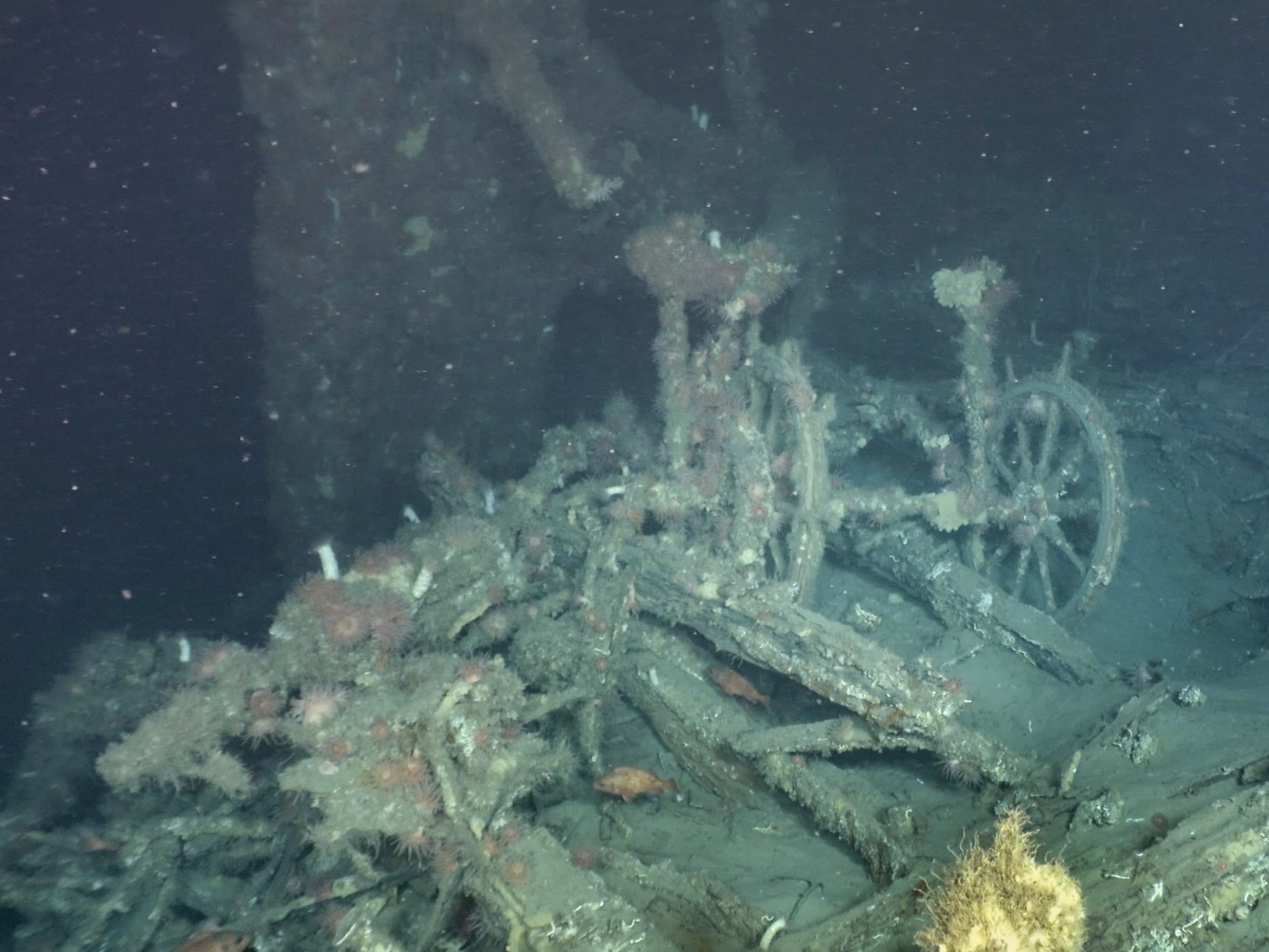
Terra Nova’s double helm. (Photo by Canadian Geographic and WHOI)
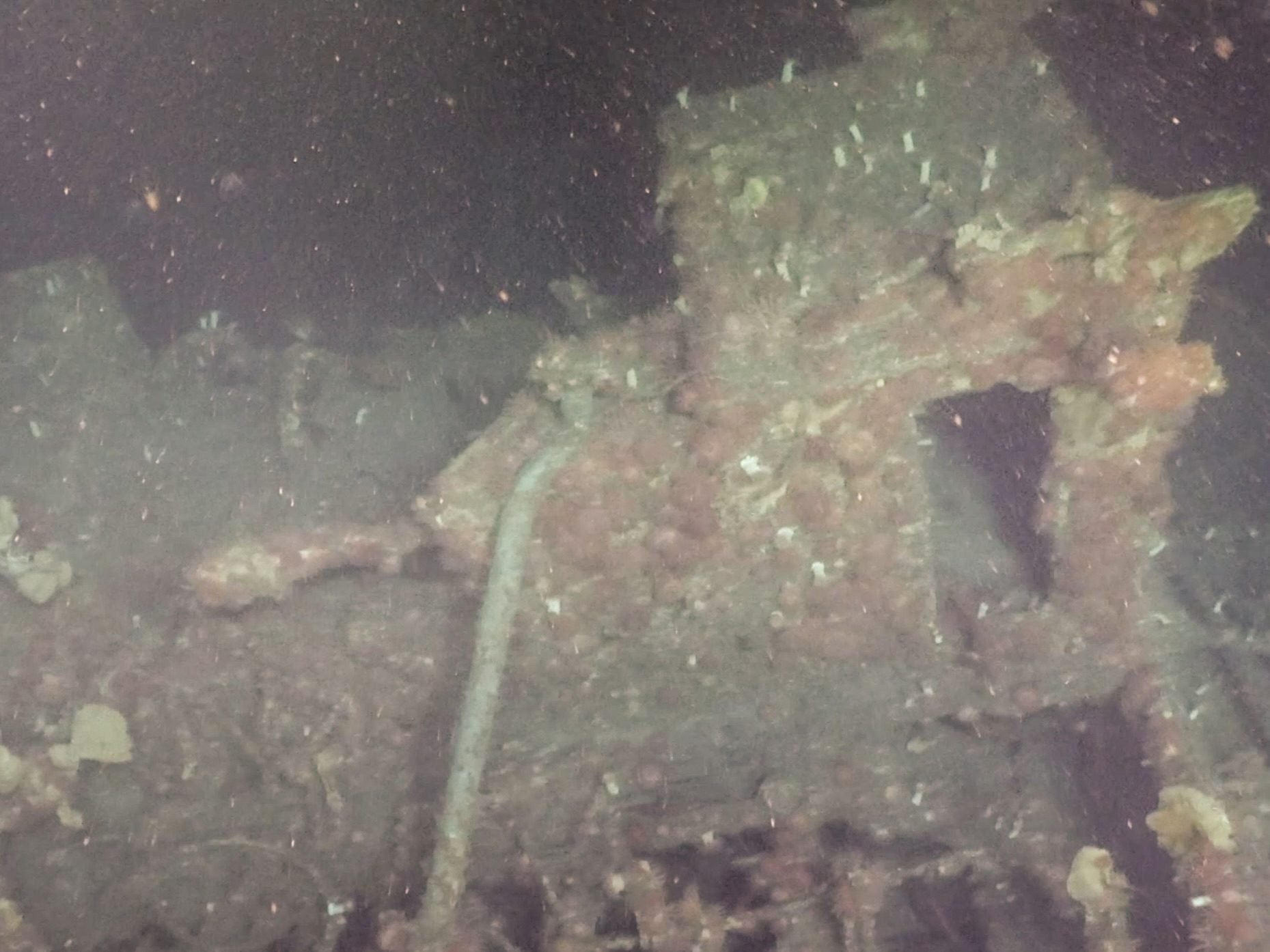
A portion of the superstructure of the Terra Nova (Photo by Canadian Geographic and WHOI)
During the Second World War, the U.S. military chartered Terra Nova to ferry supplies to naval bases in Greenland. On September 12, 1943, the ship sustained heavy ice damage and sent a distress signal. After evacuating the crew, the U.S. Coast Guard decided Terra Nova was a threat to navigation and scuttled the ship by shelling it with a three-inch gun. Terra Nova finally sank on Sept. 13.
“It was a 10 out of 10,” said David Mearns, the RCGS Co-Chief Scientist for the expedition and one of the most successful shipwreck hunters in the world. “It was superb dive, superb conditions, excellent visibility, the ship is fantastic.” Geiger called the dive “epic.”
Observers on the first dives saw many distinguishing features of Terra Nova. The bow of the ship is beginning to split apart, however the hull is largely intact, and from the stern, observers were able to see the rudder standing upright, the propeller, and parts of the engine room.
“The combination of an expertly piloted ROV mounted with Voyis cameras has already proven, in the case of Quest, to be a powerful tool to help document and preserve shipwrecks like these for future study,” said Dwight Coleman, Co-Chief Scientist from WHOI for the expedition. “Quest and Terra Nova will eventually disappear into the seafloor, but these high-definition records will always exist.”
Mark Pathy, Chief Mission Specialist, who was with Geiger in 2024 when they first discovered Shackleton’s wreck, returned to see both Quest and Terra Nova this week. Pathy said he hopes this expedition inspires young people to follow in the footsteps of Shackleton and Scott.
“To live a life of adventure and discovery is important for all of us, especially young people,” said Pathy. “The dive on two important historical ships over the course of two weeks is unprecedented. We hope to inspire people to live a life of discovery.”
The 2026 Heroic Age Expedition was years in the planning and involves a world-class team of professionals, including veteran Alvin submersible pilot Bruce Strickrott. This week’s dives on Terra Nova are some of the most northerly ever undertaken by the sub and had to be carefully planned around drifting icebergs.
“Using Alvin to explore the ships used by two-storied explorers has highlighted both how far we’ve come since the early 20th century, as well as how much we still have to learn about our planet,” said Strickrott. “In their day, there were still unknown and uncharted parts of the continents. Today, when we travel into the deep ocean, the people in Alvin are often the first to see parts of the seafloor with human eyes.”
The team will spend one more day surveying and mapping Terra Nova, using Voyis underwater photogrammetry technology to create a permanent digital twin of the site for further study and public engagement.
The Heroic Age Expedition is expected to return to Woods Hole, Mass., on July 21, depending on sea conditions.
The expedition comprises an international team of experts, including renowned shipwreck hunter David Mearns, marine archaeologist Cora Annamaiya Norling (Njord Center, National Museum of Denmark), benthic ecologist Kirstin Meyer-Kaiser (WHOI), research director Antoine Normandin (RCGS), historian and author Jan Chojecki (author, The Quest Chronicle), and historian Geir Kløver (director, Fram Museum).
As part of its commitment to exploration and innovation, Meta has donated several pairs of Ray-Ban Meta AI glasses for use by expedition members. The AI-powered wearables provide a hands-free way to capture and share the expedition as it unfolds, demonstrating how emerging technology can enhance scientific discovery and storytelling in extreme environments.
Alvin and Atlantis are owned by the U.S. Navy Office of Naval Research and operated by WHOI with support from the U.S. National Science Foundation (NSF). The mission's remotely operated vehicle is provided through the NSF-supported Ocean Observatories Initiative (OOI) at WHOI.
Our thanks
We would like to recognize some of the sponsors who helped make the expedition possible: Kevin Chan and Meta Platforms, Voyis, Leica, Shackleton Expedition Grade Clothing, U.S. National Science Foundation, Office of Naval Research, Ocean Observatories Initiative, and several donors who believe in mission of the RCGS to “make Canada better known to Canadians and to the world.”
###
Royal Canadian Geographical Society
The Royal Canadian Geographical Society is a nonprofit organization founded in 1929 to “make Canada better known to Canadians and to the world.” It achieves this goal through the publication of Canadian Geographic, the country’s number 1 paid magazine with a readership of 4.6 M per month. The motto of the RCGS is “Ducit Amor Patriae” which means “Love of Country Leads Me,” representing the vision of its founders to “be a unifying influence upon the life of Canada.” The RCGS also operates Canadian Geographic Education, which has a network of 28,500 educators in every province and territory. The Society also awards numerous research and expedition grants.
Woods Hole Oceanographic Institution
Woods Hole Oceanographic Institution (WHOI) is a private, non-profit organization dedicated to marine research, engineering, and higher education. Founded in 1930 and based in Cape Cod, Massachusetts, WHOI’s mission is to understand the ocean and its interaction with the Earth system, and to communicate the ocean’s vital role in the global environment.
For more information or interviews please contact:
Rosemary Thompson (at sea July 2-21)
Senior Vice President, External
Royal Canadian Geographical Society
rthompson@rcgs.org
(613) 240-6739
Suzanne Pelisson (on shore)
Director of Media Relations
Woods Hole Oceanographic Institution
spelisson@whoi.edu
(973) 801-6223