
Expedition captures first images of Ernest Shackleton’s last ship, Quest, in Labrador Sea using cutting-edge technology
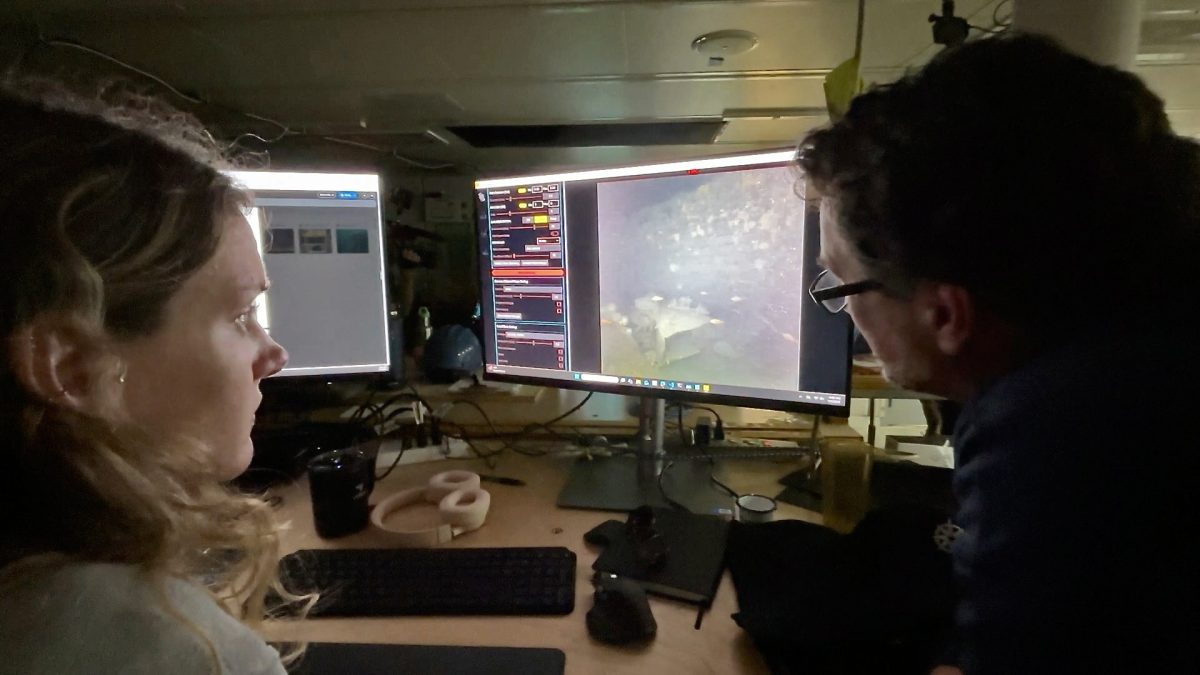 WHOI imaging specialists Dwight Coleman (right, also the Chief Scientist of the Heroic Age Expedition) and Zoe Daheron (left) watch as real-time images of the wreck of Sir Ernest Shackleton’s Quest are transmitted from the seafloor off the coast of Labrador and Newfoundland to a lab on the research vessel Atlantis. (Photo by Ken Kostel, © Woods Hole Oceanographic Institution)
 July 8, 2026
The Heroic Age Expedition, led by the Royal Canadian Geographical Society in partnership with Woods Hole Oceanographic Institution, reveals the famed Antarctic explorer’s last ship, Quest in stunning detail
Footage and photography available for use can be found here.
LABRADOR SEA July 8, 2026 – An expedition led by the Royal Canadian Geographical Society in partnership with Woods Hole Oceanographic Institution has obtained the first close-up images of the wreck of Quest, the last ship of famed Antarctic explorer Sir Ernest Shackleton, in the Labrador Sea. The images were obtained by WHOI’s Falcon ROV and DSV Alvin, the first submersible to visit the wreck of Titanic 40 years ago.
Expedition leader and RCGS CEO John Geiger, who was an observer on Alvin’s first dive to the wreck site, described seeing Shackleton’s final ship, Quest, as a “moving experience.”
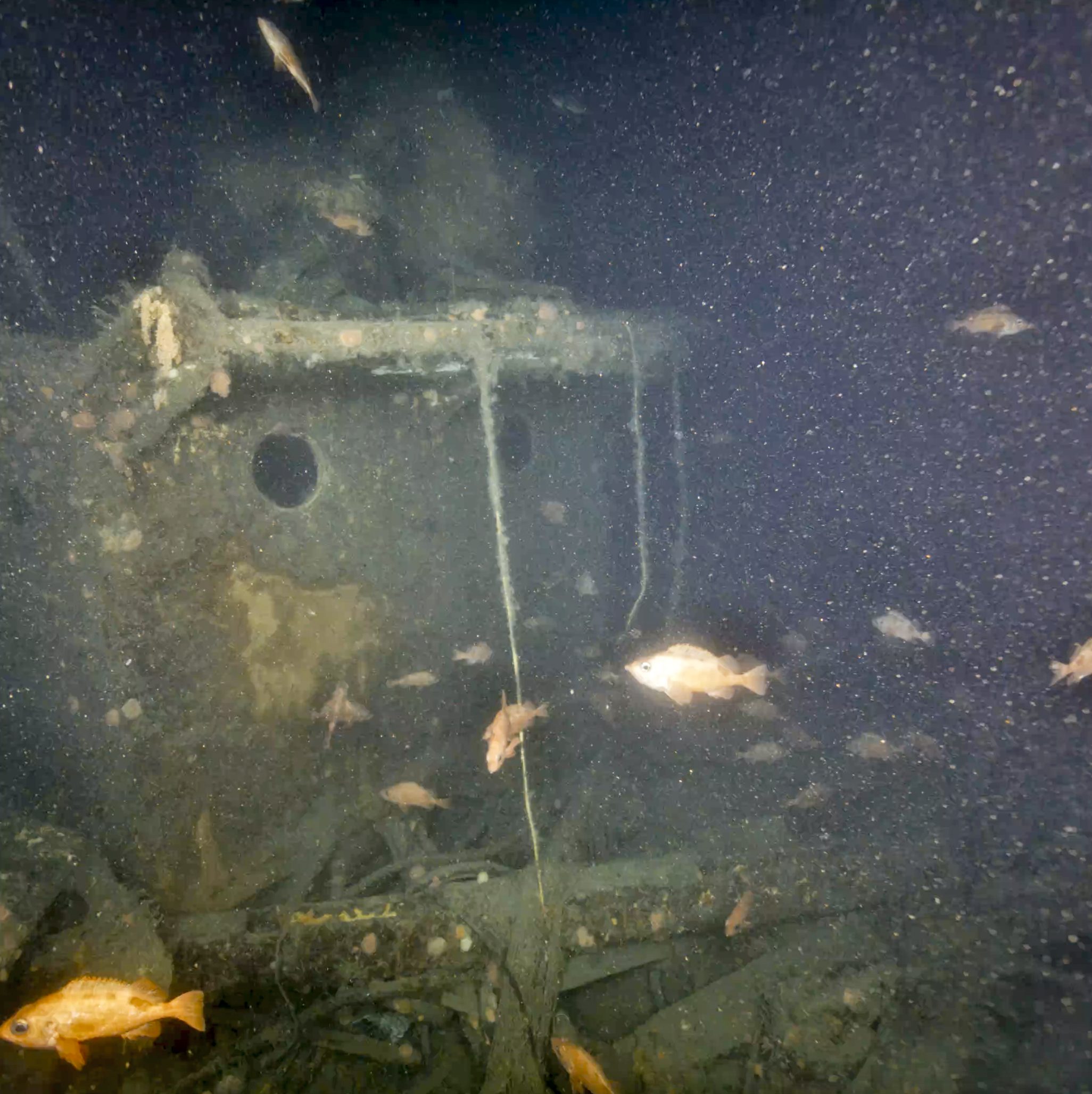
Much of the ship is still visible, including the bow, the deck, and some portholes, while the main mast was down. The entire wreck was populated with pink corals and several species of fish, including cod, red fish, and wolf fish.
“To see Shackleton’s ship, and to think that Shackleton was standing on that deck a century ago. At first, there was a lot of darkness, but suddenly the bow emerges as you are going towards it. It’s incredible,” said Geiger.
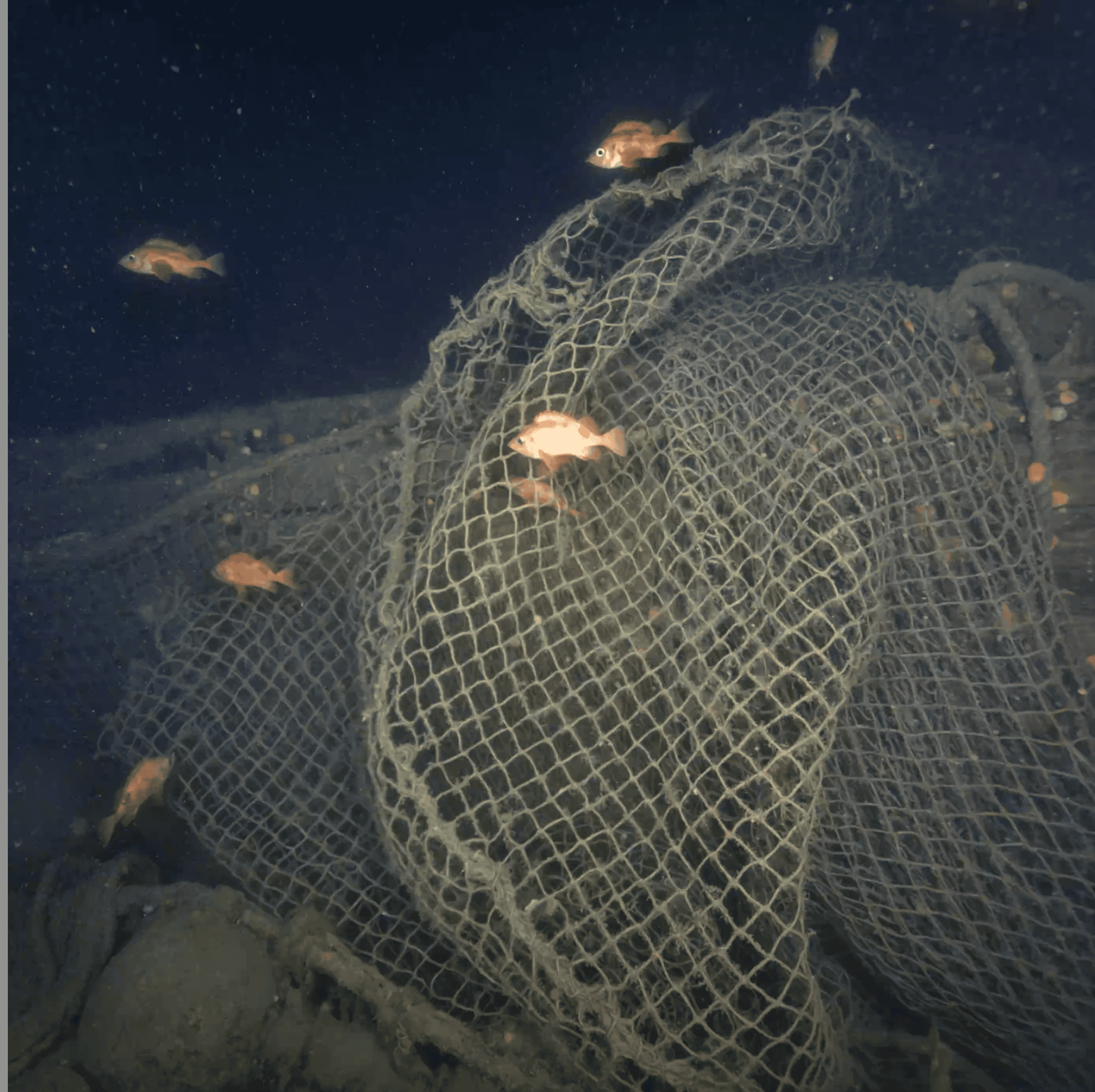
Quest’s wreck was discovered in 2024 by the RCGS-led Shackleton Quest Expedition, but at that time, only side-scan sonar images were obtained. Geiger wanted to return to the wreck with more advanced imaging technology and underwater vehicles to learn more about what happened to the ship and the state it’s in today. As the expedition team first observed the wreck, they saw several large fishing nets obscuring parts of Quest.
(Photo by Canadian Geographic and Voyis)
(Photo by: Canadian Geographic and Voyis)
“There is a lot of damage to the ship,” said Geiger. “The nets are a sad story, limiting our ability to look at the wreck. I think we have to take responsibility for what we are doing to our oceans; that’s a huge issue.”
Mark Pathy, Chief Mission Specialist, who was with Geiger in 2024 when they first discovered the wreck, and returned to see Quest up close this week, said he hopes this expedition inspires young people to follow in the steps of Shackleton and Scott.
“I hope it inspires people to explore the planet and to understand that there are undiscovered wonders to see and experience out there. It really is a magical place, our planet,” said Pathy.
Ernest Shackleton was one of the world’s greatest polar explorers and died on Quest in 1922 at the age of 47. He was the central figure in one of the most extraordinary stories of human survival, famously saving his entire crew following the loss of his ship Endurance after two years frozen in the ice of the Weddell Sea. At the time of his death, he was on his way to Antarctica on what was planned to be his final expedition.
Quest was sold to a Norwegian family and spent the next 40 years sealing in Arctic waters. She was finishing a season in the Labrador Sea when she was crushed by ice floes and sank on May 5, 1962.
The expedition was years in the planning and involved a world-class team of professionals from the Woods Hole Oceanographic Institution, including Alvin submersible pilot Bruce Strickrott.
“Exploring any wreck with a human-occupied submersible is a complicated task,” said Strickrott. “Our success today and the coming days is a direct result of having a group of deep-submergence professionals with extensive experience operating in extremely complicated surroundings.”
The team will spend three days surveying and mapping the wreck, using made-in-Canada Voyis underwater photogrammetry technology to create a permanent digital twin of the site for further study and public engagement.
“In addition to using Alvin to put the first human eyes on Quest in more than 60 years, we’ll be using the very best imaging technology available to create a digital twin of the ship,” said Dwight Coleman, Co-Chief Scientist from WHOI for the expedition. “This type of 3D modelling has only existed in ocean science for the last couple of years, and it’s giving us entirely new ways to explore these historic wrecks and make them real for the public.”
Later this week, the team will sail northeast towards Greenland to survey a second iconic shipwreck with ties to the so-called Heroic Age of Antarctic exploration, Terra Nova, which was the last ship of Shackleton’s rival, Robert Falcon Scott. Scott was second to reach the South Pole in 1912, arriving five weeks after a Norwegian party led by Roald Amundsen, but died on the return journey along with four of his men.
Both ships have ties to Canada, having operated as sealers in Canadian waters. Shackleton initially intended to take Quest to the Canadian Arctic before pivoting to the Antarctic.
The expedition comprises an international team of experts, including renowned shipwreck hunter David Mearns, marine archaeologist Cora Annamaiya Norling (Njord Center, National Museum of Denmark), benthic ecologist Kirstin Meyer-Kaiser (WHOI), research director Antoine Normandin (RCGS), historian and author Jan Chojecki (author, The Quest Chronicle) and historian Geir Kløver (director, Fram Museum).
As part of its commitment to exploration and innovation, Meta has donated several pairs of Ray-Ban Meta AI glasses for use by expedition members. The AI-powered wearables provide a hands-free way to capture and share the expedition as it unfolds, demonstrating how emerging technology can enhance scientific discovery and storytelling in extreme environments.
Alvin and Atlantis are owned by the U.S. Navy Office of Naval Research and operated by WHOI with support from the U.S. National Science Foundation (NSF). The mission's remotely operated vehicle is provided through the NSF-supported Ocean Observatories Initiative (OOI) at WHOI.
For more information or interviews, please contact:
Rosemary Thompson (at sea July 2-21)
Senior Vice President, External
Royal Canadian Geographical Society
(613) 240-6739
Suzanne Pelisson (on shore)
Director of Media Relations
Woods Hole Oceanographic Institution
(973) 801-6223
Our thanks
We would like to recognize some of the sponsors who helped make the expedition possible: Kevin Chan and Meta Platforms, Voyis, Leica, Shackleton Expedition Grade Clothing, U.S. National Science Foundation, Office of Naval Research, Ocean Observatories Initiative, and several donors who believe in mission of the RCGS to “make Canada better known to Canadians and to the world.”
Royal Canadian Geographical Society
The Royal Canadian Geographical Society is a nonprofit organization founded in 1929 to “make Canada better known to Canadians and to the world.” It achieves this goal through the publication of Canadian Geographic, the country’s number 1 paid magazine with a readership of 4.6 M per month. The motto of the RCGS is “Ducit Amor Patriae” which means “Love of Country Leads Me,” representing the vision of its founders to “be a unifying influence upon the life of Canada.” The RCGS also operates Canadian Geographic Education, which has a network of 28,500 educators in every province and territory. The Society also awards numerous research and expedition grants.
Woods Hole Oceanographic Institution
Woods Hole Oceanographic Institution (WHOI) is a private, non-profit organization dedicated to marine research, engineering, and higher education. Founded in 1930 and based in Cape Cod, Massachusetts, WHOI’s mission is to understand the ocean and its interaction with the Earth system, and to communicate the ocean’s vital role in the global environment.