How a cargo ship is tracking hidden ocean life in the Atlantic
With funding support from CMA CGM, ocean observations aboard Bermuda Container Line's M/V Oleander now include a window into microscopic life
Estimated reading time: 5 minutes
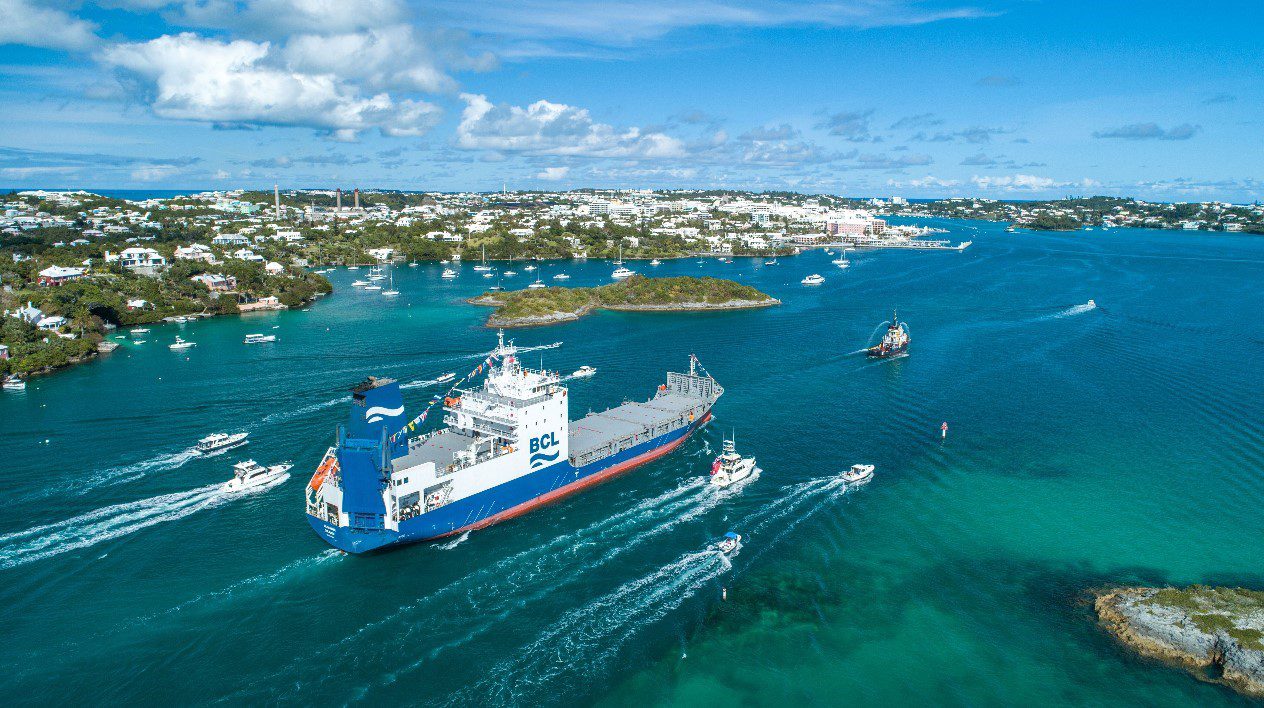
Twice a week, a container ship departs New Jersey for Bermuda, quietly serving as one of the most consistent ocean-observing platforms in the Atlantic.
For nearly half a century, the Oleander has transported cargo between Port Elizabeth and Hamilton, delivering supplies from food and medicine to lumber and scooters. Since the late 1970s, the vessel, owned and operated by Bermuda Container Line, has also carried scientific instruments collecting biological, chemical, and physical marine data, forming one of the longest-running ocean time series.
“It’s a fortuitous relationship,” said Magdalena Andres, a physical oceanographer who collaborates with biologist Heidi Sosik at Woods Hole Oceanographic Institution (WHOI) to collect data using instruments on board Oleander. “Bermuda needs supplies, so the ship runs year-round, and that route happens to be incredibly valuable for ocean science.”
Each 750-mile (1,200-kilometer) crossing takes about two days, traversing the Gulf Stream and three water masses: cool continental shelf waters off the U.S. coast, warmer Slope Sea waters, and the subtropical Sargasso Sea. This creates an ideal natural laboratory for studying how circulation and climate variability influence marine ecosystems.
A robotic microscope at sea
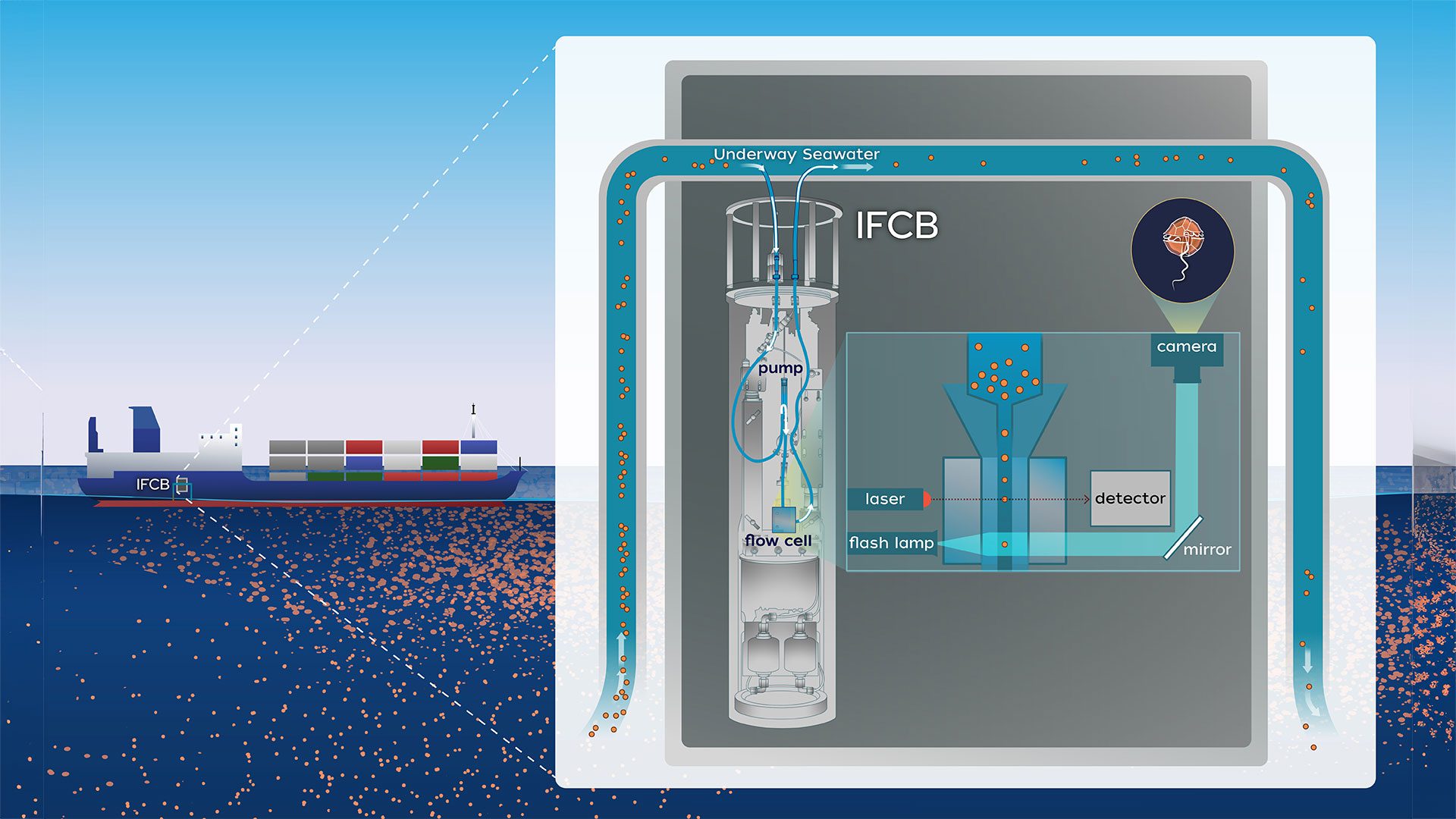
Over the past year, the program expanded to include detailed microbial life studies with the installation of an Imaging FlowCytobot (IFCB), which Sosik calls “a robotic microscope.” First prototyped at WHOI in 2005, the instrument has since been deployed on oceanographic vessels around the world, capturing tens of thousands of phytoplankton images daily and continuously documenting and identifying microscopic life across vast stretches of ocean.
Decades of experience operating IFCBs at sea prepared Sosik last year for the more ambitious and unique step of installing one onboard Oleander, made possible with funding support from the shipping company CMA CGM.
At the heart of the project is a simple message: microscopic plankton are fundamental to ocean life and the health of the planet. Among the dozens of microbial organisms identified by the IFCB, many are phytoplankton that produce oxygen and form the base of food webs, supporting everything from zooplankton to whales. And some of the most intriguing are species of diatoms that have blooms which may help export carbon to the deep ocean.
“It is exciting because we can see their diversity and distribution in near-real time,” Sosik said, helping scientists understand their influence on both local food webs and global carbon cycling.
Meeting engineering challenges
The 70-pound instrument, located in the ship’s engine room and connected to the seawater system, sips roughly one teaspoon of water every 20 minutes from an intake pipe then captures images of the organisms in the samples. Images are transmitted to scientists on shore via satellite for monitoring, while full datasets are stored onboard for later download and analysis. The measurements are also combined with new satellite imagery from NASA to help Sosik and other scientists better understand surface-ocean biodiversity.
Installing the instrument in the engine room, where seawater was already being pumped in for other scientific measurements, presented a unique set of challenges, said Emily Peacock, a marine research technician in Sosik’s lab. “We adapted to what was available,” she said. “The engine room is hot, noisy, and subject to vibration, and it is not the typical place we would place an instrument like this.”
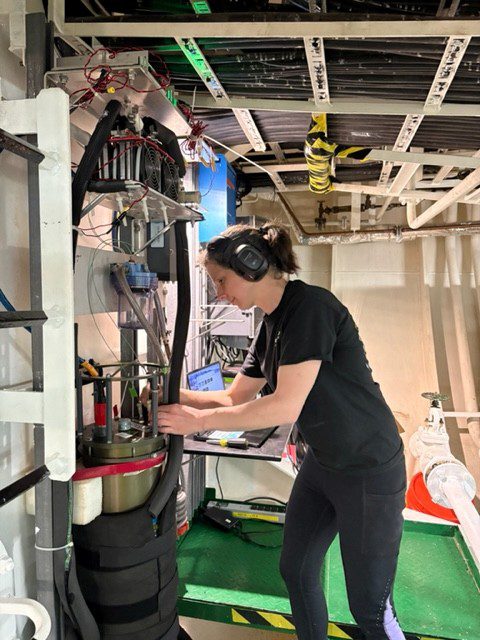
Emily Peacock installs an IFCB in the engine room of the Oleander at Maher Terminals in Elizabeth, New Jersey. (Photo by Joe Garcia, © Woods Hole Oceanographic Institution)
Instead, they worked creatively to design cooling systems and install specialized pumps that allow the IFCB to operate reliably under shipboard conditions. The instrument must also function autonomously, since no scientists are present during Oleander’s twice weekly crossings. Using GPS, it records precise locations for each sample, enabling researchers to link observations to exact positions along the ship’s track.
For CMA CGM, the investment in the instrument aboard Oleander reflects a commitment to understanding and protecting ocean systems vital to their business. “The ocean regulates the global climate, absorbs carbon dioxide, produces oxygen, and is home to more than half of the planet’s biodiversity,” said Heather Wood, director of sustainability initiatives at CMA CGM. “It also underpins global trade and economic activity.”
Supporting efforts like the IFCB aligns directly with the company’s sustainability strategy. “As stewards of the seas that carry our ships, we recognize that our operational decisions affect the ocean,” Wood said. “The biological data from the IFCB helps WHOI and CMA CGM interpret how ocean systems function, which is critical to responsible operations.”
Building a global ocean observing network
Scientists hope to expand this approach to other commercial ships, building a network to monitor ocean properties globally. Oleander stands out not just for what it measures but how frequently, providing near-real-time observations rarely possible on traditional research cruises.
That repetition is essential, Andres said. “The ocean is patchy biologically, and revisiting patches many times gives a clearer picture of change.”
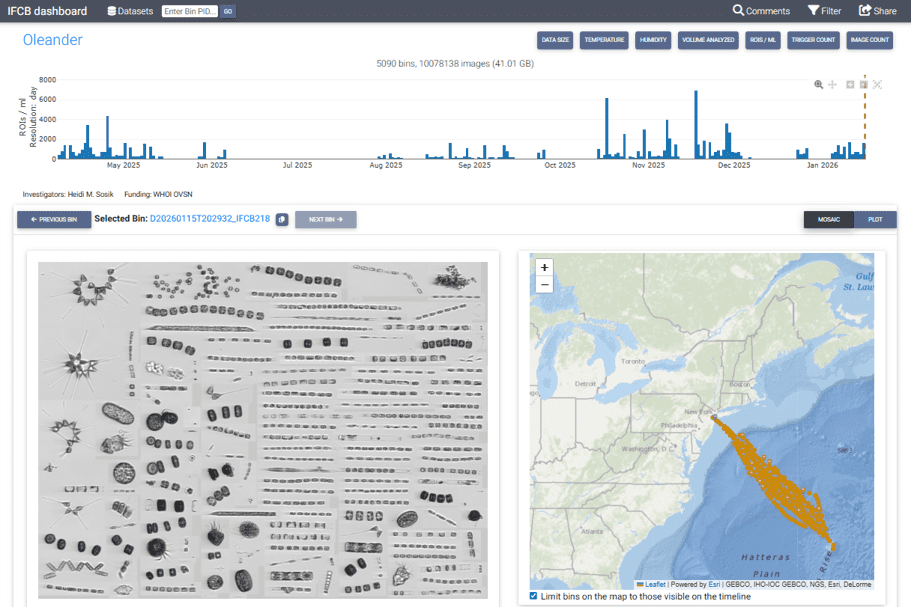
Decades of Oleander measurements have revealed long-term warming trends and monitored changes in the Gulf Stream, forming a rare, continuous North Atlantic record built by a working cargo ship with an expanding suite of instrument technology. For marine ecologist Tim Noyes of the Arizona State University Bermuda Institute of Ocean Sciences, who processes datasets and maintains instruments onboard Oleander, the program represents a rare marriage of consistency and scale. Since 1977, the Oleander project has steadily expanded its observational capabilities. Early and ongoing measurements of core ocean properties funded by the National Science Foundation and NOAA, have formed the foundation for decades of ocean and atmospheric research in the Atlantic.
More recently, the successful deployment of the IFCB on Oleander shows that advanced scientific instruments can operate reliably on commercial vessels, a milestone Noyes said could broaden biological ocean monitoring worldwide.
“For me, what’s most interesting is the combination of long-term consistency and expanding capability,” Noyes said. “You need the oceanographic context to understand biological communities. We’ve shown how to connect those pieces.”