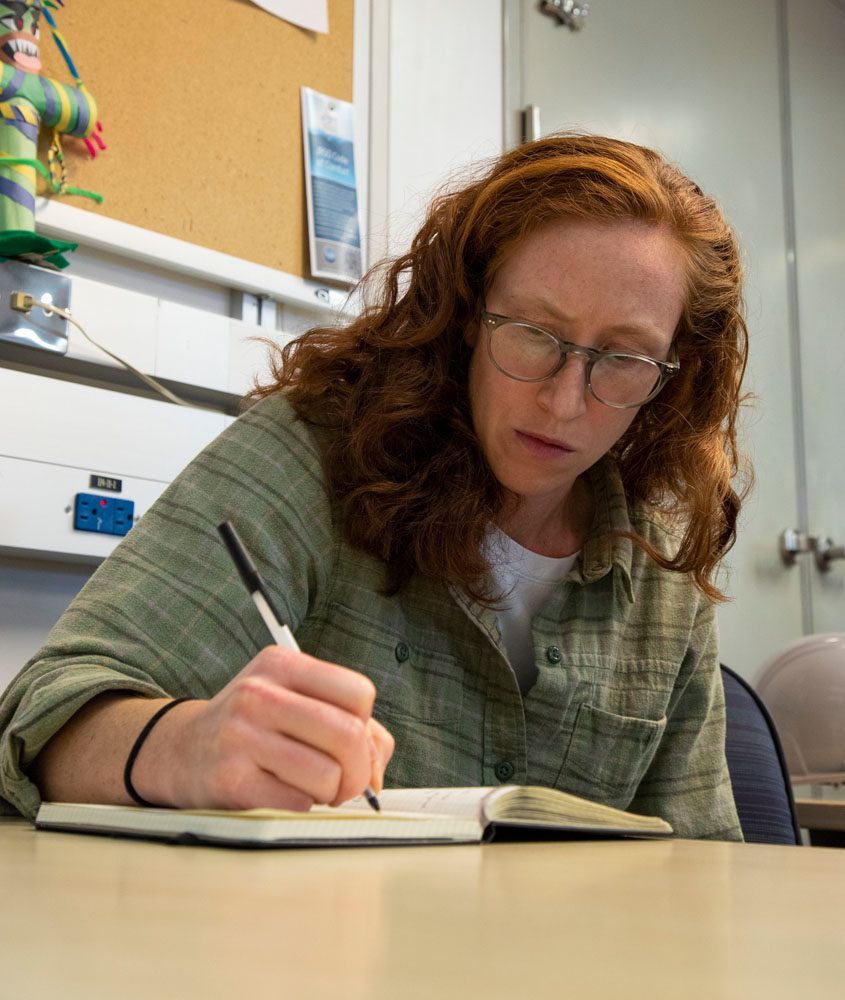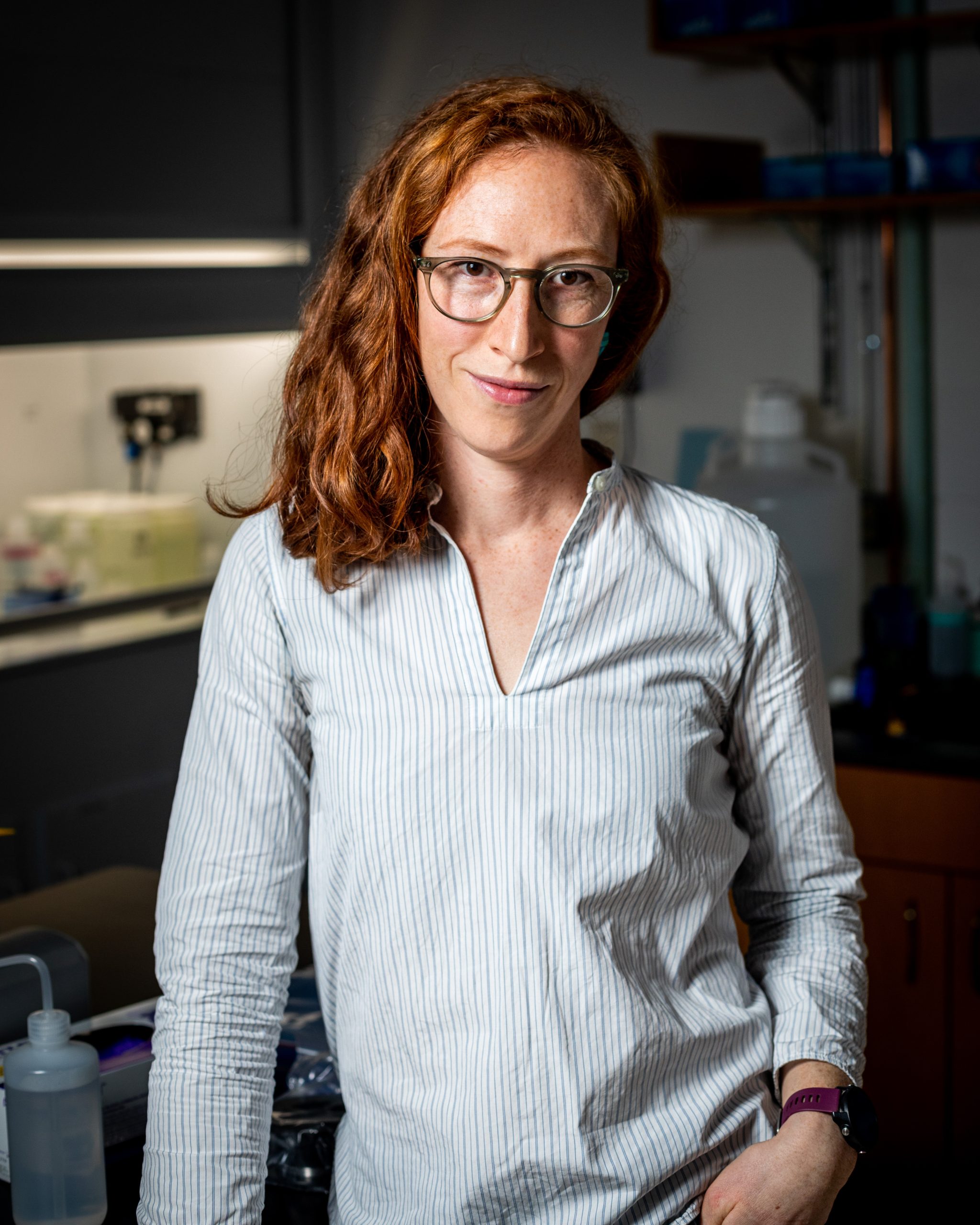
I grew up in Brookline, just outside Boston. While we didn’t live on the coast, my grandparents had a house on the Maine coast where the ocean became part of my life. I came to oceanography through a pretty winding path, though.
I moved to the Midwest to study chemistry in college, and it wasn’t until I started learning about past abrupt climate change events—which by that I mean tens of thousands of years ago and completely reshaped Earth’s climate—that something clicked. The ocean plays this enormous role in all of it, and I wanted to understand how. That’s what paleoceanography is: piecing together aspects of the ocean’s past through the physical and chemical clues it leaves behind.
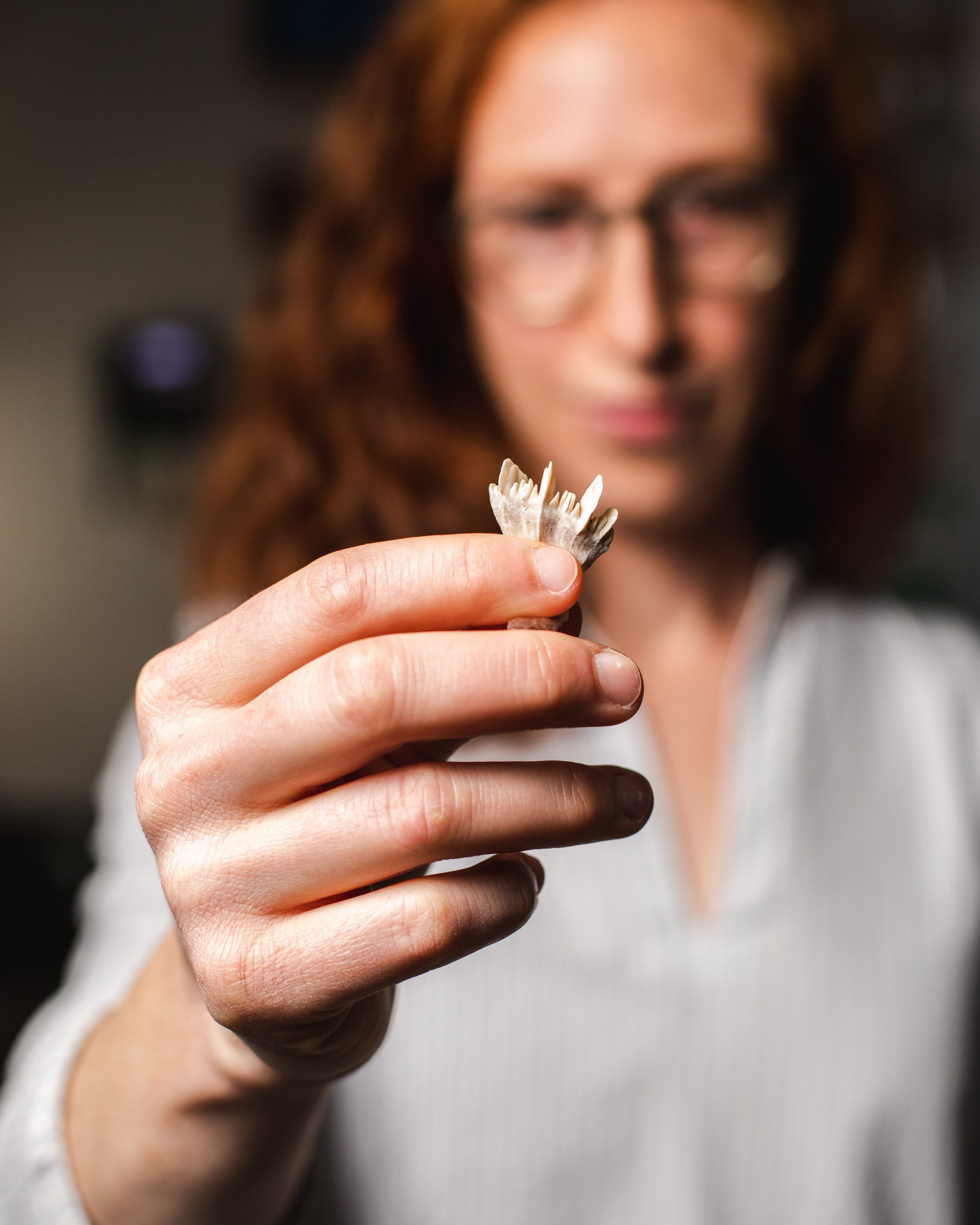
My work is focused on deep-sea sediment cores and deep-sea corals. The corals are especially fascinating—they live their entire lives in the pitch black. No sunlight, just waiting for food to drift down. While the survival of these species is already an incredible subject to study, from a paleoceanography point of view, certain markers inside of them help you know when in time you’re looking at, which is a rarity in my field.
I feel lucky that I've always been really excited about science, and that’s allowed me to follow a nonlinear trajectory. It's reassuring to know you don't need to have it all figured out from the start. If you're excited, motivated, and have varied interests, I think sometimes it just ends up leading you in an interesting direction. It means that you can continue to evolve in your career, and that's an exciting thing too. You can always learn new stuff. That's one of the things that's so awesome about being a scientist, and honestly, it's both the hard part and the best part of the job. We're here to learn more about the ocean, the climate, all of it.
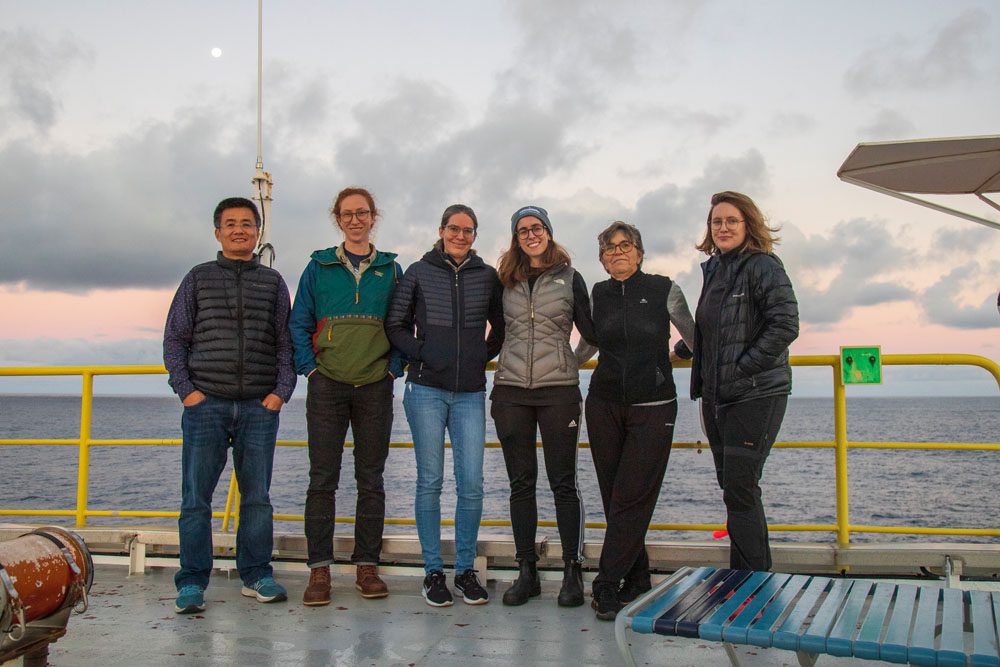
This past summer, that path led to a big milestone for me. I led my own research cruise for the first time out to the Labrador Sea for sediment coring. More than half the science party were women, and for many of them it was their first time at sea. That mattered to me.
When I was coming up, having female scientists to talk to made a real difference—it helps you see yourself in that role. I’ve been lucky throughout my career to have been around a lot of other women scientists, and that makes a difference, too.
That’s a big part of why I got involved with WOGEMS, the women’s and gender equity group at WHOI. Being in a leadership position in this group has been really rewarding. With a lot of these community-led groups, there’s no compensation—everyone is just doing this in their free time because it's something that is important, and we don't want it to disappear.
Science works best when everyone feels like they belong here.