WHOI joins Manresa Wilds Project to help restore part of Connecticut’s coastline
By Danny Hentz | October 6, 2026
In Norwalk, Connecticut, a sustainable, futuristic outdoor space is emerging from a derelict fossil fuel plant, with WHOI ready to help bring it to fruition.
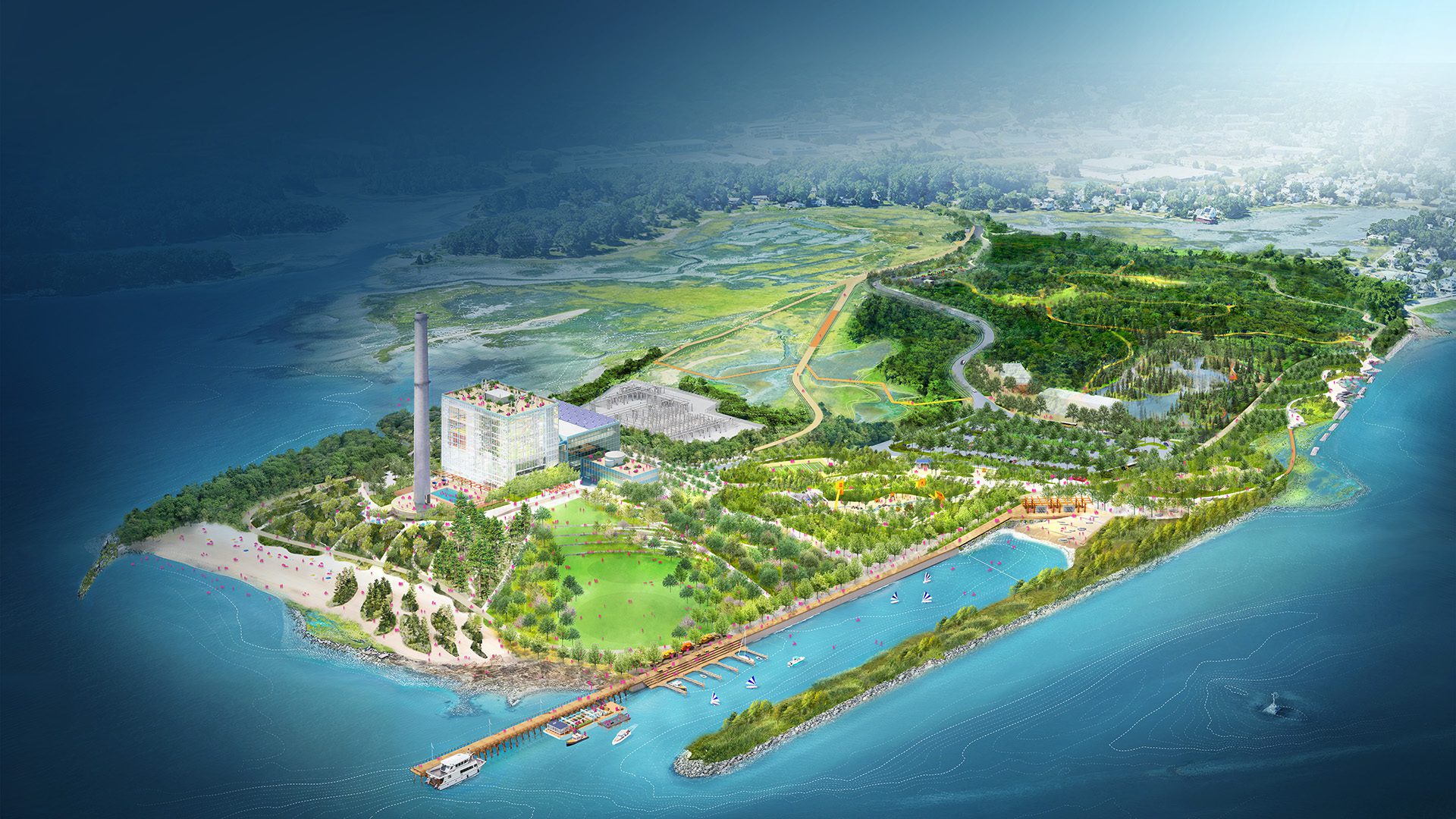
Manresa Island is a peninsula spanning 1.75 miles (2.8 kilometers) of Norwalk’s coastline. Beginning in the 1960s, the area was home to the Norwalk Harbor Generating Station, a coal-fired power plant that was decommissioned in 1997, following growing concerns about the pollution it produced. Over the past 30 years, the abandoned plant leaked 200 gallons of toxic chemicals, including coolants, into the surrounding lands and waters.
In 2024, the land and station were acquired by Norwalk residents and philanthropists Austin and Allison McChord, who founded the non-profit Manresa Island Corp. to restore the area and reopen it to the public as a park. By February 2026, state and local governments approved early remediation work and the phase of “Manresa Wilds,” the McChords’ multi-stage plan to transform the site into a publicly accessible green space and ecological rehabilitation area, beginning in 2027 with the opening of the Northern Forest.
WHOI is part of Manresa Island Corp.'s Research and Education Station (RESA), at Manresa Wilds, a consortium of five institutions using the site as a shared platform for coastal research and environmental education meant to engage the public. The institution is already playing a central role in consulting with project partners to design the future wetland and intertidal site, and in devising a curriculum for science demonstrations, exhibits, and educational programming for the full opening of the park between 2032 and 2035.
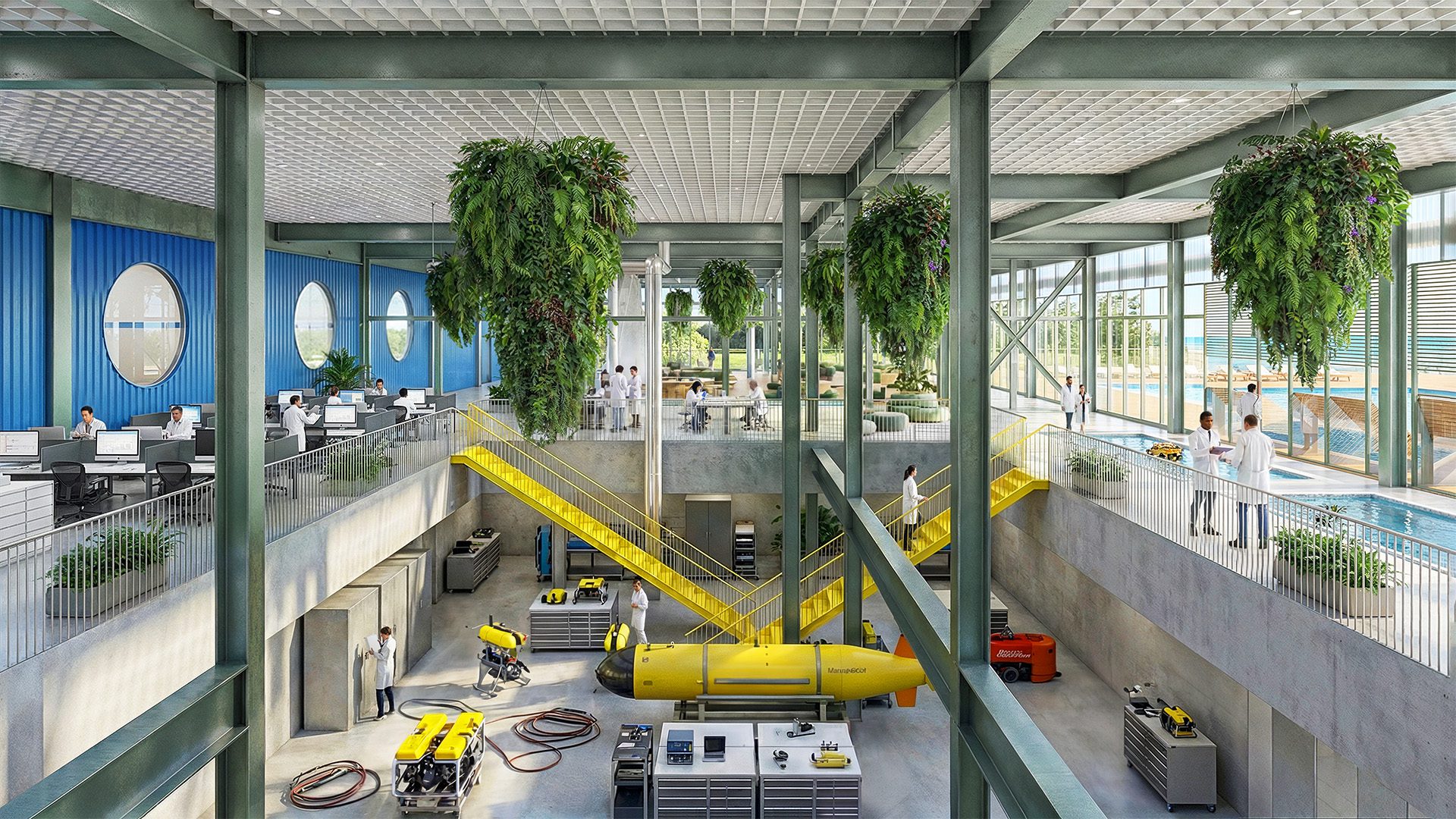
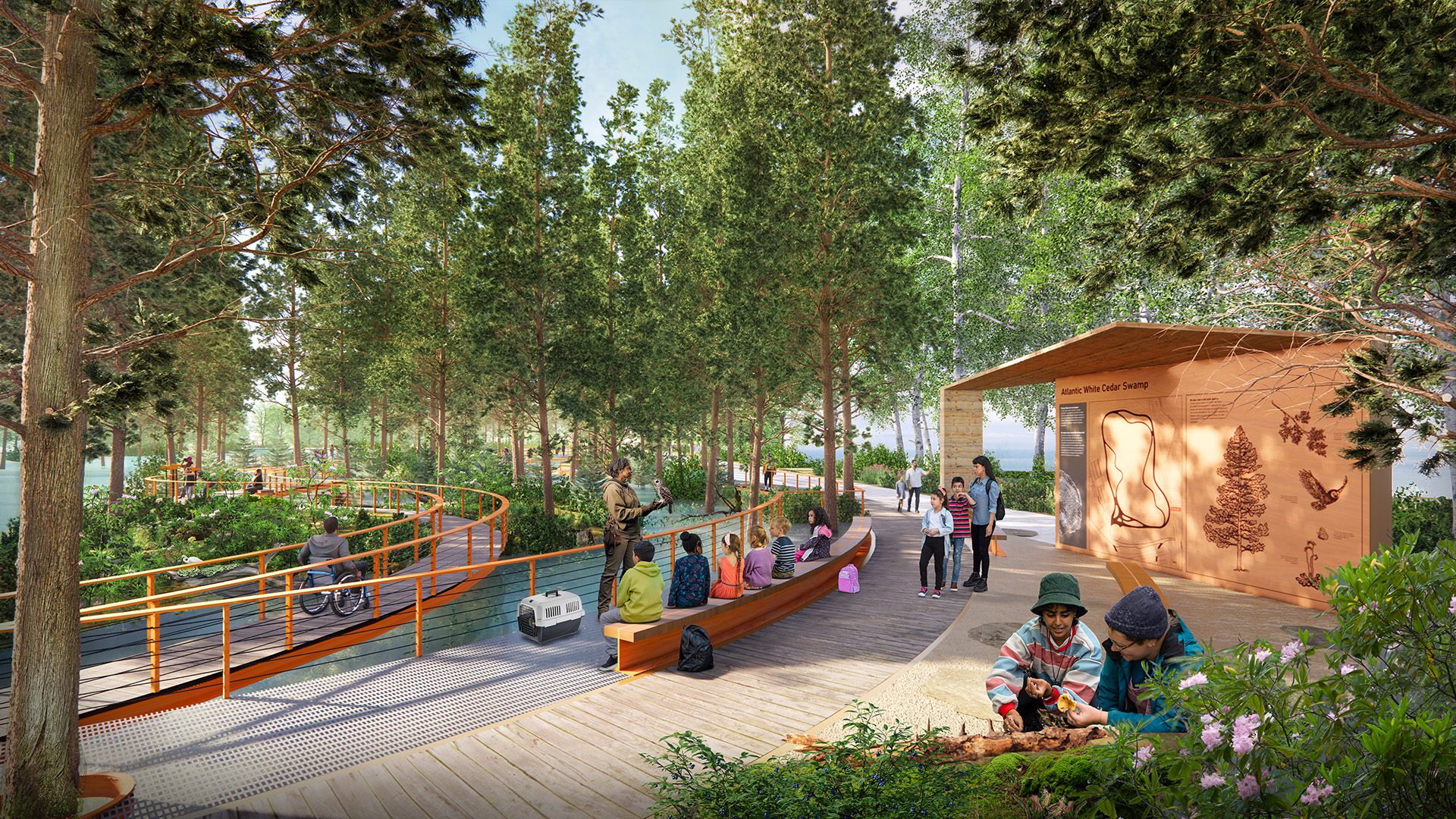
(Left) A vision for research space inside the renovated power plant space, where ocean researchers can house marine vehicles. (Right) Outdoor classroom spaces planned for the island's Northern Forest area. (Images courtesy of BIG and SCAPE)
Last year, WHOI scientists were asked to submit research ideas that leveraged the Institution’s access to Manresa. The list of approved proposals is growing and now includes a sea-level rise assessment, a historical review of local salt marsh areas, a habitat restoration project, a shipwreck survey of the Sound, and testing of autonomous underwater vehicles (AUVs) in Long Island Sound and nearby marine canyons.
“With every project that we’ve proposed, there's also an education and outreach component,” said WHOI research biologist Taylor Heyl, one of the liaisons developing the Institution’s strategic science vision for Manresa. “It's already been an incredible project, and I think it's gaining more and more attention right now, which is exciting.”
In addition to giving research projects a home base, Manresa Wilds will expand public access to the land by developing a series of nature trails and outdoor gathering spaces, as well as a pool and flexible community spaces inside the power plant.
De-privatizing the area has been a long-fought battle for some of Norwalk’s residents since the 1950s, when a resolution to make Manresa a public park nearly passed. By making the island a hybrid space for nature, the public, and science, Manresa Island Corp. hopes to make the project a blueprint for restoring other abandoned sites around the country—some of which may also be sources of toxic pollutants.
“There are all these environmental ticking time bombs out there waiting for the next superstorm,” said Manresa’s Chief of Strategic Partnerships, Rich Flood. “There's a sense of immediacy in how we protect Long Island Sound, but [also] other bodies of water that these power plants live on and have been abandoned for years.”
Estimates of abandoned U.S. facilities (including power and sewage treatment plants) at risk of unleashing pollutants range from several hundred to well over 5,000. WHOI has a demonstrated history of analyzing the long-term impacts of pollutants from such sites and has examined best practices for remediation of many marine spaces. Manresa’s leaders say it’s the Institution’s use of applied science that will make it a valuable partner.
“Manresa can serve as a hub for research on Long Island Sound, and we see WHOI as being a critical part of that in terms of our future vision,” said Manresa Island Corp’s Executive Director Jessica Vonashek. “It was a meant-to-be partnership.”