Reclaiming knowledge from the sea
WHOI’s Jordan Kennedy draws on Indigenous knowledge, engineering, and observation to rethink how we study and restore coastal landscapes
By Rachel Mann | September 9, 2026
Indigenous peoples shaped the Pacific Northwest’s coastline with stone. When the tide rolled out, they built rock walls to slow the flow of water, trap sediment, and create an ideal habitat for clams. These "clam gardens" became highly productive shellfish fisheries, supporting communities from present-day Alaska to California through generations of careful observation, maintenance, and stewardship.
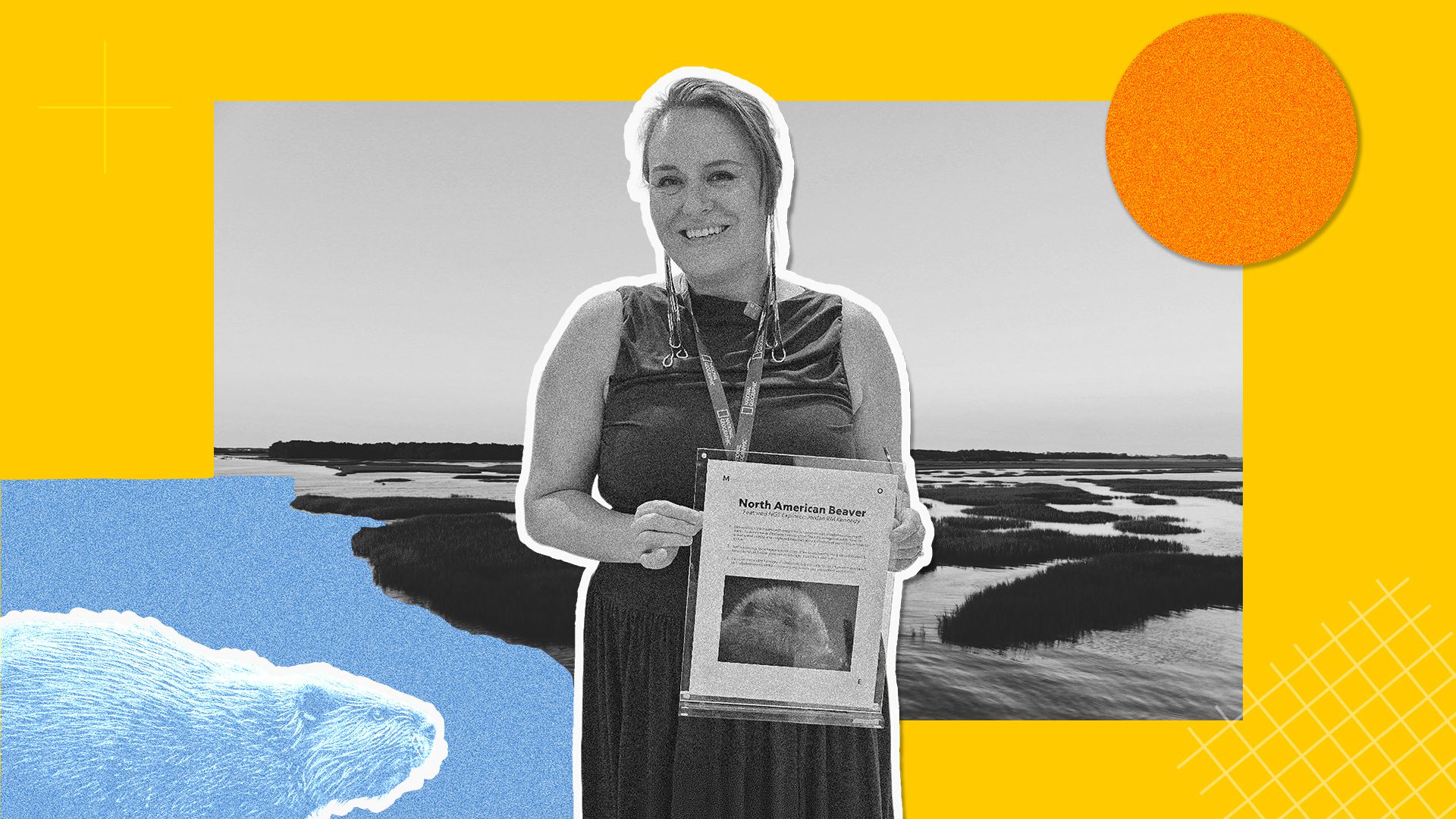
"Clam gardens were an aquaculture technique that terraformed massive swaths of the intertidal coastline. They can be more than 5,000 years old, but they require continual care,” said Jordan Kennedy, a Ladd Thorne Indigenous Knowledge fellow at WHOI. “As Indigenous communities were displaced from their coastal lands, the practice was interrupted.”
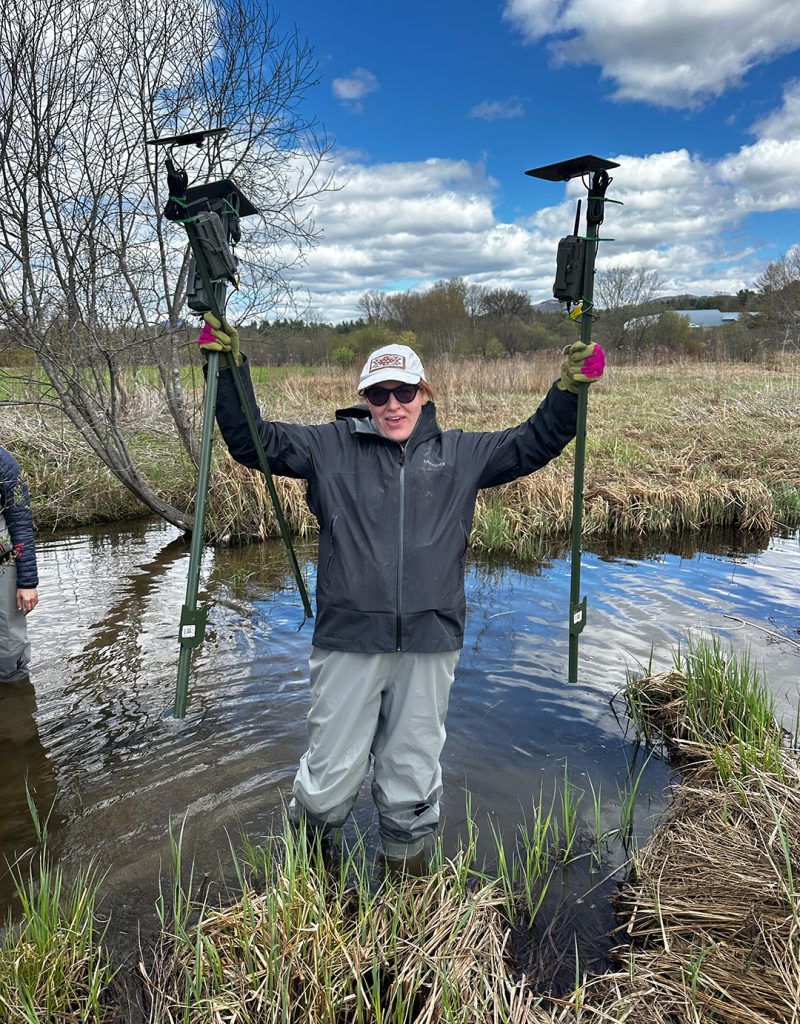
Jordan Kennedy installs camera traps at a restoration site on Vermont Land Trust property in Vermont as part of her field research on beavers and their role as ecosystem engineers. (Photo courtesy of Jordan Kennedy)
For Kennedy, clam gardens are more than an example of ancient engineering; they are a reminder that knowledge is inseparable from place. Growing up on the Blackfeet Reservation in Montana, as the daughter of an enrolled tribal member, her relationship with the landscape influences the way she approaches her research. While science often asks researchers to step back from the systems they study, traditional ecological knowledge begins with the understanding that people are part of those systems.
“Traditional ecological knowledge is place-based knowledge. It is longstanding intergenerational knowledge that is communicated through language, art, and practice,” Kennedy explained. “It demands that you are a part of and not separate from the natural world. It’s more of a philosophy than a knowledge system.”
A mechanical engineer by training, she has spent the past decade studying beavers, not only as ecosystem engineers, but as teachers. During her formative years, she watched the animals reshape streams every spring. Those observations became the foundation for her doctoral research and, eventually, new ways of thinking about engineering, robotics, and landscape design.
"I grew up literally swimming with beavers in the river and watching them build every single year, so I had a lot of land-based observations where I was really confident in designing my first field season. The way that I engage with landscapes is I take them seriously," she said. "I take the animals seriously. I take the perspective that I'm dealing with kin. I'm not dealing with beings that are somehow outside of me or below me or separate from me."
She describes her approach to research as a braided one. In that braid, engineering, observation, and culture are intertwined ways of understanding the same system. Her work with beavers, robotics, and coastal mapping sits within that same structure, even if it looks fragmented from the outside.
“A prayer is not separate from science. The way I collect food is not separate from my knowledge, she explained. “All of these things from an Indigenous worldview are connected.”
That braided approach also shapes how she enters research relationships. She emphasizes that engagement with Indigenous knowledge systems is grounded in relationships first, data second.
“I don't think I could correctly do anything that's ocean-based without understanding who I'm talking to and how they view the world,” she said. "When you're engaging with the tribe, you have to introduce yourself. You don't just get to run in there. You always start with their story. You start with the stories of creation."
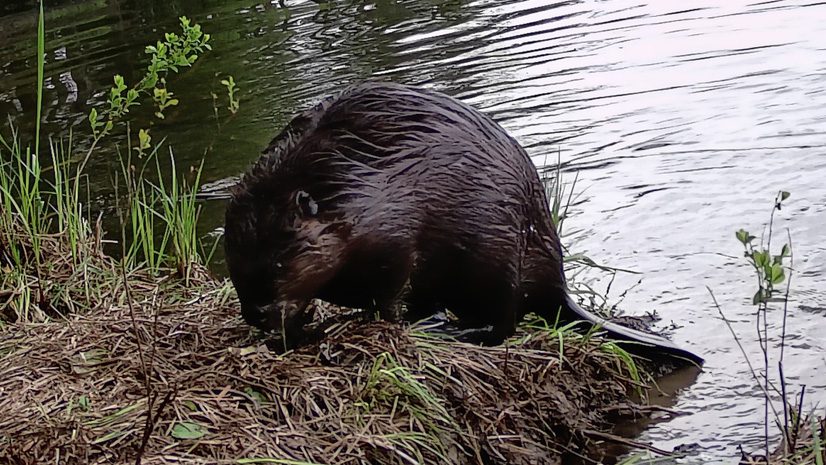
A beaver interacts with a human-dug canal at a Vermont Land Trust property, providing an example of how beavers engage with and reshape the landscapes around them. (Photo courtesy of the Vermont Land Trust)
That way of seeing carries forward into her coastal research today. In WHOI’s FIeld robotics and aLgorithmic Decision-making Lab (FILD Lab), Kennedy works under the supervision of WHOI scientist Nare Karapetyan, developing autonomous systems for monitoring intertidal environments. Their goal is to adapt these tools to map clam gardens and understand where they once flourished and where they could thrive again.
“Mapping intertidal environments presents an interesting challenge from a robotics perspective,” Karapetyan said. “In environments shaped by tides, changing water levels, and limited visibility, we have to think carefully about where and when these systems should collect data and how different sensing methods can work together.”
"The revitalization of these clam gardens isn't just a revitalization of a technique," Kennedy said. "It is a reclaiming of knowledge."
Seen through that lens, clam gardens are not simply restored infrastructure or archaeological remnants. The stone walls still line sections of the intertidal zone, but without continued care, they are incomplete systems. Their revitalization, Kennedy suggests, is not only about rebuilding productive shellfish habitat. It is about reactivating relationships between people, place, and practice so that the knowledge embedded in those shorelines can continue to be lived rather than only observed.