Tiny drifters, massive impact
How salps shuttle carbon to the deep
By MOLLY TSONGAS | MARcH 24, 2026
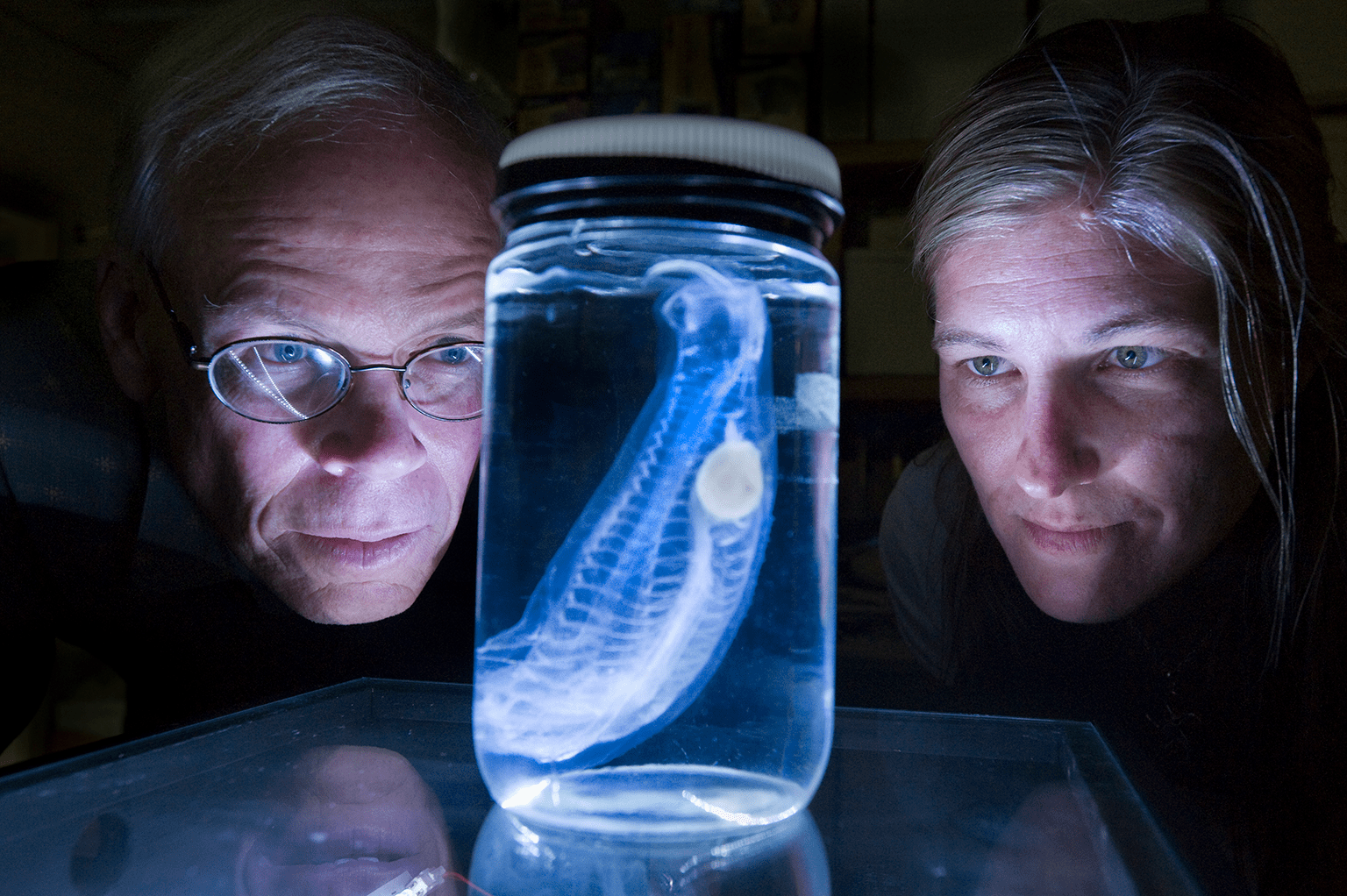
In the early 1970s, WHOI biologist Larry Madin dove underwater in the Bahamas. Suspended in crystalline blue water, he stared in fascination at spiraling strands of gelatinous zooplankton around him. They were salps, translucent tunicates first described by naturalists in the 1700s.
At the time, Madin had no idea that he was encountering one of the ocean’s most powerful climate regulators.
Curious about the role salps play in the marine ecosystem, Madin began diving to collect salps by hand, carefully coaxing them into glass jars. “They were too delicate to handle out of the water,” he recalled.
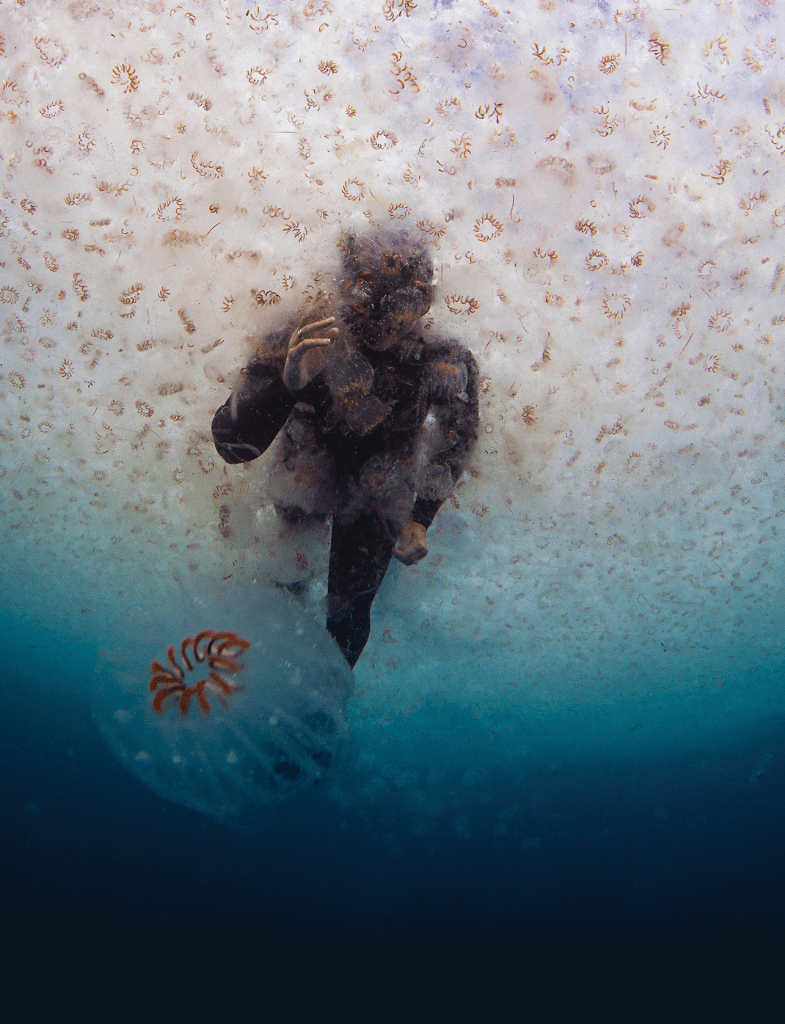
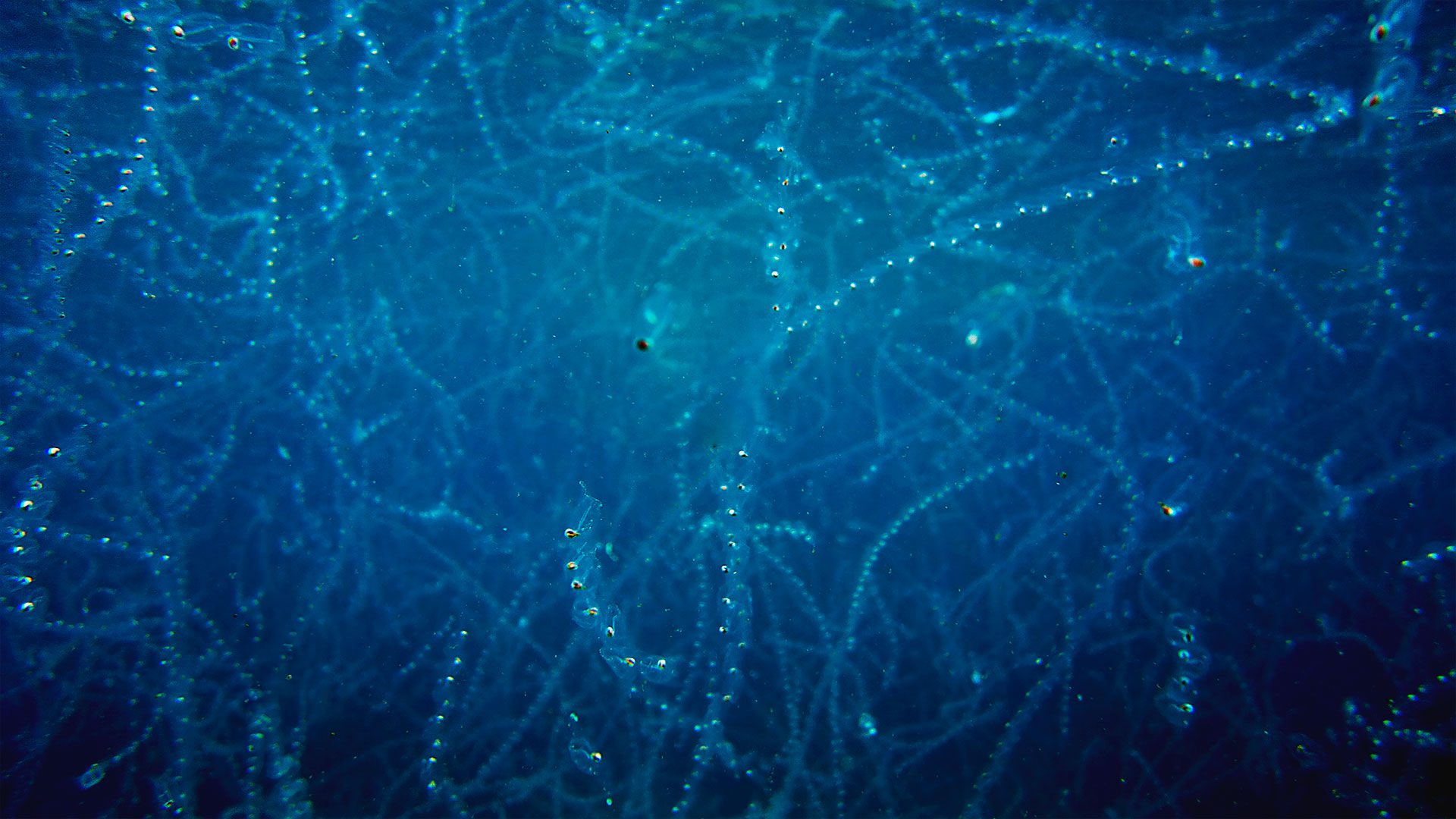
A diver swims through a dense bloom of salps (Cyclosalpa sp.) off the coast of New Zealand. (Photo by Paul Caiger © Paul Caiger)
Up close, Madin observed how salps feed by pumping seawater through their hollow, barrel-shaped bodies. As they swim, they trap phytoplankton, microscopic organisms that use photosynthesis to absorb carbon dioxide from the atmosphere.
“They’re really elegant creatures,” said Madin. “They combine filter feeding and locomotion in one seamless system. They’re pumping water, feeding, and moving all at the same time. It’s quite a little factory.”
What happens next is key to their role in the global carbon cycle.
Salps compress vast quantities of tiny phytoplankton into dense, carbon-rich fecal pellets that sink quickly, at rates measuring up to 1,000 meters (3,280 feet) per day. Many species of salps also engage in diel vertical migration, descending up to 600 meters (1,968 feet) each day, giving their waste a head start toward the seafloor.
This rapid transfer strengthens the biological carbon pump, moving carbon from the surface into depths where it can remain stored for decades or centuries. It is like depositing carbon into an oceanic bank vault.
“As one of the most effective grazers in the ocean, salps could be playing a major role in carbon sinking,” Madin explained.
This adaptable species can reproduce explosively, both sexually and asexually. A solitary individual can generate chains stretching 15 meters (50 feet), each chain composed of hundreds of offspring. Populations can surge within days when phytoplankton are abundant.
Salp blooms are famously unpredictable. “One cruise you might not see any. Then, the next time you go out, salps are filling the water,” said WHOI senior scientist Heidi Sosik.
In one remarkable event, a single salp swarm covered nearly 100,000 square kilometers (38,600 square miles) of ocean surface. Scientists estimated the salp swarm consumed up to 74 percent of phytoplankton each day, transporting as much as 4,000 tons of carbon daily into the deep ocean. This is the equivalent of 14,000 tons of carbon dioxide per day.
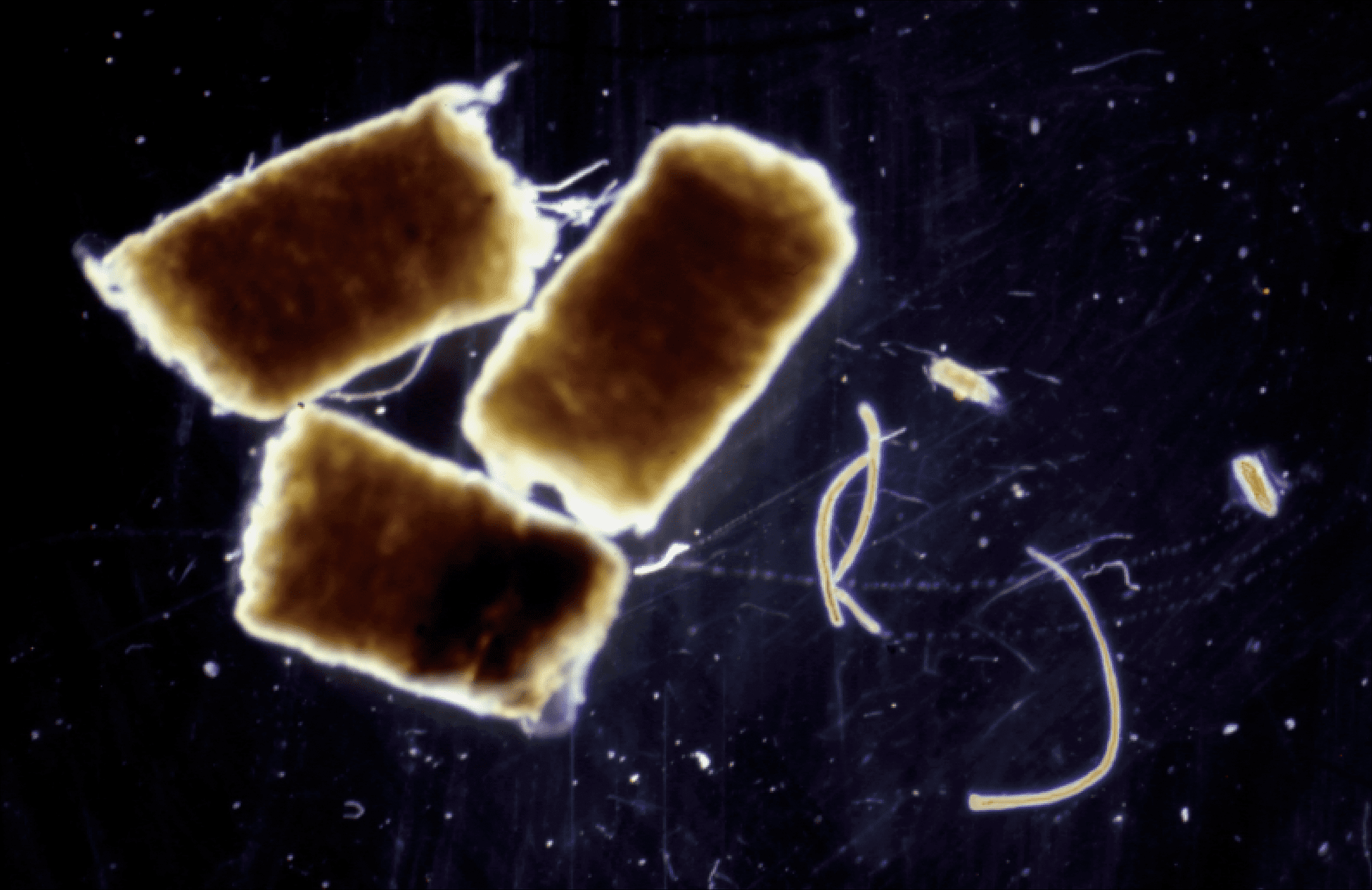
Only recently has the role salps play in our climate gained wider attention.
“The more we study how food webs and organisms affect the flow of carbon across the planet, the more we find organisms like salps playing a huge role,” said Sosik. “They may not be well known, but they are climate heroes in how they regulate the carbon cycle.”
They are nearly invisible. They bloom unpredictably. They leave no fossil record. Yet, the ocean’s most unassuming drifters may be among its greatest climate guardians.