A new underwater robot could help preserve New England’s historic shipwrecks
WHOI's ResQ ROV to clean up debris in prominent marine heritage sites
Estimated reading time: 3 minutes
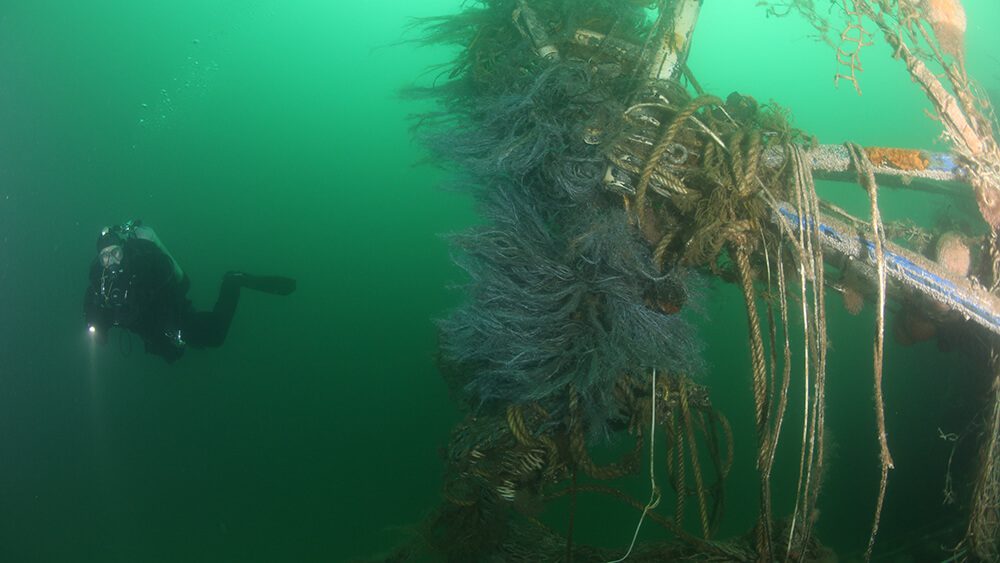
In 2019, Kirstin Meyer-Kaiser set out to explore the waters of Stellwagen National Marine Sanctuary off the coast of Massachusetts to revisit rare marine communities sighted on the wreck of the 19th-century steamship Portland. Instead, she found a habitat marred by derelict fishing gear.
The ship’s wooden transom, adorned with rare species of frilled anemone and glass sponges just a decade before, was now gone, and a massive gash—likely from the dredge dragged behind a trawling vessel—ran perpendicular through its mid-section, leaving only sand where a deck should have been. Trawl nets twisted into mats and wrapped around the ship's hull. For Meyer-Kaiser, it was clear that marine debris was a major threat to New England’s historic shipwrecks.
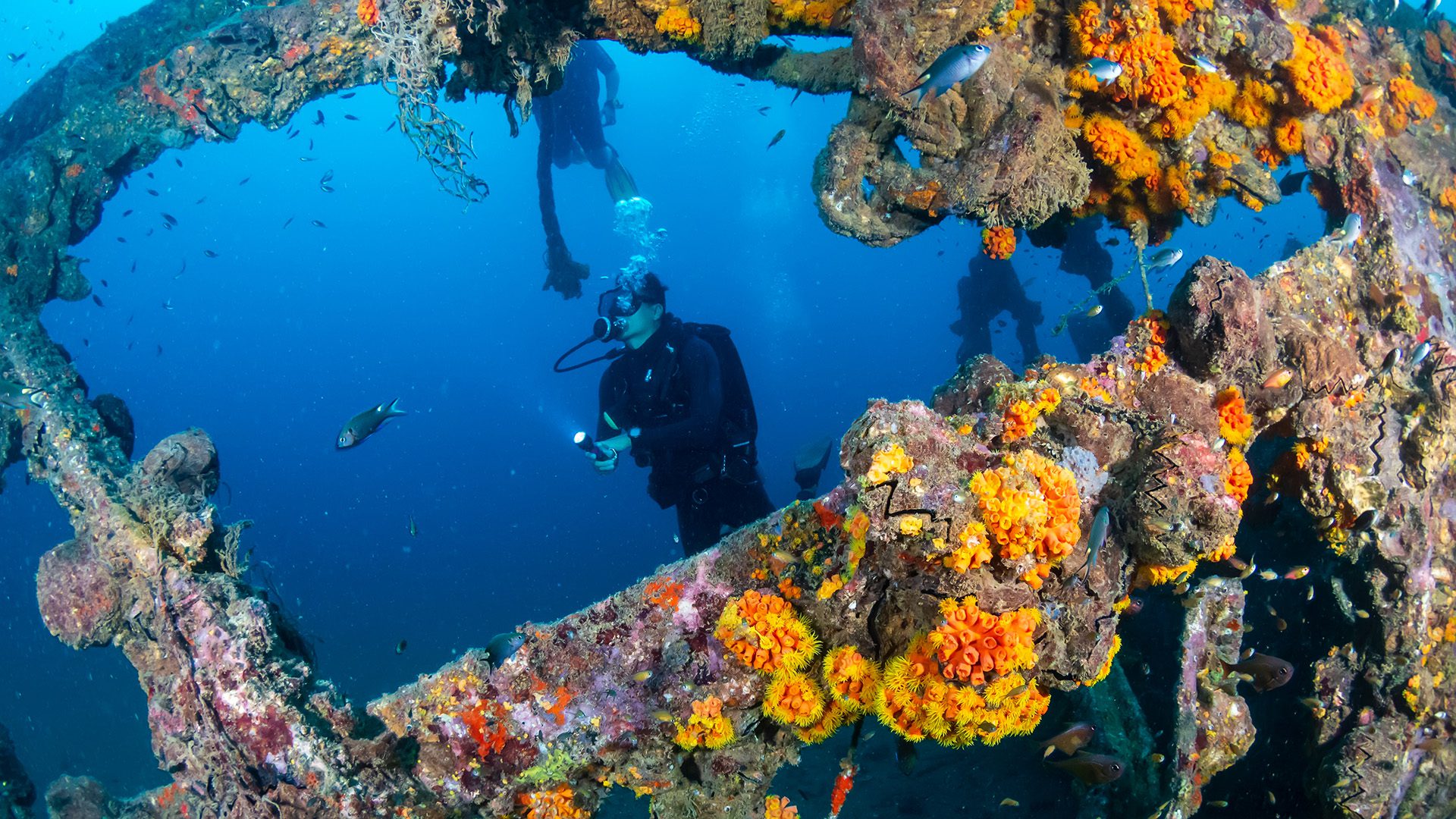
“This is a place where our combined heritage lives on, [not only] through the history of the shipwrecks, but in the habitat it provides,” said Meyer-Kaiser.
Stellwagen Bank National Marine Sanctuary is home to an estimated 200 shipwrecks spanning centuries of maritime history. For the project’s clean-up arm, Meyer-Kaiser turned to WHOI lead engineer Robin Littlefield, who had been working on a remotely-operated vehicle (ROV) designed to rescue larger research robots that become stuck underwater during fieldwork. Thanks to Meyer-Kaiser, the Rescue Robot or “ResQ ROV” now has another application: to tidy up New England’s marine heritage. Littlefield and his team have welcomed the challenge.
“Conservation of marine ecosystems and mitigating the impact of derelict fishing gear are well-aligned with the mission of the institution,” said Littlefield. “We’re working to develop a cost-effective ROV that can be purchased or built by other stakeholders to help with future ghost-gear inspection and removal efforts.”


Littlefield’s team is employing a combination of custom design and off-the-shelf parts to make the vehicle inexpensive to reproduce, but sturdy enough to reach some of Stellwagen’s deepest wrecks.
The robot will employ ocean-grade shears and a retrieval line, so it can aid in clearing away debris and then buoy it to the surface for collection and disposal. The vehicle’s optical camera will give pilots the ability to survey the cleanup, while vertical and horizontal thrusters help keep the bot stable in waters that are notoriously difficult to work in.
“The operational environment is really challenging—low visibility, high currents—it's incredibly dynamic,” said Littlefield. “Marine debris is moving around in relation to the shipwreck and the vehicle, so there's a real risk of entangling the ROV itself.”
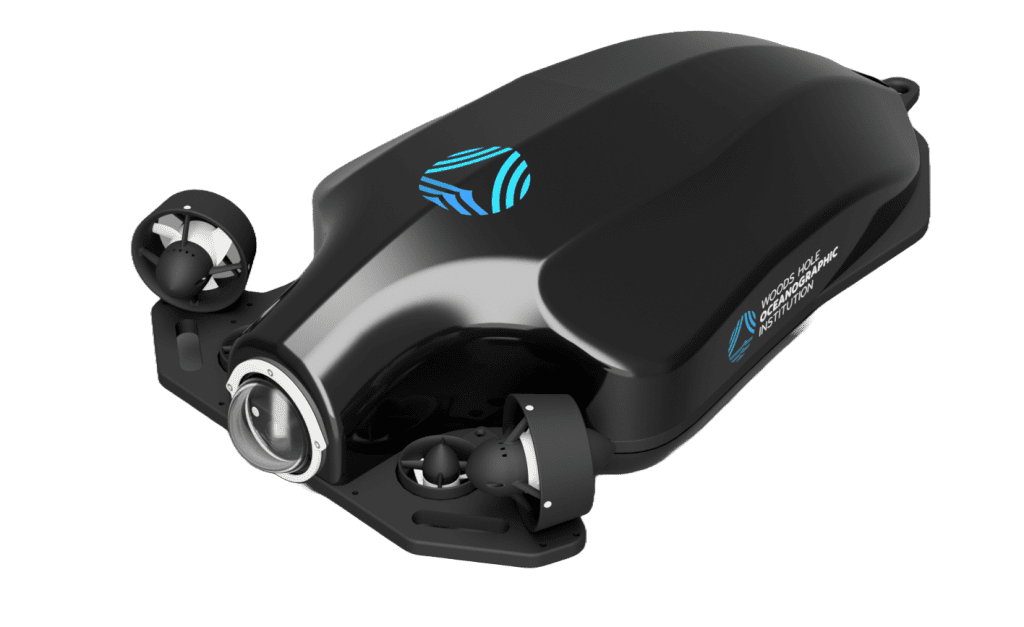
A rendering of ResQ ROV. (Image courtesy of Robin Littlefield, © Woods Hole Oceanographic Institution)
The debris removal team is now working with sanctuary officials to identify shallow wrecks where Rescue Robot can practice removing debris.
"This is a win-win,” said Mike Bailey, the sanctuary’s project manager. “WHOI is learning how to refine and develop this capability, which will be a huge step toward preserving and protecting our shipwrecks.”
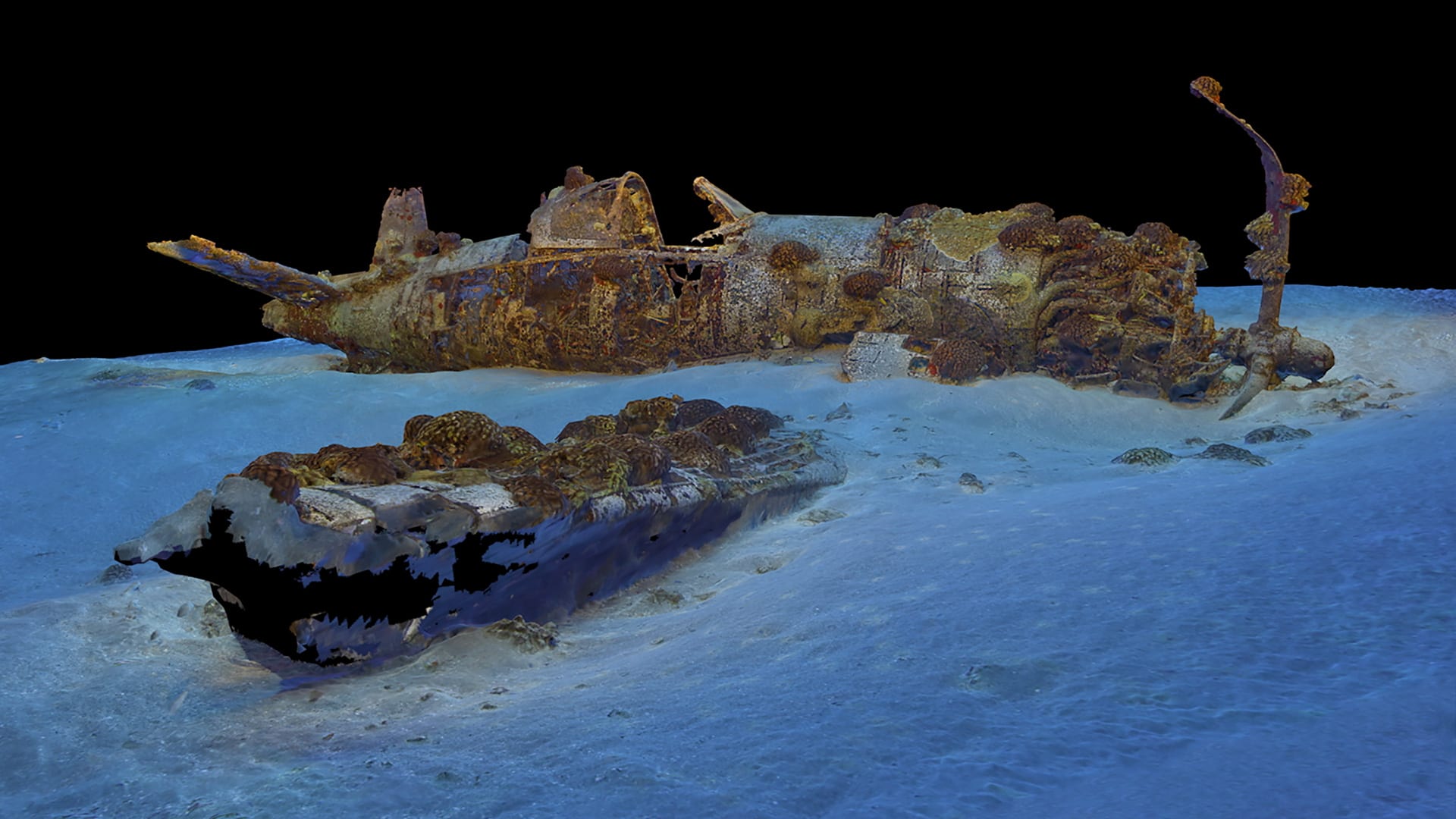
ResQ ROV may one day do more than just restore wrecks. Littlefield’s team has already engineered the bot with outreach and engagement in mind. Early on, they partnered with Forge Grove Engineering and Design, who designed the vehicle’s foam body with inspiration from the shell of a leatherback sea turtle. They’re also working with WHOI’s WarpLab to expand ResQ ROV's capabilities so that it can eventually produce high-resolution scans of shipwrecks, which can later be 3D-printed for use in museums—a larger offshoot of the program.
WHOI’s efforts may help researchers preserve the shipwrecks and unique ecosystems of Stellwagen Bank, while also bringing maritime history to the surface for future generations to enjoy.
“If we don't know who we are, then we can't know where we're going,” said Bailey. “It's hard to prepare for tomorrow’s challenges without really knowing what we dealt with in the past.”