Inside Room 71: WHOI history in seven artifacts
Some of the technology, art, and gifts that tell the story of the institution's early days
Estimated reading time: 3 minutes
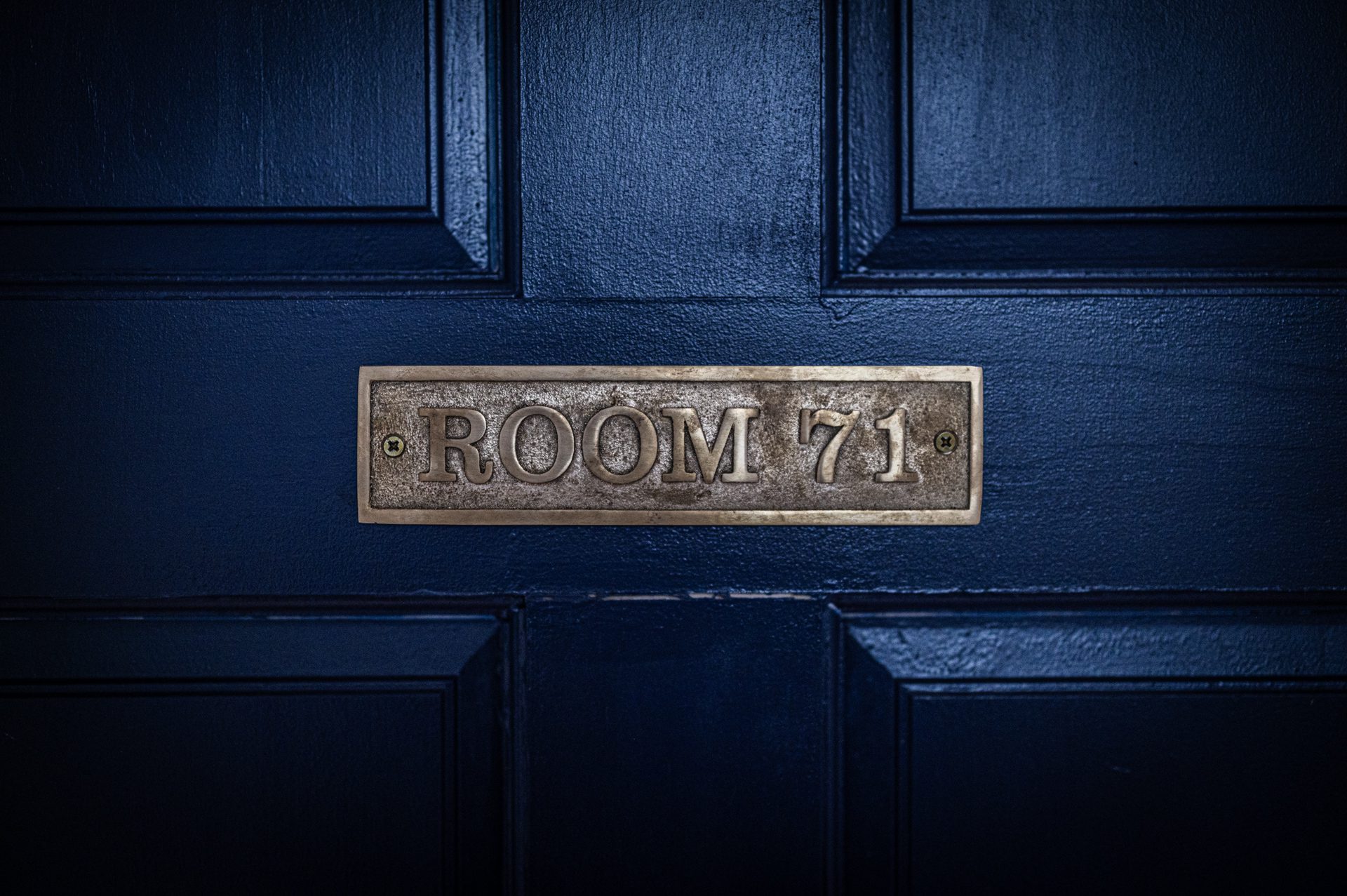
In 2025, WHOI launched Room 71, a new initiative dedicated to reimagining how we communicate about the ocean and to transform the image of ocean science. The program, led by its director Richard Vevers, seeks to engage new audiences by leveraging existing partnerships and employing new tools for creative storytelling — from interactive ocean exhibits to publicly available image repositories. Room 71 is also helping WHOI scientists and engineers better promote their work through new communications training and project support, as well as consultation on nature-inspired designs meant to improve the performance and aesthetics of new ocean robots and sensors. The initiative’s launch also came with a physical space set inside Bell House — the building that houses WHOI’s communications department and creative team.
Inside the room is a mix of decor both old and new that are designed to inspire creative thinking and big ideas. Along shelves painted navy blue, you can find 3D-printed models of WHOI’s latest remotely-operated vehicles and sensors, as well as prototypes of educational tools that demonstrate various physical oceanography concepts. The real marvels, however, are a curated set of artifacts from the annals of WHOI’s archival department.
Among them are old oceanographic sensors, artwork, and gifts that tell the story of the institution’s early days — times when many disciplines of ocean science were still in their infancy. We explore seven of these items below, noting their significance to WHOI and the world of oceanographic research. These ocean artifacts embody the same spirit of innovation and collaboration that drives Room 71 today.
1. Bigelow’s early sketches
Before he was the institution’s founder and inaugural director, Henry Bryant Bigelow was a marine biologist entranced by ocean life. These sketches appear in several volumes published by Harvard, Bigelow’s alma mater between 1909 and 1911. They show Bigelow’s fascination with the anatomy of gelatinous organisms including salps, jellies, and sea combs. Their ornate style and colorations seem to draw inspiration from German zoologist Ernst Haeckel, who captured the likeness of similar organisms in his book, “Kunstformen der Natur” (“Art Forms in Nature”).
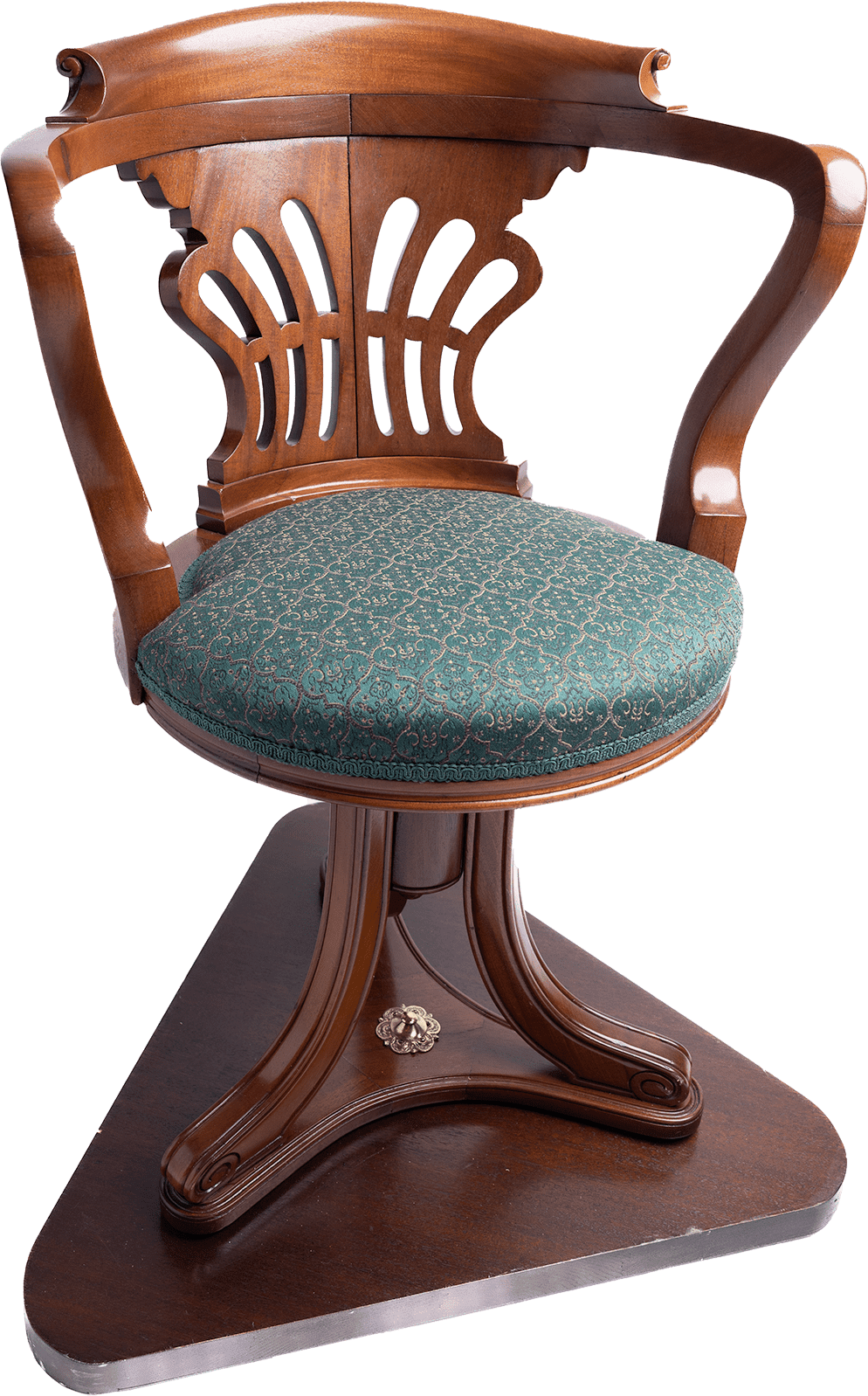
2. The chair of Prince Albert I
Monaco, a coastal city-state neighboring Southern France, was one of the first European nations to fervently embrace ocean research in the late 19th century, thanks in large part to its leader Prince Albert I (reign 1889-1922). In 1875, the prince converted his pleasure yacht, Hirondelle, into one of the world’s first research vessels. In 1906, he created the Oceanographic Institute Foundation, which included the Oceanographic Institute of Paris and the Oceanographic Museum of Monaco — some of the first international bodies dedicated to advancing ocean research. A chair from the Hirondelle belonging to his serene highness was later gifted to Brown University Professor of Chemistry Norris Rakestraw on a trip to Monaco. Rakestraw later gifted it to WHOI in 1933, just two years after becoming a research associate at the institution. The chair now symbolizes the long-standing international cooperation that persists between WHOI and Monaco.
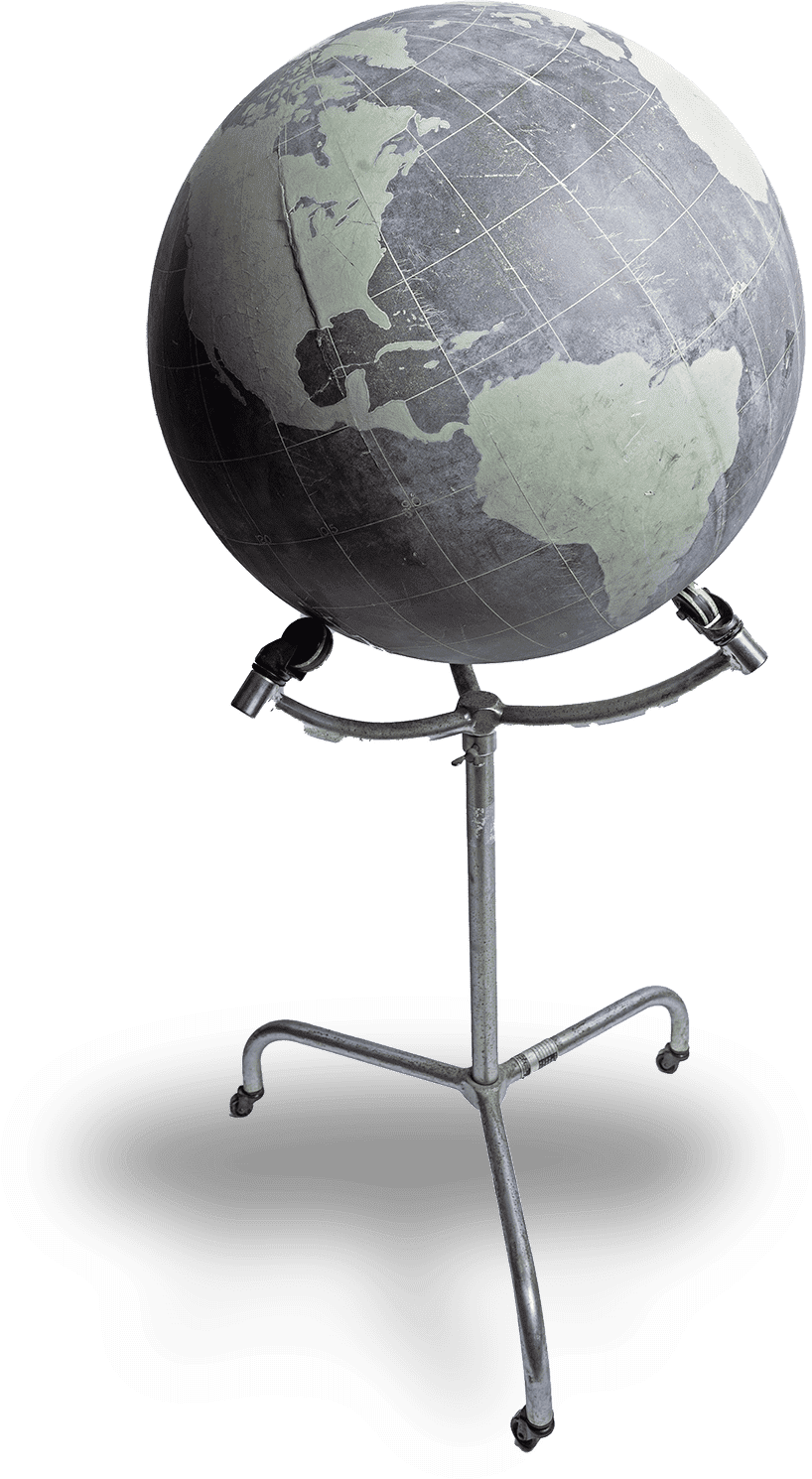
3. The blackboard globe
Before the advent of satellites and computer models, ocean currents were best illustrated using chalk and blackboards.
This swiveling blackboard globe was a prime tool of WHOI oceanographer Henry Stommel, who famously used it to illustrate how ocean currents were intensified by the Coriolis effect — the apparent curvature of forces like wind caused by the Earth’s rotation (c.1948).
4. One of the first models of the bathythermograph
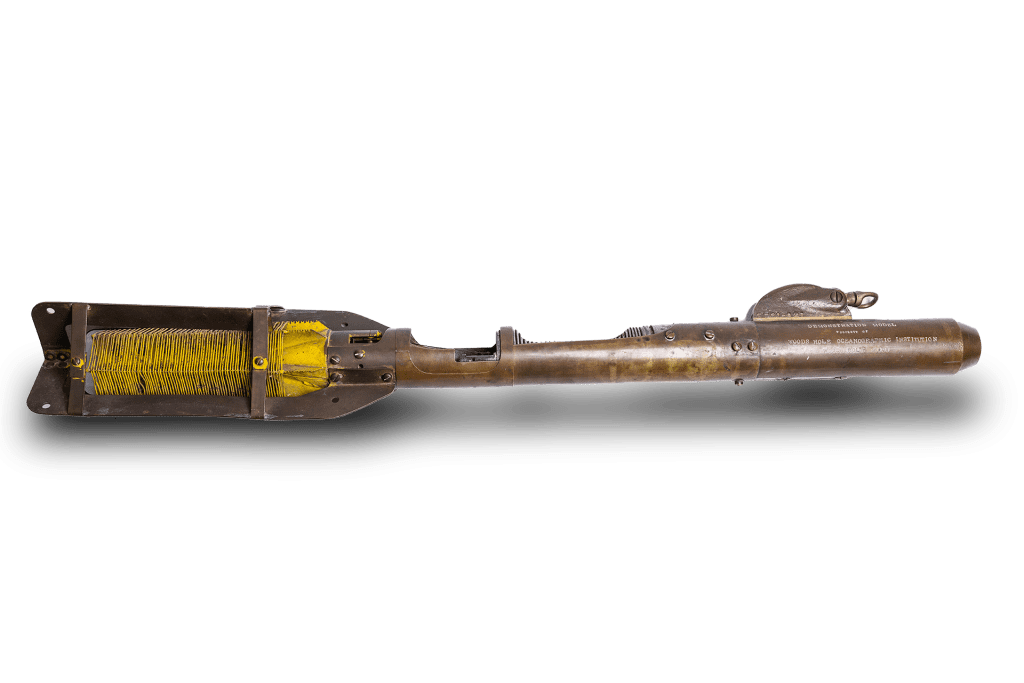
The bathythermograph was invented in 1938 by WHOI oceanographer and engineer Athelstan Spilhaus to measure changes in ocean temperature across depths. That data proved useful to the U.S. Naval officers, who learned their submarines could avoid detection by enemy vessels while traveling below steep temperature gradients called thermoclines. This particular model was used by WHOI to train ensigns in the U.S. Navy. It was later returned to the institution by one of the program’s former pupils, Henry Roenke.
5. The R/V Atlantis plaque that flew to space
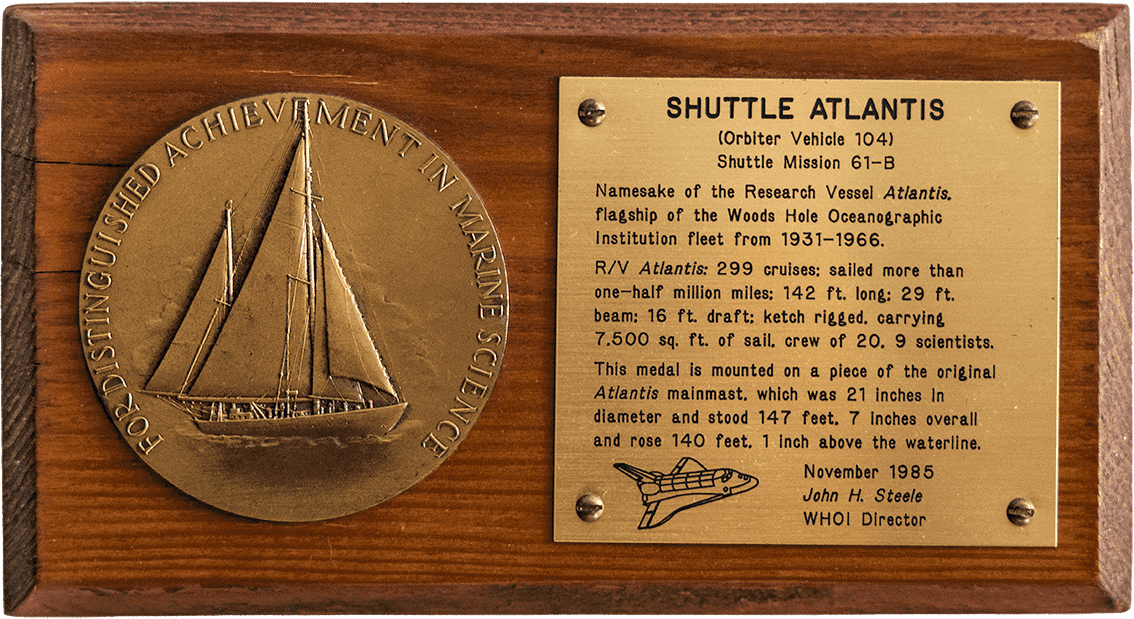
 Ocean scientists and astronauts share a unique love for exploring unknown frontiers. Because of this, WHOI and NASA have a long history of honoring their fellow explorers. In November 1985, astronauts paid a visit to WHOI and collected a plaque that used to sit aboard the institution’s inaugural research vessel, Atlantis I—often considered one of America’s first interdisciplinary ships committed to oceanographic exploration. One month later, that plaque blasted off to space aboard the namesake Atlantis space shuttle. WHOI has returned the honor, most recently with the christening of its youngest ocean-class research vessel in 2015. That ship was named after a well-known astronaut, Neil Armstrong.
Ocean scientists and astronauts share a unique love for exploring unknown frontiers. Because of this, WHOI and NASA have a long history of honoring their fellow explorers. In November 1985, astronauts paid a visit to WHOI and collected a plaque that used to sit aboard the institution’s inaugural research vessel, Atlantis I—often considered one of America’s first interdisciplinary ships committed to oceanographic exploration. One month later, that plaque blasted off to space aboard the namesake Atlantis space shuttle. WHOI has returned the honor, most recently with the christening of its youngest ocean-class research vessel in 2015. That ship was named after a well-known astronaut, Neil Armstrong.
6. The controller from HOV Alvin’s first manipulator arm
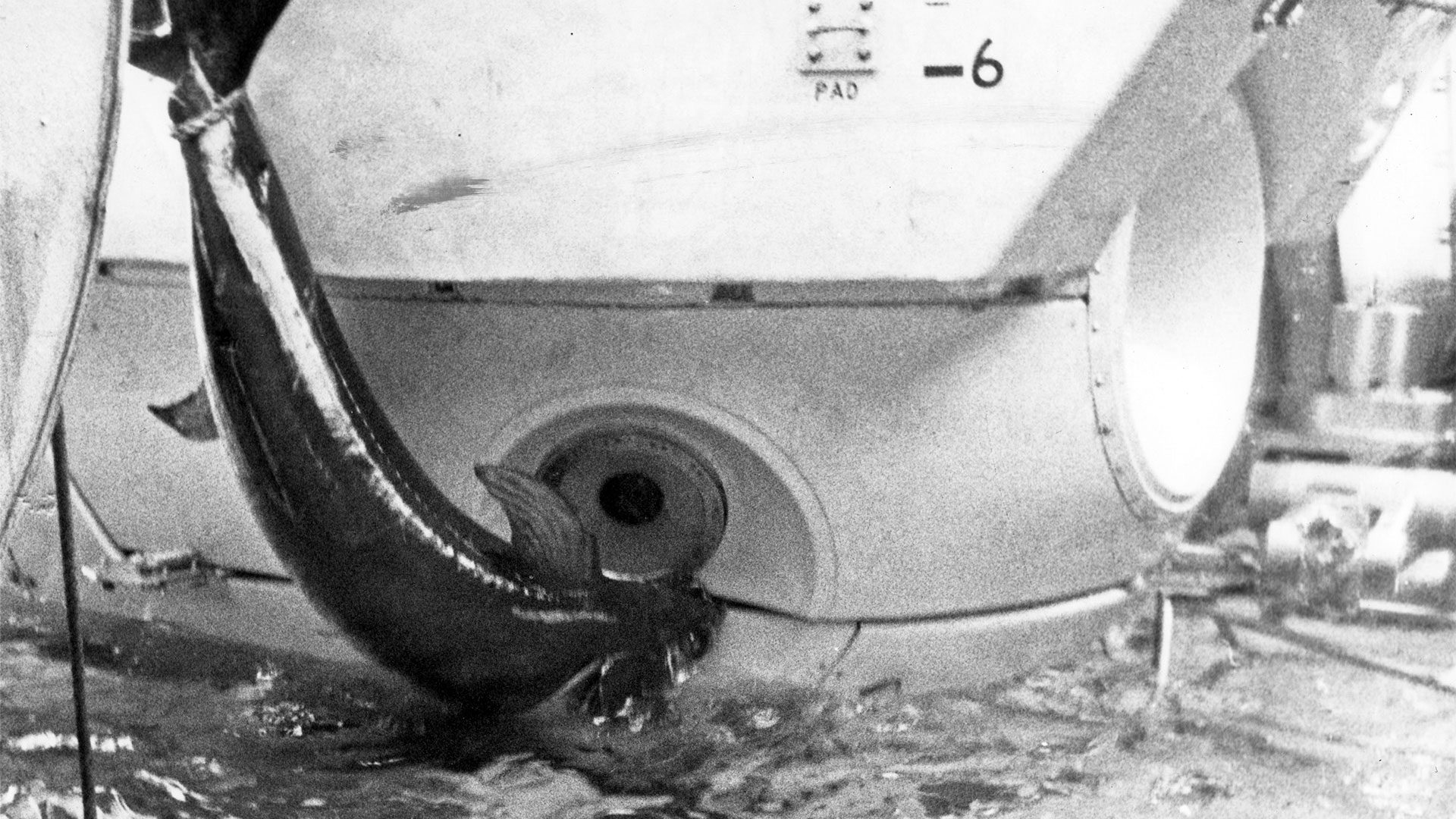
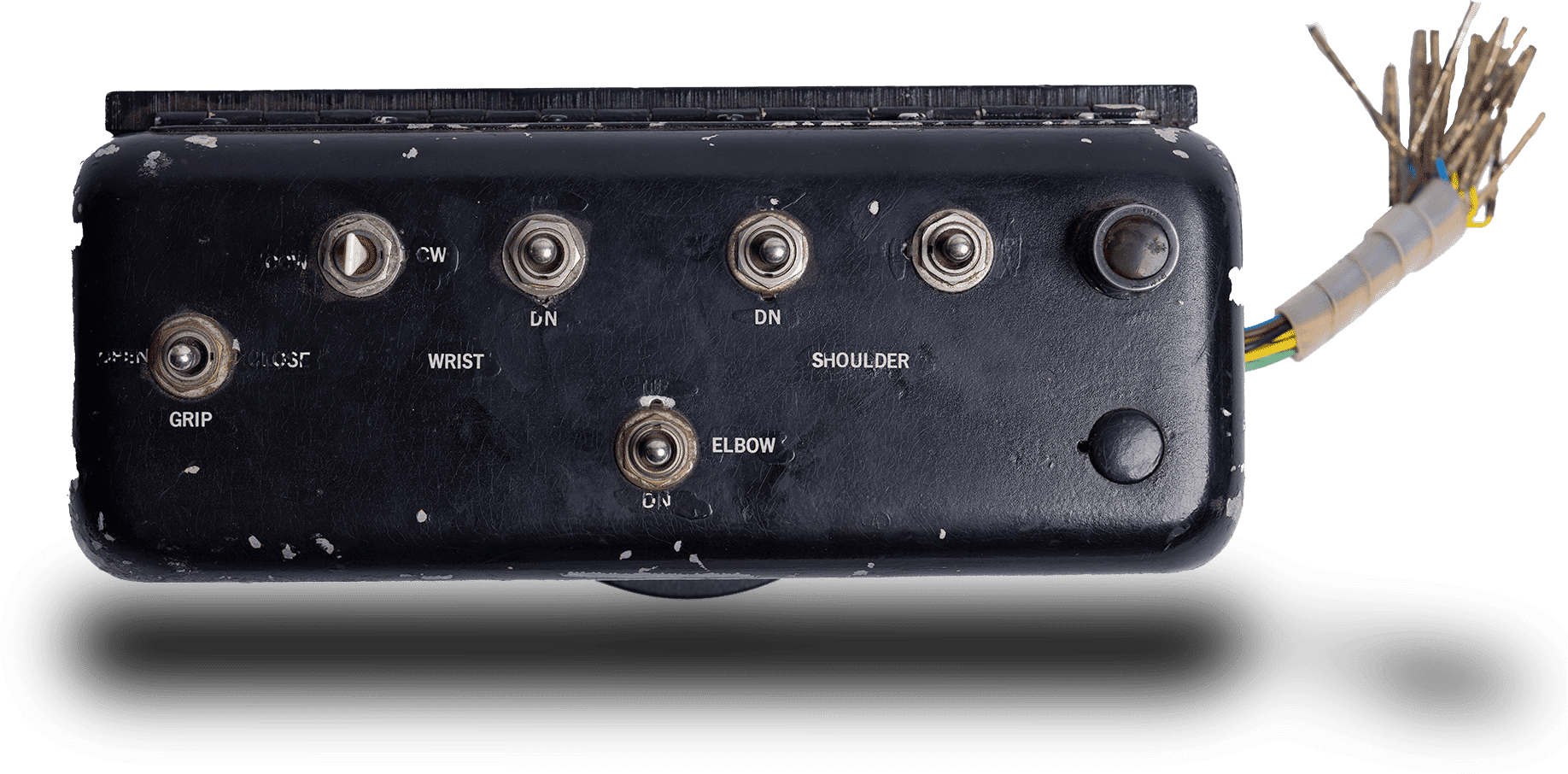
 In 1964, the U.S. Navy joined WHOI in commissioning the institution’s first human-occupied vehicle, (HOV) Alvin.
For the first time, explorers could access never-before-seen ecosystems, from hydrothermal vents to marine canyons. Eventually, scientists realized they needed a way to reliably collect samples from these places.To this end, WHOI engineer Harold "Bud" Froehlich designed the vehicle’s first manipulator arm. The controller (pictured here) was briefly lost during a dive September, 1967, only to be recovered one month later. In Room 71, it now serves as a memento of Alvin’s first appendage.
In 1964, the U.S. Navy joined WHOI in commissioning the institution’s first human-occupied vehicle, (HOV) Alvin.
For the first time, explorers could access never-before-seen ecosystems, from hydrothermal vents to marine canyons. Eventually, scientists realized they needed a way to reliably collect samples from these places.To this end, WHOI engineer Harold "Bud" Froehlich designed the vehicle’s first manipulator arm. The controller (pictured here) was briefly lost during a dive September, 1967, only to be recovered one month later. In Room 71, it now serves as a memento of Alvin’s first appendage.
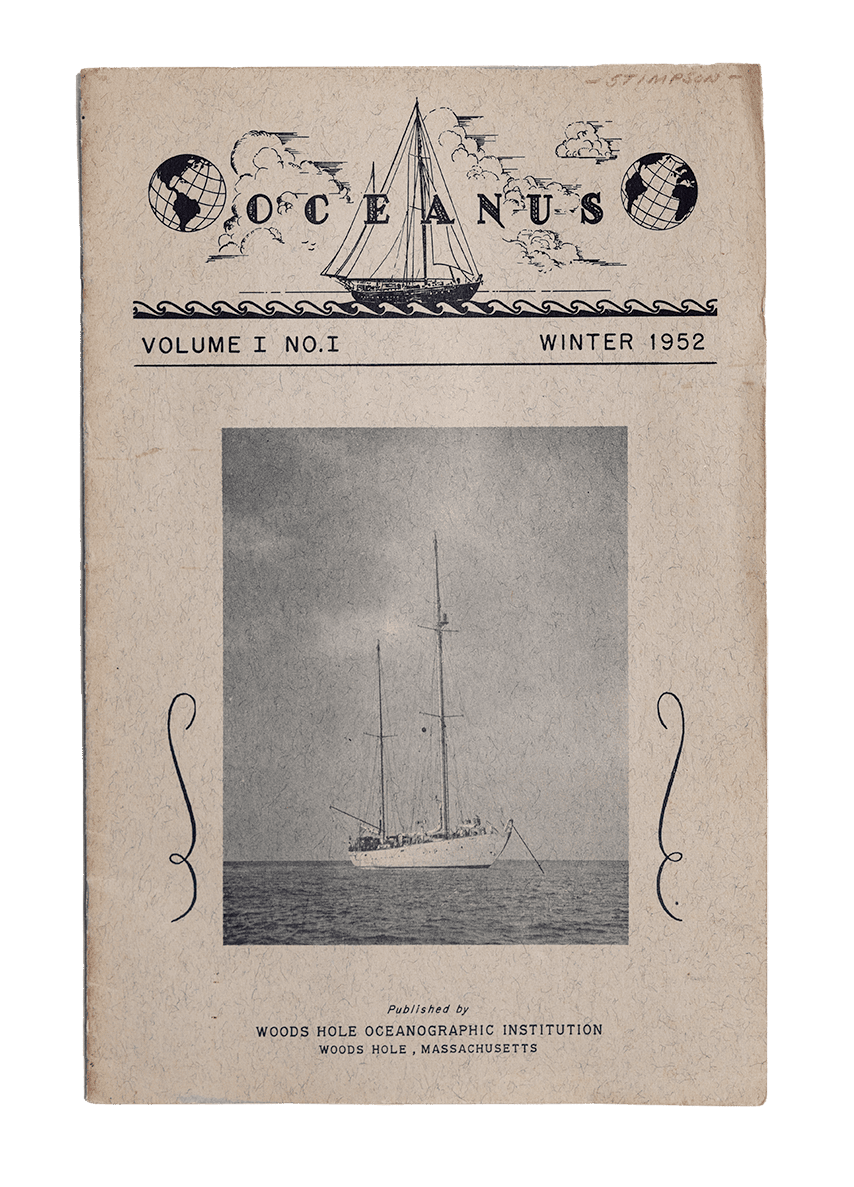
7. The first issue of Oceanus Magazine
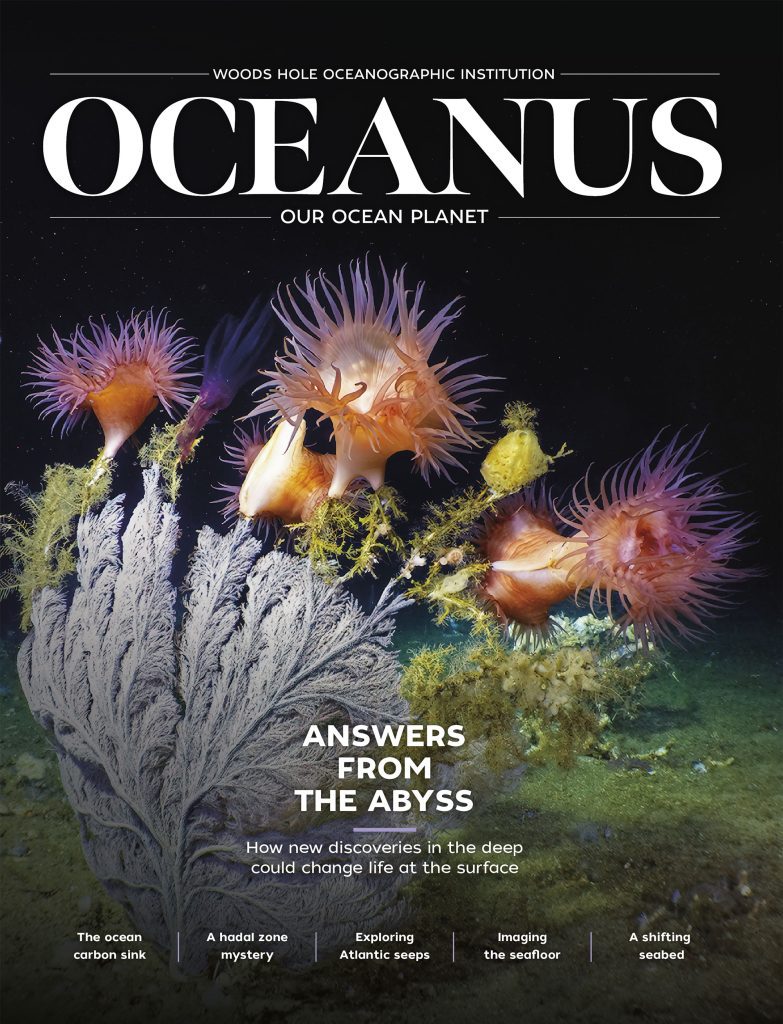
The first issue of Oceanus Magazine was published in 1952 under the editorial guidance of WHOI’s first public information officer, Jan Hahn. Produced quarterly, the magazine initially provided dues-paying WHOI supporters with updates on research and at-sea fieldwork. Hahn oversaw the first 57 issues, until 1974, when his successor, William MacLeish, wisely shifted the magazine from an institution-only publication to a subscription-based model meant for general readership. Today, Oceanus remains the longest-running ocean science magazine in the world.
CORRECTION
May 29, 2026 - In the first section, the original text mistakenly identified the American Photojournalist Ernst Haas as Bigelow's supposed inspiration, rather than German zoologist Ernst Haeckel.