An Ocean Warmer Than a Hot Tub
Ocean temperatures once may have reached 107°F. Could they again?
Scientists have found evidence that tropical Atlantic Ocean temperatures may have once reached 107°F (42°C)—about 25°F (14°C) higher than today. The surprisingly high ocean temperatures occurred millions of years ago when carbon dioxide levels in Earth’s atmosphere were high, the scientists said.
The findings, if confirmed, indicate that future ocean warming from the buildup of heat-trapping carbon dioxide may be much greater than predicted by computer models now used by scientists and policymakers to forecast climate change.
“These temperatures are off the charts from what we’ve seen before,” Karen Bice, a paleoclimatologist at Woods Hole Oceanographic Institution, reported Feb. 17 at the annual meeting of the American Association for the Advancement of Science. She was also lead author of a study to be published this spring in the journal Paleoceanography. “If the models are not right, society is not well informed or well served.”
Warmer ocean temperatures cause more evaporation, which could shift where and how much precipitation falls and could generate more intense hurricanes and winter storms, Bice said.
High carbon dioxide levels
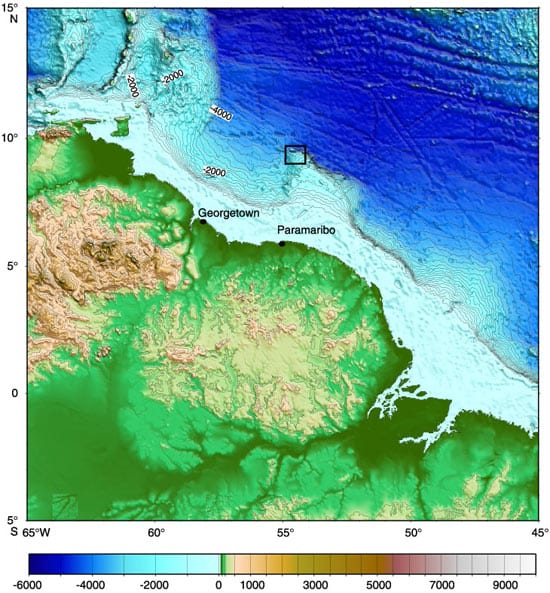
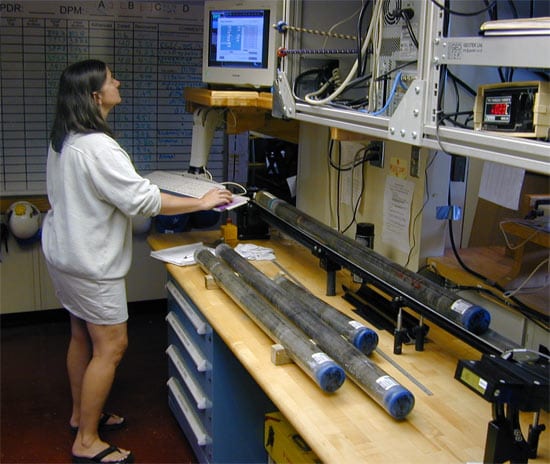
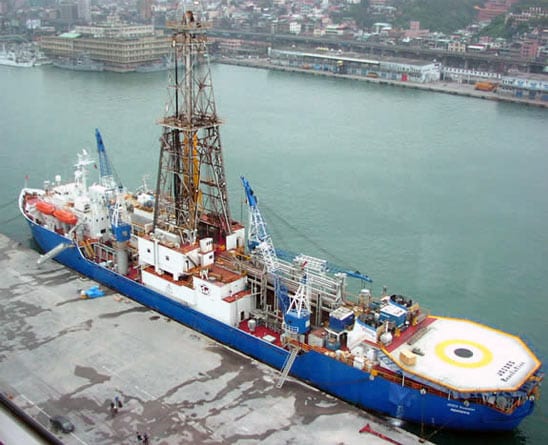
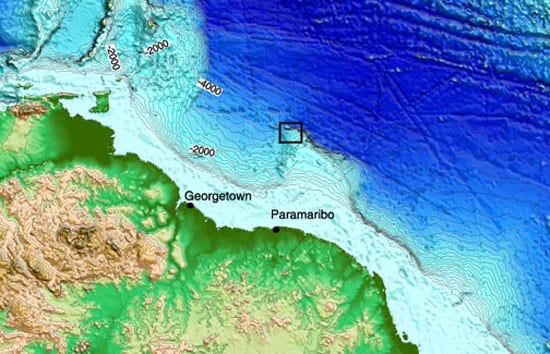
To determine ancient ocean temperatures, a multi-institutional team of scientists analyzed three long sediment columns cored from the seafloor off Suriname, in northeast South America, by the international Ocean Drilling Program’s drillship JOIDES Resolution.
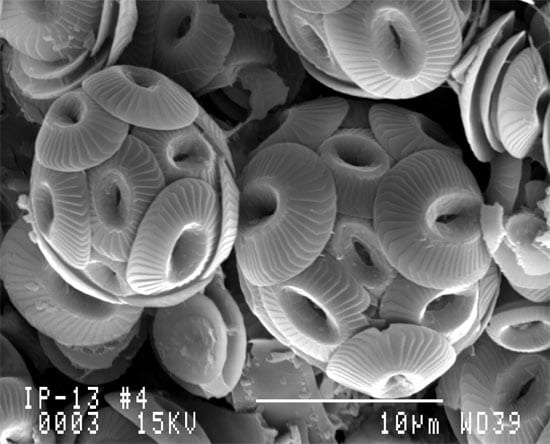
The sediments contained both carbon-rich organic matter and the fossilized shells of microscopic marine organisms that had settled and piled up on the seafloor over tens of millions of years.
The scientists analyzed the shells’ chemistry, which changes along with temperature changes in the surface waters where they lived. They determined that ocean temperatures in the region ranged between 91° and 107°F (33° and 42°C) between 84 million and 100 million years ago, in an era when dinosaurs roamed the Earth. In the same region now, temperatures range between 75° and 82°F (24° and 28°C).
For the first time, scientists used the same sample to estimate ocean temperatures and atmospheric CO2 levels, and thereby precisely correlated both phenomena. Analyses of organic matter from the sediments revealed that CO2 levels during the same time span were 1,300 to 2,300 parts per million (ppm), compared with 380 ppm today.
How reliable are current climate forecast models?
The findings question the reliability of well-accepted models that simulate global climate. When 1,300 to 2,300 ppm of carbon dioxide is factored into the models, they do not produce such high ocean temperatures.
“The climate models underestimate temperatures and the amount of warming that would accompany a CO2 increase more than 1000 ppm above today’s level,” Bice said.”
Current models may be missing a critical factor that amplifies heating, Bice said. During past warm periods, oceans and wetlands may have released large amounts of methane gas to the atmosphere. Methane traps heat 10 times more effectively than carbon dioxide.
But even when extraordinarily high concentrations of methane are factored into current models, they still fail to reproduce ocean temperatures as high as 107°F. That suggests that the models may underestimate the climate system’s response to increased greenhouse gases.
“This study addresses how the ocean-climate system changed in the past, long before people had any impacts,” said paleoceanographer Mark Leckie of the University of Massachusetts, Amherst, who reviewed the study for Paleooceanography. “I think Karen’s research should be another wake-up call to the rate at which we are changing the system today.”
The research was funded by the WHOI Ocean and Climate Change Institute and a WHOI independent study award. Funding was also provided by the U.S. Science Support Program of Joint Oceanographic Institutions, The Andrew W. Mellon Foundation Endowed Fund for Innovative Research, and Deutsche Forschungsgemeinschaft through Research Center Ocean Margins.
Slideshow