Ships in the Strait of Hormuz are becoming invasive species breeding grounds
As cargo ships sit idle in the Strait of Hormuz, their submerged hulls become home to an astonishing diversity of marine life—some that could invade distant ecosystems
Estimated reading time: 3 minutes
From above, the cargo ship appears lifeless as it sits idle in the Persian Gulf.
Since it became stranded in April, its engines have gone silent, its cargo holds are eerily silent, and crew members are trying to pass the time with maintenance tasks and exercise routines.
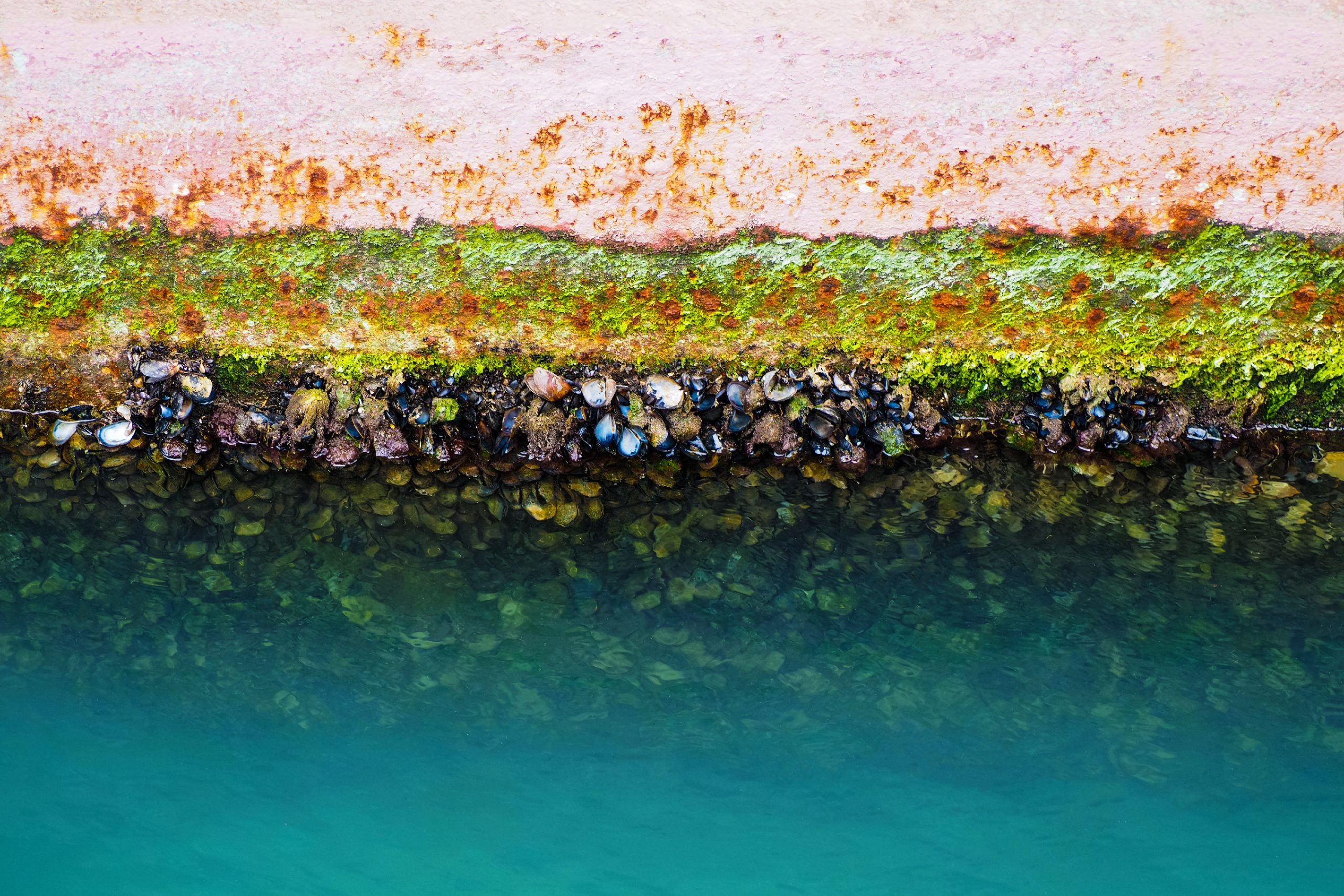
But beneath the waterline, life is thriving. There, an underwater city is being built.
It all started within the first hours of the ship’s stoppage, when organic molecules from the surrounding seawater began sticking to the steel hull, forming a natural primer that other life can attach to. Within days, marine microbes and single-celled algae colonized the invisible layer, quickly forming a slimy greenish film—the kind you see on submerged rocks in a stream.
After a few more days, the biofilm became a prime landing spot for larval sea squirts and tubeworms, organisms that had been drifting through the ocean looking for a hard surface to settle on. Soon barnacles joined the party and took up residence on the idle ship. These initial colonists became landing pads for new animals and algae to grow on, transforming an hull into a dense, rich floating ecosystem. As the months passed, the underwater city grew thicker, taller, and wider, encouraging recruitment by mobile animals like crustaceans, snails, and bivalves.
The progression of life seems almost magical. But the reality is that once the ship starts moving again, these tiny hitchhikers could end up halfway around the world, in places where they’re not supposed to be. Places they would never get to on their own. And that has scientists worried.
Particularly the scientists who worked on a recent study in the journal Biological Invasions, warning that ships stuck in the Strait of Hormuz could eventually spread invasive marine species worldwide.
“The sitting is a big issue,” said Carolyn Tepolt, a marine biologist and invasive species expert at WHOI who contributed to the study. “Stuff grows pretty fast on stationary surfaces underwater, so there’s a lot of concern that when these ships are able to leave, they’ll be moving to the next ports with a much richer ecological community than they would normally have.”
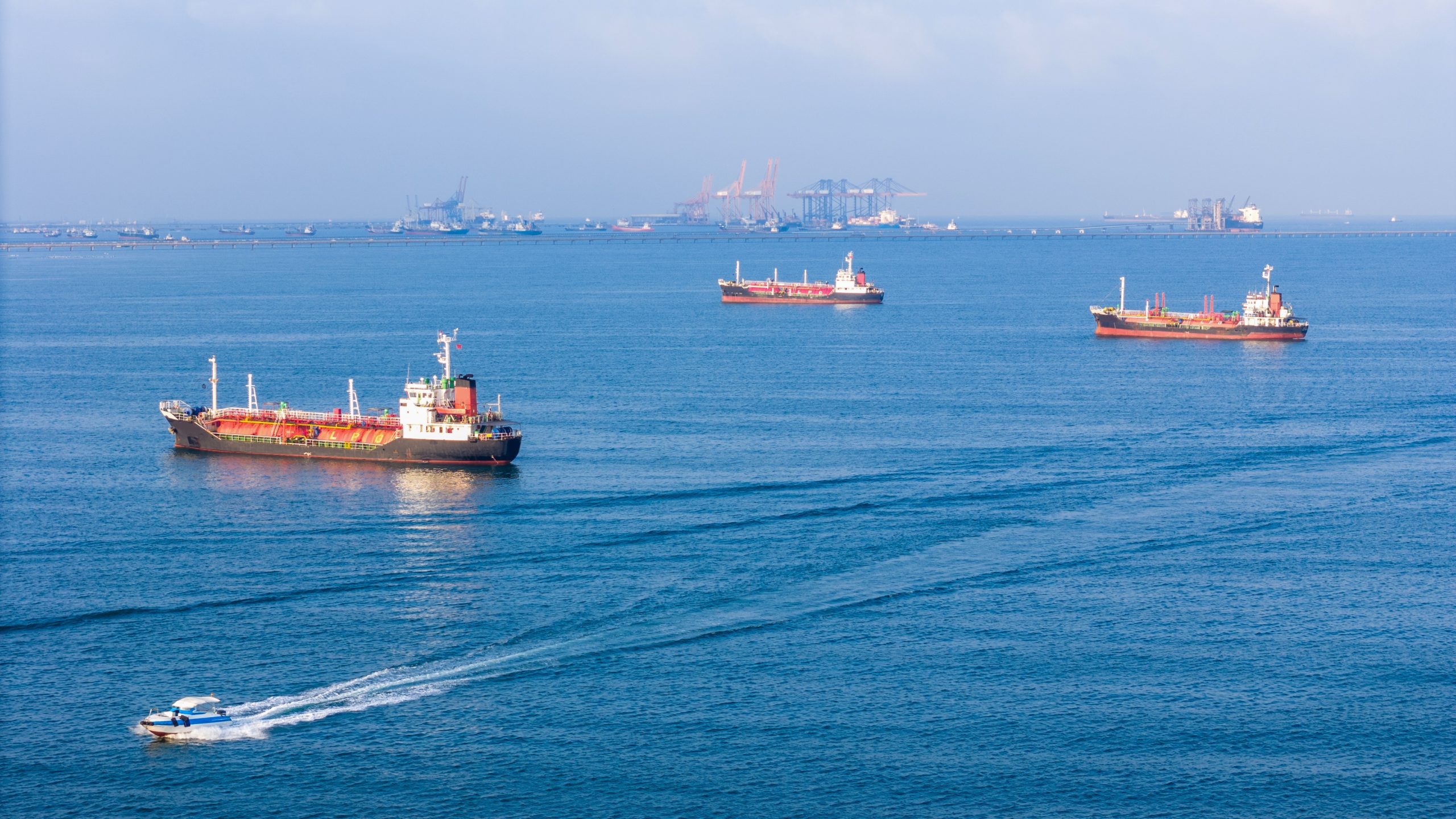
Commercial ships usually pass through ports quickly, limiting the amount of marine life that can accumulate on their hulls. But with the Strait of Hormuz closed due to the U.S.-Iran conflict, there have been an unusually large number of idle ships in the Persian Gulf—estimates suggest somewhere between 1,500-2,000. Those ships are capable of spreading invasive marine species in what the study refers to as a potential “bioinvasion super-spreader event.”
“This is scary due to the size and number of ships, the global reach, and the time of year,” said Mario Tamburri, a marine ecologist at the University of Maryland and lead author of the paper. He explained that in the Persian Gulf, the spring and early summer months is a period of peak reproductivity. “Everything with this was the worst-case scenario.”
But once the backlog of ships is cleared, which species will truly become invaders, and where? According to Tamburri, it’s hard to know. “There are many variables,” he said, “like whether there are suitable environmental conditions for the organisms in the receiving location, the time of year and season they arrive, and the number of individual non-natives introduced.”
Even widespread marine species—or “cosmopolitans” as Tepolt referred to them—could present bigger problems even in places where they already exist.
“You can’t necessarily say that we’re not worried about introducing species that are already present in a certain location,” she said. “There could be some additional impacts by moving distinct genetic variants of a species and introducing diversity that way.”
Tepolt and Tamburri both agree that ideally, at least some of the ships get their biofouled hulls cleaned before they reach new ports and the organisms have a chance to invade. There’s a strong financial incentive among ship operators to do so, given the added fuel costs associated with the roughness and drag on a biofouled hull.
“If you can clean your hull safely and effectively, that’s wonderful,” said Tamburri. “But the ships in the Gulf have limited options, and their first priority is to get the ship and crew out of there safely.”
For now, though, life below the waterline isn’t standing still. On hull after hull, these underwater communities continue to expand, quietly flourishing in the warm, salty waters of the Persian Gulf while scientists watch and wonder where they'll end up next.

MEET THE AUTHOR Evan Lubofsky
Evan Lubofsky is a science writer and editor at Woods Hole Oceanographic Institution. After studying journalism at UMass Amherst, he began writing about sensor and...
Read more