Sampling Gulf Stream plankton, one teaspoon at a time
Three questions with marine research technician Emily Peacock
Estimated reading time: 4 minutes
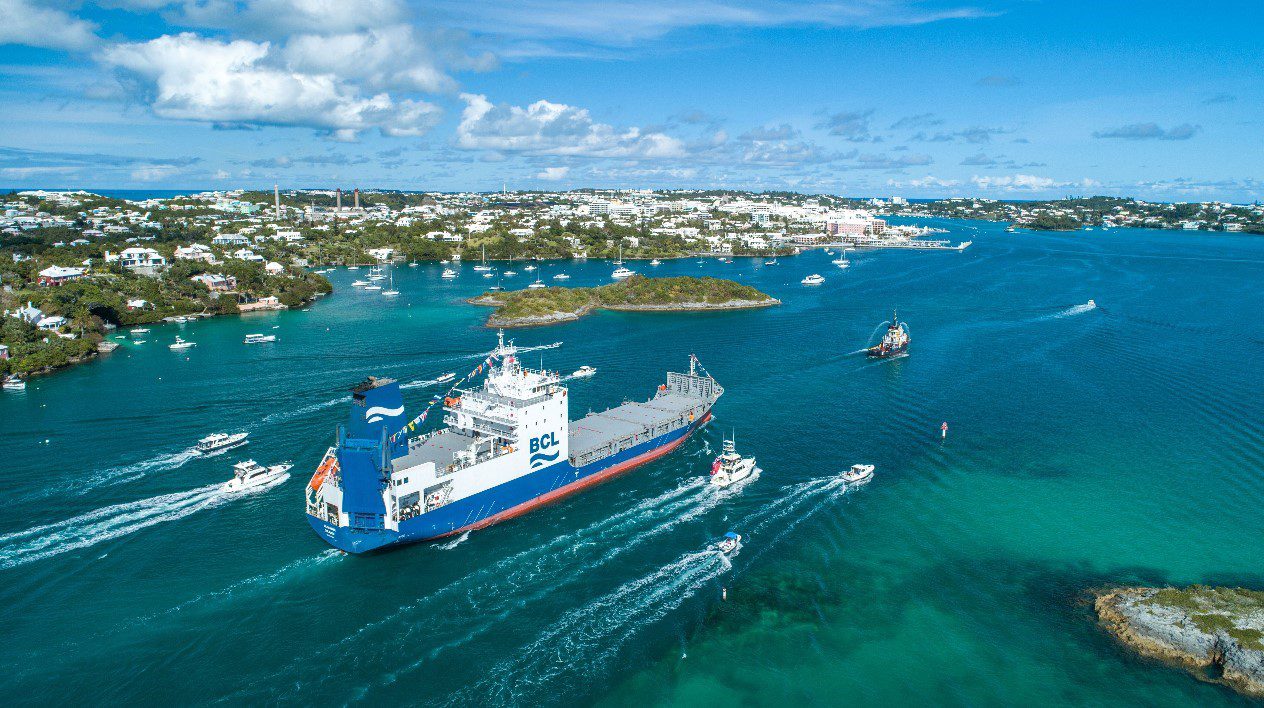
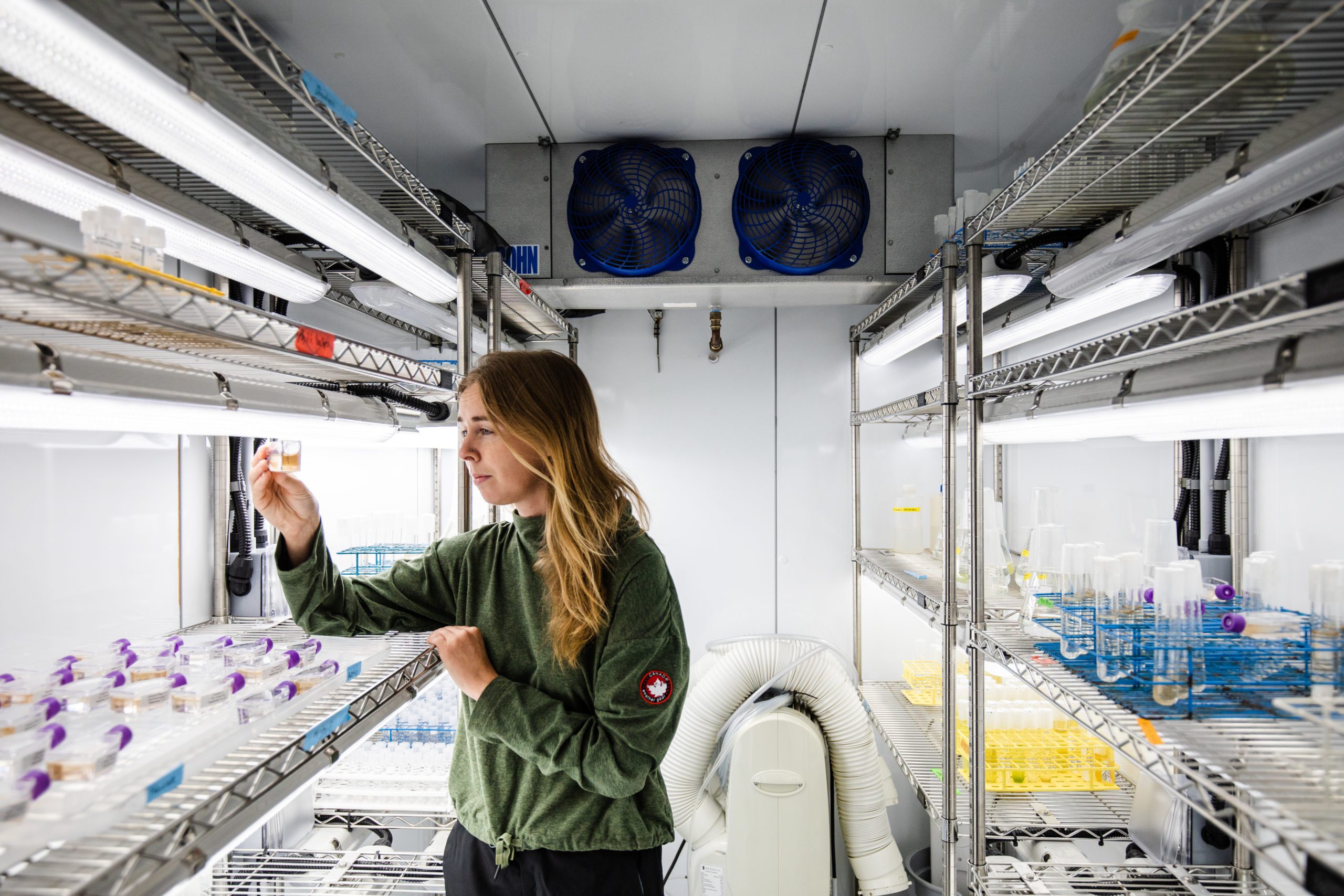
A large part of Emily Peacock’s work focuses on installing autonomous samplers of microscopic ocean life on ships and training image-recognition programs to classify the images it collects. As a research technician studying plankton in Heidi Sosik’s lab, Peacock recently played a role in installing an Imaging FlowCytobot (IFCB) on the Oleander, a container ship that travels between New Jersey and Bermuda weekly. The Oleander is owned and operated by the Bermuda Container Line and has carried scientific instruments collecting biological, chemical, and physical marine data, since the 1970s. The installation of the IFCB was made possible by funding from the shipping company CMA CGM. Oceanus sat down with Peacock to hear more about this partnership.
What is the Imaging FlowCytobot?
It’s a plankton sampler that we call IFCB for short. Every twenty minutes it draws up about a teaspoon of water and takes images of the phytoplankton and some microzooplankton. The first one was designed at WHOI, but now they are made by McLane Research Laboratories, Inc.
The IFCB can be used short-term on research cruises, in a permanent location like the Martha’s Vineyard Coastal Observatory, or long-term on a ship like the Oleander. Once it’s installed, an IFCB only needs servicing about once every six months. It sends the images it collects to shore in near-real time, and then we use a Convolutional Neural Network (CNN), that can recognize and classify the images.
I did a lot of work building image training sets for the CNN. That is a part of my job that I really like doing. I kind of work on both ends of this process, getting instruments out on ships and then making sure we have good classifications of the images. I worked with a whole team of collaborators at WHOI, Bermuda Institute of Ocean Sciences (BIOS), and the crew of the Oleander to get an IFCB installed there.
What does the IFCB add to the sampling equipment on the Oleander?
There is so much to learn about the plankton dynamics as the ship crosses the Gulf Stream twice a week. We see what is living on the continental shelf, what's at the edge of the north side of the Gulf Stream, across, and then on the other side. We've seen some interesting peaks so far of all the plankton types. We really haven't had that type of data available before. Many decades of physical oceanography data have been gathered by other instruments on the Oleander. Adding these plankton measurements is really, really cool.
We get IFCB systems ready for research vessels all the time, but installing one on a container ship like the Oleander is unique. The space that was allocated is in the engine room, rather than a lab designed for science. The camera, laser, and the sensors all must be carefully aligned, or it won’t work correctly. We were concerned about the heat and vibration. We added a bit of extra padding, a cooling system, and so far, it’s worked. We also had to add a diaphragm pump to bring seawater in. The ship already had an impeller pump, but with that some of the plankton will get damaged, or maybe some things won't survive to have their picture taken at all.
What value does a partnership like this have for your work?
The cost of sending a research vessel like the Armstrong to Bermuda and back each week and paying staff would be very expensive. With a partnership like this, we take a couple days a couple times a year to go to the port in New Jersey to set things up. Our colleagues at BIOS check on the science gear on the ship when it’s in Bermuda. They are usually pretty busy on Mondays! We get months of data from twice-weekly crossings.
It’s exciting when we open the IFCB dashboard where all the images from the Oleander have been logged, and there's something unexpected, and the image quality is great. Everybody is a little excited and we might send around a quick email: “Did you see this?” Maybe some diatom is having a lot of auxospores, or something like that.
Adding phytoplankton to the existing time series from the Oleander is magical, really. I go to the Oleander meetings with the scientists who started this, and they are mostly talking about physical oceanography, which is less familiar to me, but they are clearly so excited about their work. And then we’re like “but wait, phytoplankton,” and they're like, "Oh, that fits in too.”
Other members of the team that and installed and maintains the IFCB on the Oleander: Heidi Sosik (WHOI), principle investigator; Magdelena Andres (WHOI, Science RoCS), principal investigator; Taylor Crockford (WHOI), prepping IFCBs for long-term deployment; Alexi Shalapyonok (WHOI), advisor emeritus; Snehal Prabhu (WHOI Ocean Vital Signs Network Tech Fellow), Rebecca Hudak (Science RoCS), Joe Garcia (WHOI Ocean Vital Signs Network Tech Fellow), networking, data downloads, and communications; Nathan Figueroa (WHOI) automating IFCB sampling with PhytoArm; Matt Enright and Tim Noyes (BIOS) visit the ship every Monday to check on sensors for all the programs aboard.