From ruin to reef
Studies of Pacific ship and plane wrecks provide insights on coral ecosystems and the potential for pollution
By Amy E. Nevala | October 31, 2025
During just six years of World War II, thousands of ships and tens of thousands of airplanes were lost across the Pacific. Some sank in naval battles or from submarine torpedoes or aerial bombs. Others went down in dogfights or kamikaze attacks. Many more succumbed to storms, fuel shortages, or mechanical failures, with lives lost from the United States, Japan, and European nations, as well as Australia, China, and New Zealand.
Today ship and plane wrecks lie scattered across the Pacific, serving as war graves, archeological sites, and stark reminders of the war’s scale. For WHOI biologist Kirstin Meyer-Kaiser, they are also “underappreciated habitats” and living laboratories of coral reef communities.
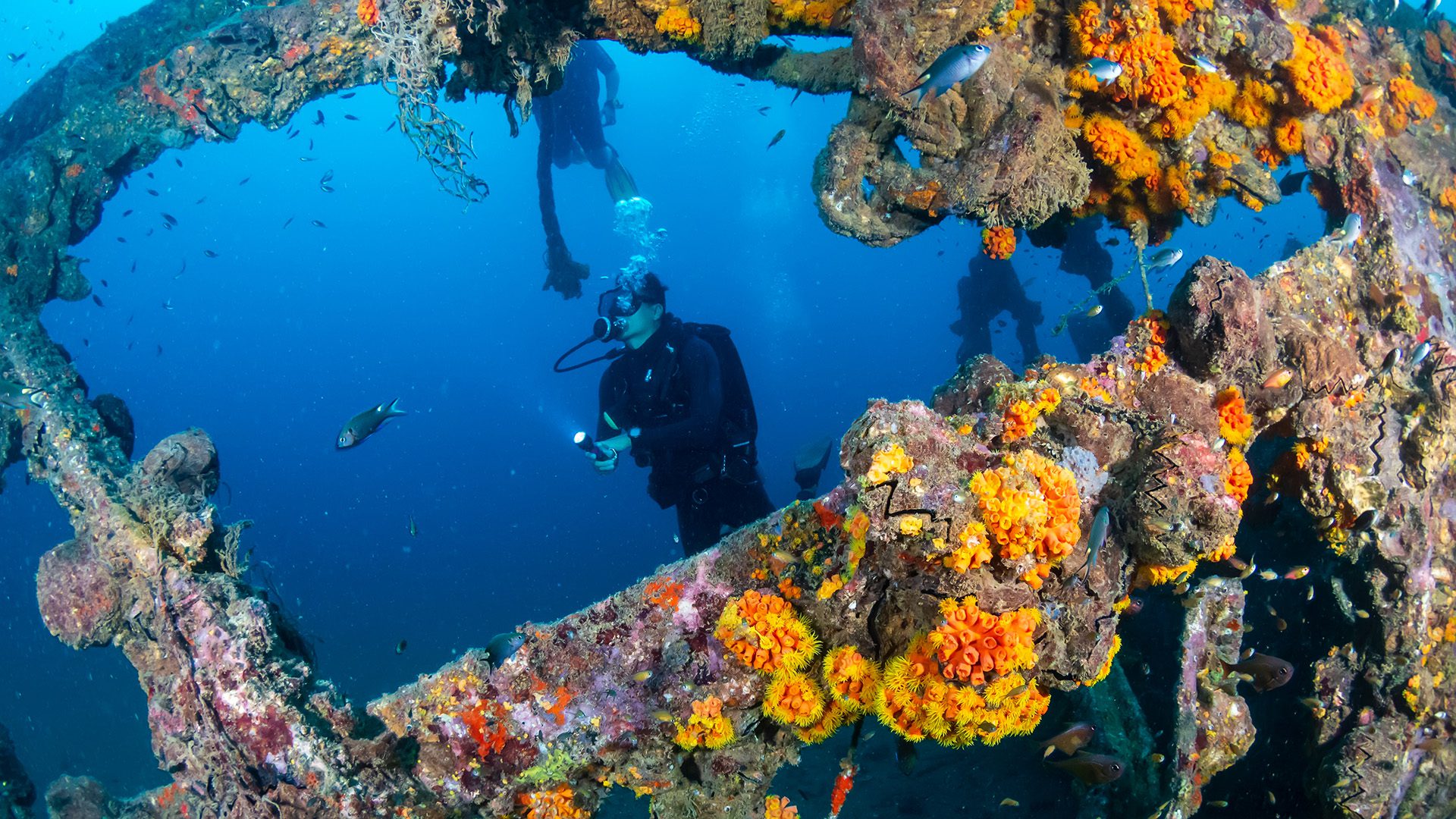
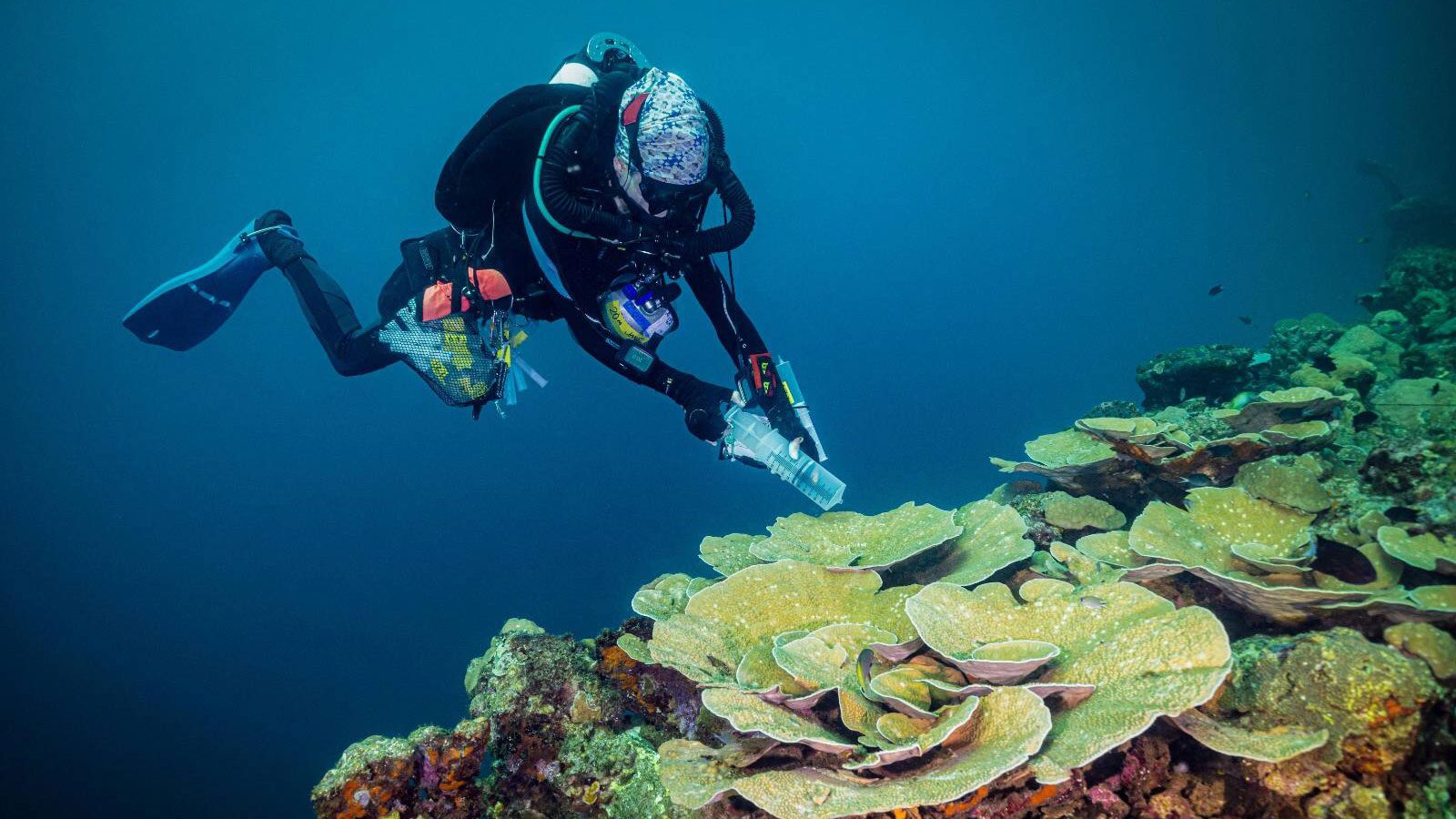
In Palau’s clear western Pacific lagoons, wrecks up to 300 feet (91 meters) in length remain visible and accessible to scientists like Meyer-Kaiser, more than 80 years after the last battle. Further south, in the Solomon Islands, she and a team of technical divers are also documenting reef ecosystems growing on wartime remnants on these isolated seafloor locations.
“Most wrecks are island-like, separated from natural hard-bottom habitats by expanses of sand and mud,” Meyer-Kaiser said of her 2022 work in Palau and, this summer, the Solomon Islands. Despite their isolation, drifting larvae from corals, sponges, and anemones settle on these metal surfaces, creating ideal sites to study how interconnected marine life expands and develops.
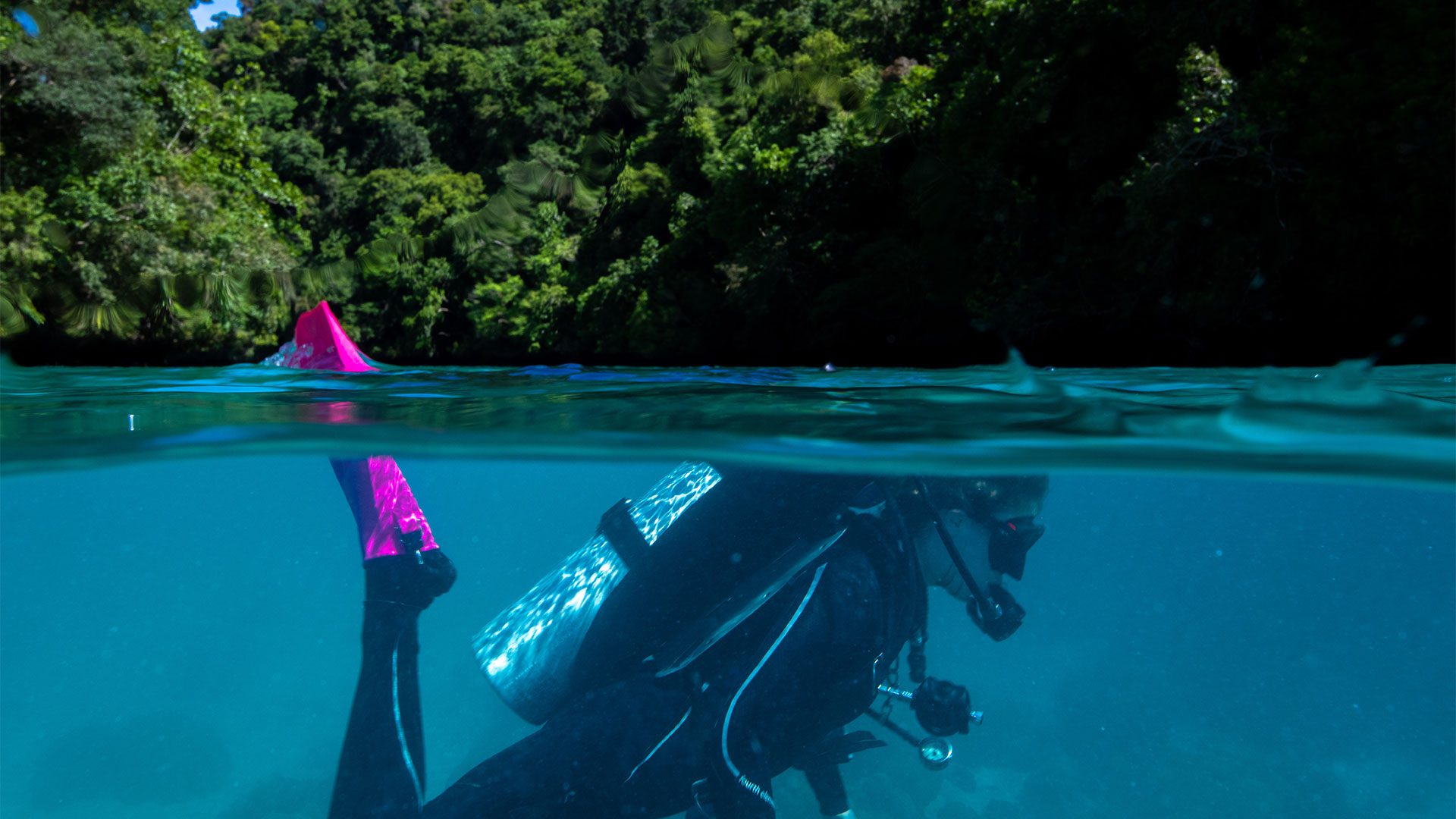
Meyer-Kaiser’s work on wrecks in Palau began three years ago during a six-week funded coral reef research expedition. On her days off, she dove on two nearby shipwrecks and one plane wreck located in shallow lagoons, photographing anemones, corals, and sponges along set transects to measure their size, density, and distribution. Last summer, biology student intern Olivia Quintin analyzed 1,600 of those images with grant support from Bridgewater State University.
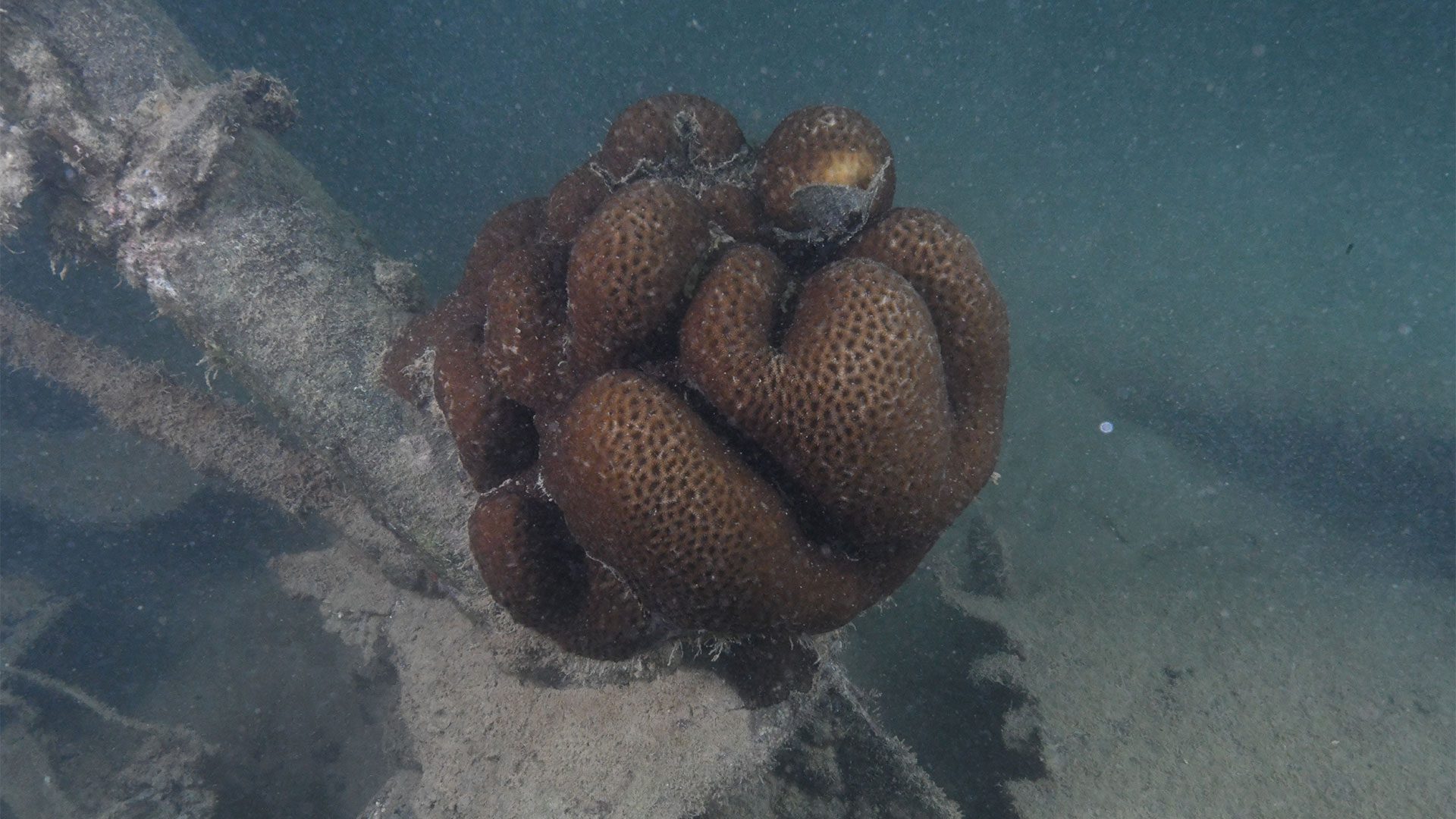
By comparing the wrecks to nearby reefs, the team found that their positions and structure influenced what grew there. In the ocean, as sediment and other debris falls from the surface, it accumulates and smothers some organisms or blocks them from the sunlight. As a result, vertical walls on wrecks often host more delicate, light dependent organisms, while flatter, horizontal decks collect more sediment.
“Together, these differences shape distinct communities on the vertical and horizontal faces of the wrecks,” Meyer-Kaiser said.
Materials also influenced growth. She found that steel ships supported denser marine life than aluminum planes, and small tissue samples revealed that corals absorb metals from their host structures, with higher iron and manganese on shipwrecks, and elevated aluminum in samples taken from plane debris.
“Though the sample size was small, the findings hint that metals from sunken vessels may subtly influence coral growth and health,” she said.
The research also provides information on the potential for pollution. As these wrecks enter their eighth decade under seawater, oil leaks from corroding fuel tanks become an increasing concern to nearby islanders. WHOI marine chemist Chris Reddy, an expert in oil spills and pollution, estimates that more than 3,800 war wrecks still contain oil. (One, the USS Arizona at Pearl Harbor in Hawaii, slowly seeps from a tank still holding an estimated 600,000 gallons of heavy fuel oil, enough fuel to fill an Olympic pool).
In August, Meyer-Kaiser built on her work in Palau when she joined technical diver and marine archeologist Matt Carter in the Solomon Islands to capture ultra-high-resolution images of shipwrecks for three-dimensional models. These models will help to determine which vessels pose the greatest leak risks, and subsequently, help to develop mitigation strategies, such as enzyme-based oil biodegradation, slow-release containment, and the placement of early-warning leak sensors.
In the months ahead, Meyer-Kaiser, Reddy, and others will continue analyzing Solomon Island’s photographic data as well as water, oil, and microbial samples to understand how marine organisms accelerate or slow corrosion. Her collaborators include marine archeologist Calvin Mires, biogeochemist Colleen Hansel, and microbiologist Maria Pachiadaki through the WHOI initiative Shipwrecks and Beyond, which explores the ecological legacy of underwater cultural heritage.
“Most people hear ‘shipwreck’ and they think of the Titanic or treasure hunting,” Mires said. “They are far more than relics. They are intersections of history, ecology, and discovery, reminders of the past that shape the ocean today.”