3 questions with a former NASA astronaut
WHOI Corporation Member Sunita Williams discusses space exploration, ocean science, and environmental stewardship
Estimated reading time: 3 minutes
 This article printed in Oceanus Summer 2026
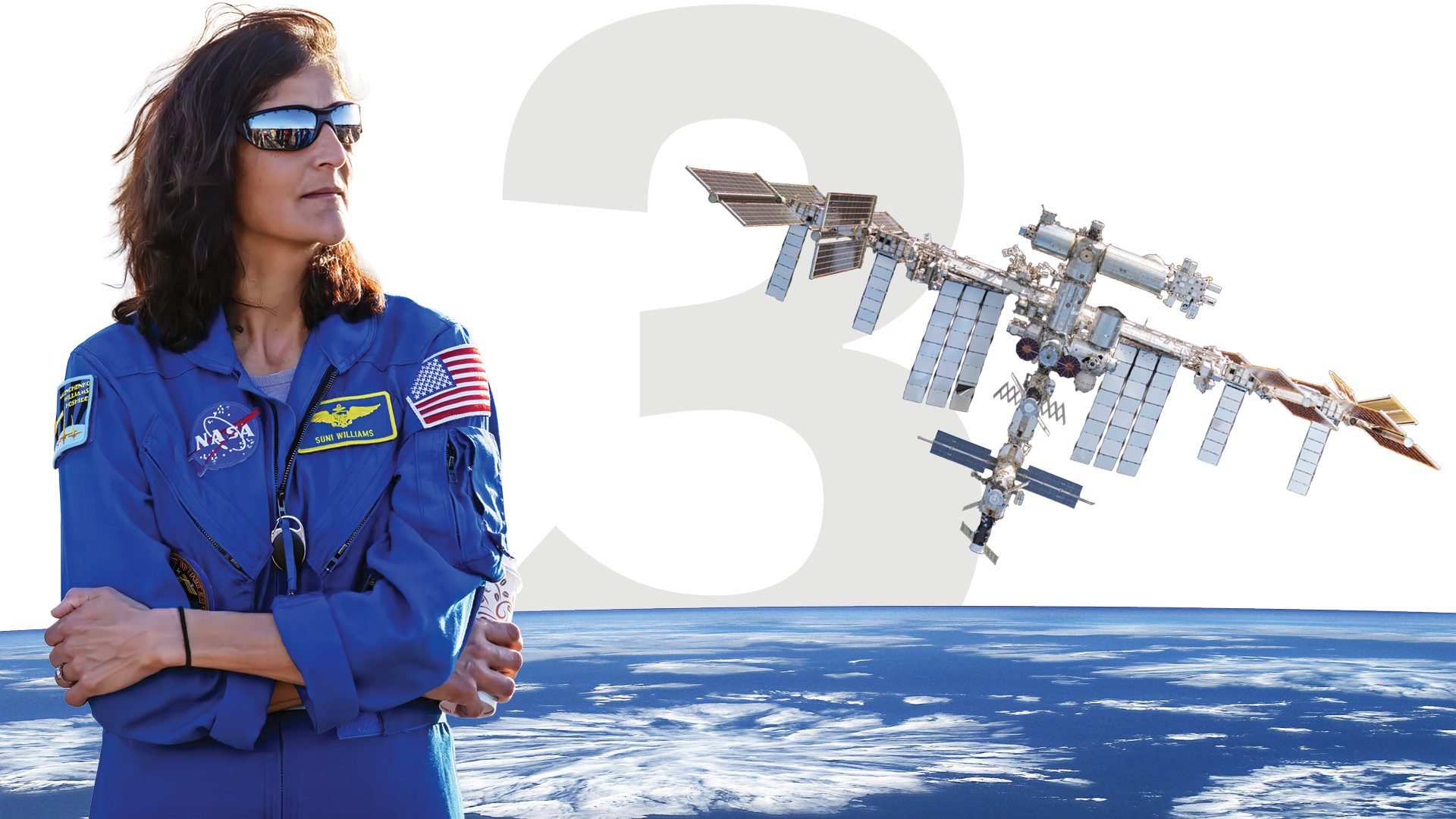
Sunita “Suni” Williams is a NASA astronaut (ret.), U.S. Navy test pilot, and commander of the International Space Station. During her career at NASA, she spent 608 days in space and completed nine spacewalks—giving her the most spacewalk time by a woman. She is also a member of the WHOI Corporation and the recipient of WHOI’s 2025 Science Champion Award. Oceanus sat down with her to discuss her work in space and her care for the ocean.
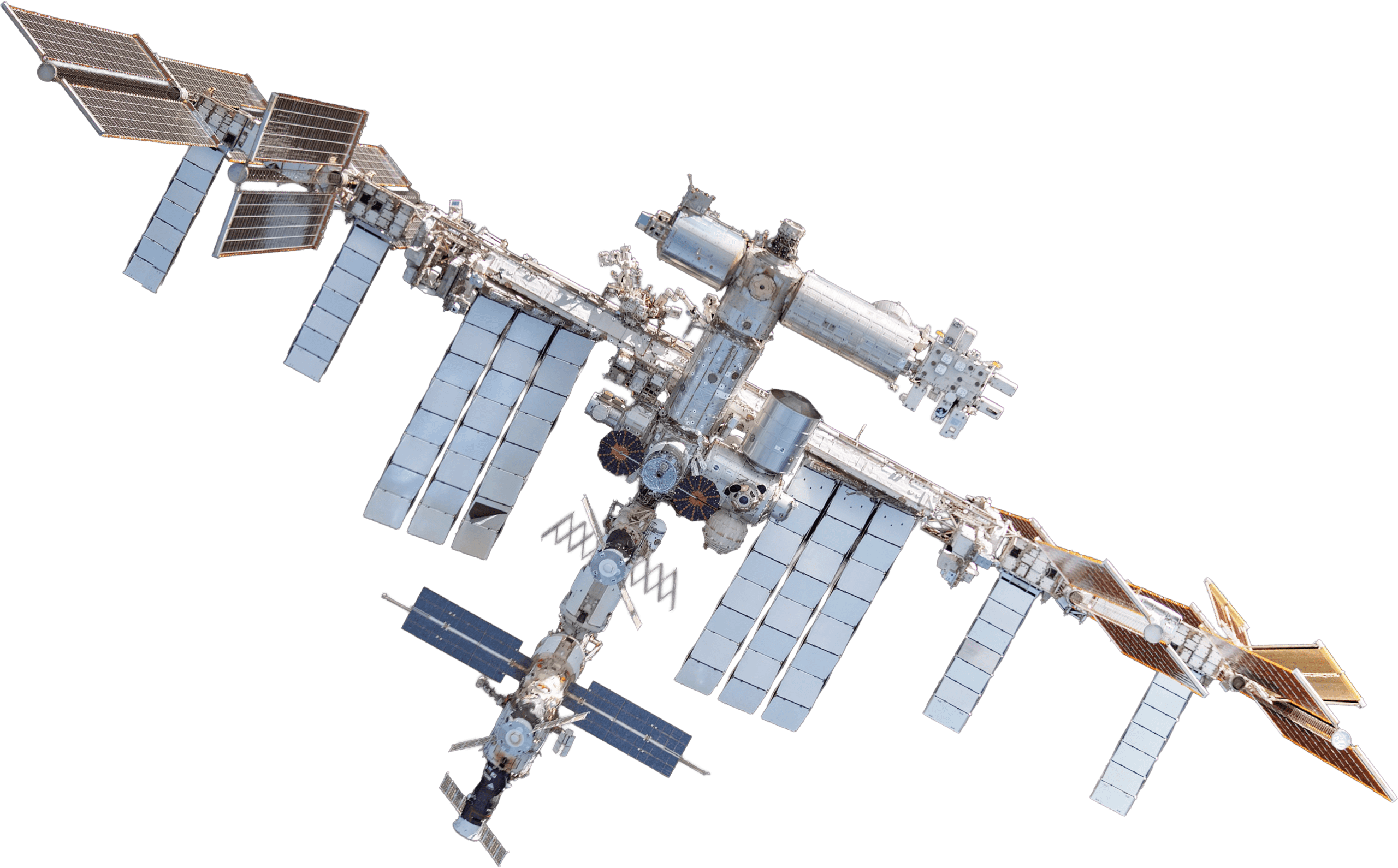
International Space Station. (Courtesy of NASA)
Q. How would you describe your relationship with the ocean?
I was just at the Kerala Literature Festival in India, giving a talk beside the Arabian Sea. It made me think of the WHOI map that shows how the ocean is one body of water. I was on the beach and was connected to where my sister swims near Woods Hole. The same water moves on this whole planet. I have ultimate respect for it. As an astronaut looking down at Earth from space, I see that the ocean is what allows us to be here. And as a swimmer, I know it’s powerful and can make or break you.
Q. Do you see parallels between ocean and space research?
Spacecrafts and research vessels are both exploration vehicles. We have traditions from the U.S. Navy on the International Space Station, just like ships going to sea. NASA is exploring space because we want to understand how to live and work there. Space provides us a medium to do really interesting experiments by taking gravity out of the equation. That science also helps us understand our life on Earth. Likewise, WHOI takes their ships and puts them wherever the action is—investigating the seafloor, the twilight zone, plants, animals, corals, or the sea itself. Like NASA, they bring that data back to understand further how we live on this planet.
When I am in space, I am the hands and eyes of scientists in a remote place. I try to be extremely meticulous whenever I am doing an experiment, so it will live up to the reputation and expectations of the people who put this together. I try to be inquisitive and curious and report on it as well as possible, so that we can really take advantage of the unique environment that I’m in. Scientists at WHOI do the same thing. The scientists and engineers on the ships encapsulate years of research and science in every experiment.
Q. How has your time on the International Space Station impacted your perspective on the ocean?
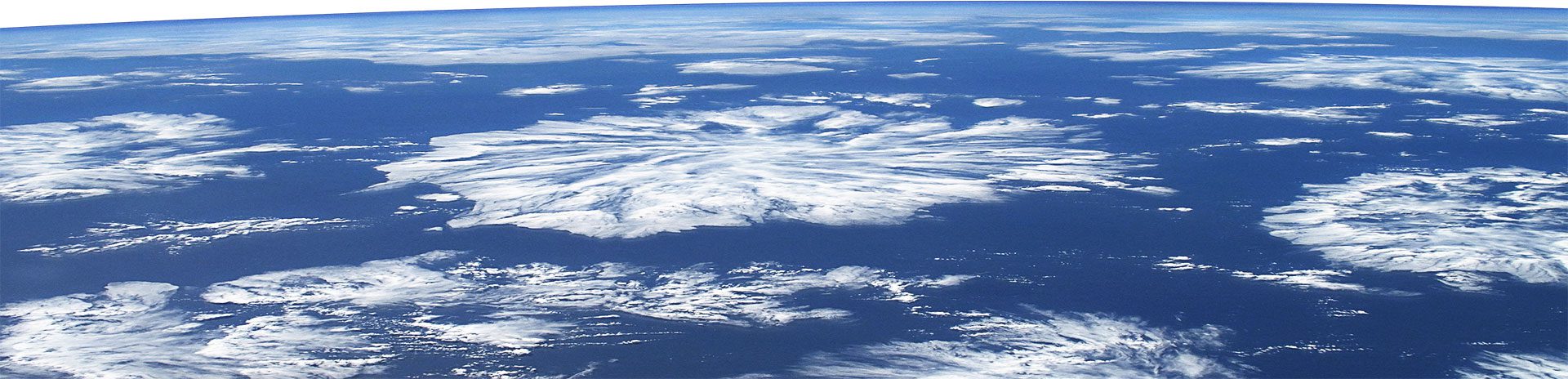
Most of the time we’re over the ocean. You can see the planet alive because of the ocean’s interaction with the atmosphere, and everywhere you look it is a different color. It’s a more intricate way to look at our planet than continent formations.
There is one part of the Pacific Ocean that makes huge flower clouds. It’s the interaction with the water and the wind near the equator in the fall, and they look sort of like a bunch of peonies. Off the east coast of North America, near Canada, you can really see evidence of the depth of the water, and the ice is in jetty formations. Off the east coast of South America, you see changes in the color of the ocean based on algae. That’s also where you see icebergs from Antarctica. During one flight, I was asked to take a picture of a specific iceberg, and I was wondering how I was going to distinguish it from a cloud. But it was huge—30 kilometers long—and the blue color of the ice was obviously different from a cloud.
We know Jupiter by its atmosphere and Saturn by its rings. The thing that makes Earth recognizable from space is our ocean.