 This article printed in Oceanus Summer 2026
Estimated reading time: 1 minute
For most oceanographers, mapping the seafloor isn’t as picturesque as it may sound. In pitch-black waters, robots equipped with sonar and other sensors scan deep-sea mountains—ranges that would rival the Grand Tetons—and translate them into datasets and three-dimensional maps. Where some may only see the digitized form of these majestic landscapes, light-painter Lori Hepner sees the raw material for her artwork.
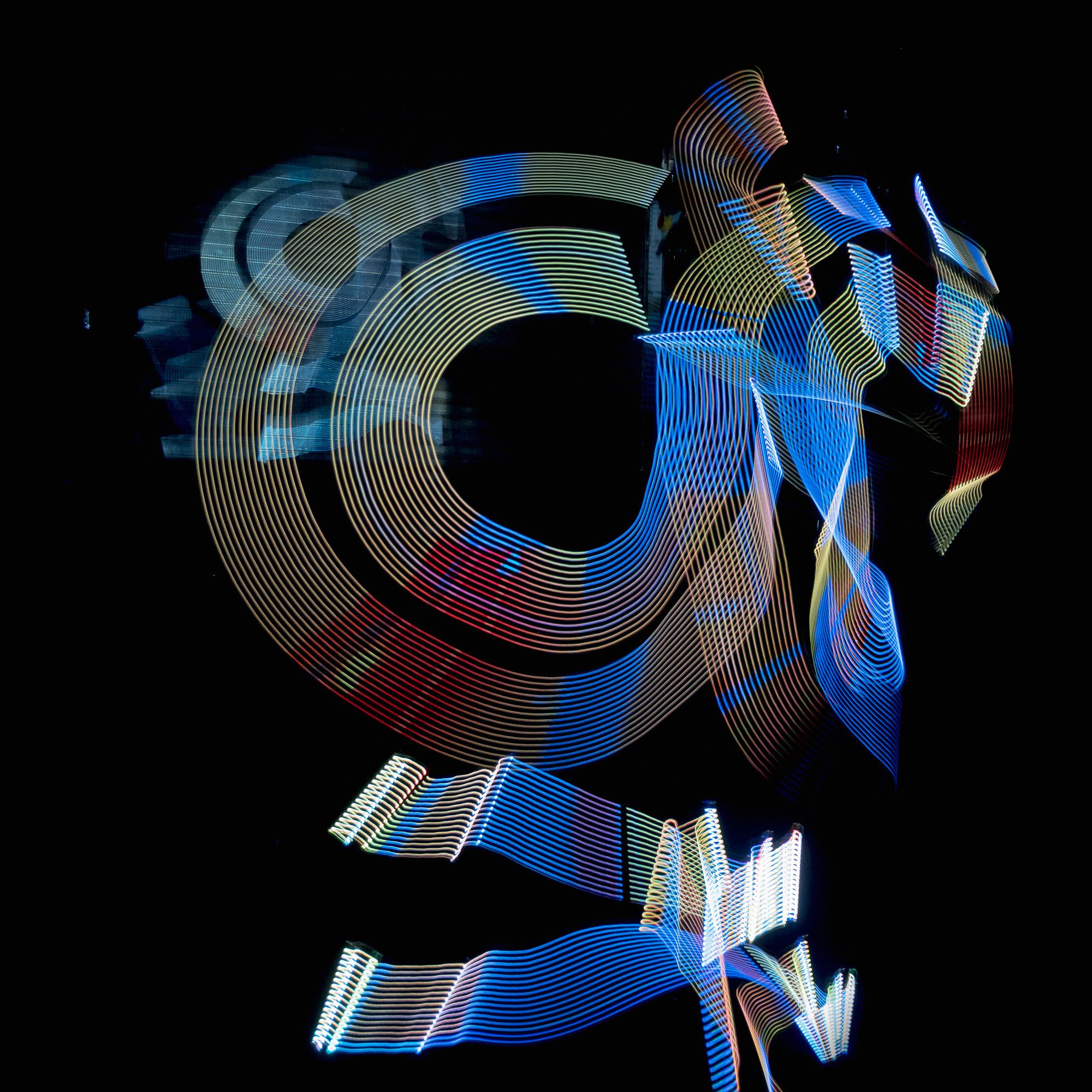
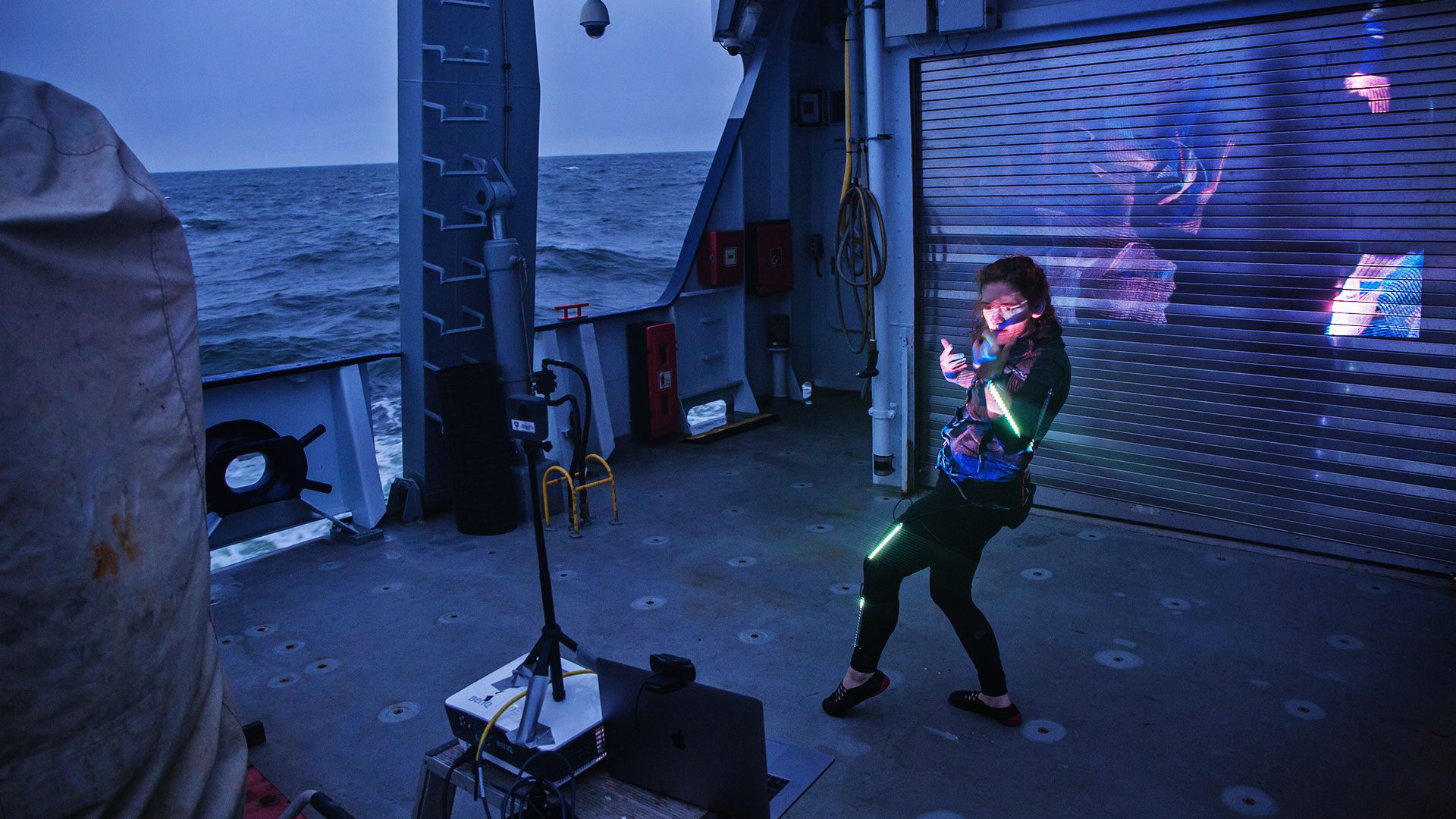
Hepner is an interdisciplinary artist and professor of integrative arts at Penn State University who employs light and dance to turn invisible things into engaging installations. Her main tool, a custom-made suit adorned with colorful LED tubes, allows her to wire herself to a computer and translate complex data into a symphony of colors. Through careful choreography, she creates dynamic light trails that are frozen in time using a remotely triggered camera.
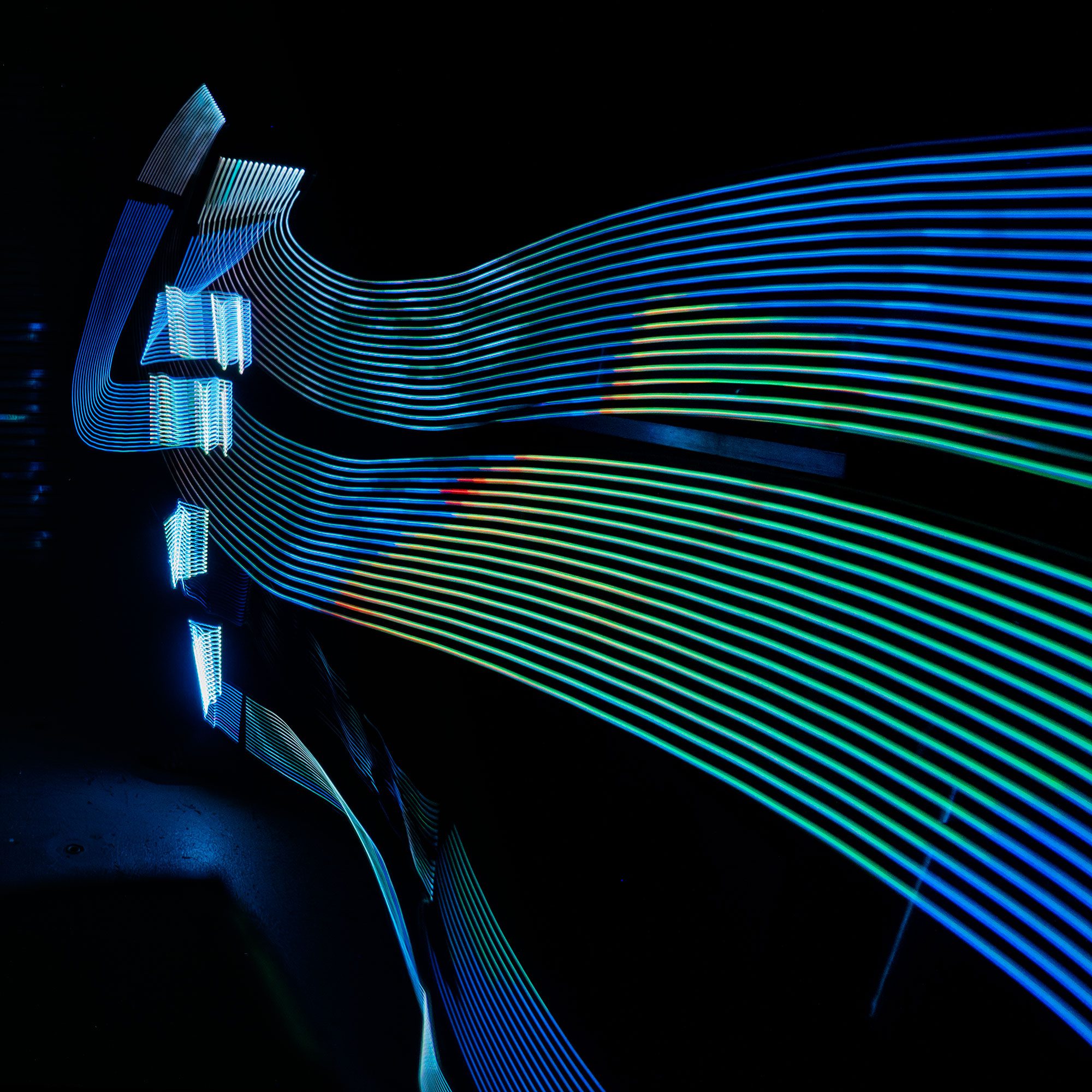
A Pittsburgh native, Hepner first became intrigued by ocean science as a Fulbright scholar and artist in residence on the remote island of Traena, Norway, in 2017. Soon after, she applied to the Schmidt Ocean Institute’s Artist-at-Sea Program and was accepted, earning a berth aboard R/V Falkor on a 2018 mission to map the seafloor of the Cascadia Margin—a tectonically active zone offshore of the Pacific Northwest. The region is especially important to researchers in WHOI's Ocean Bottom Seismic Instrument Center, who have scanned the area to study tectonic activity along the Cascadia Subduction Zone.
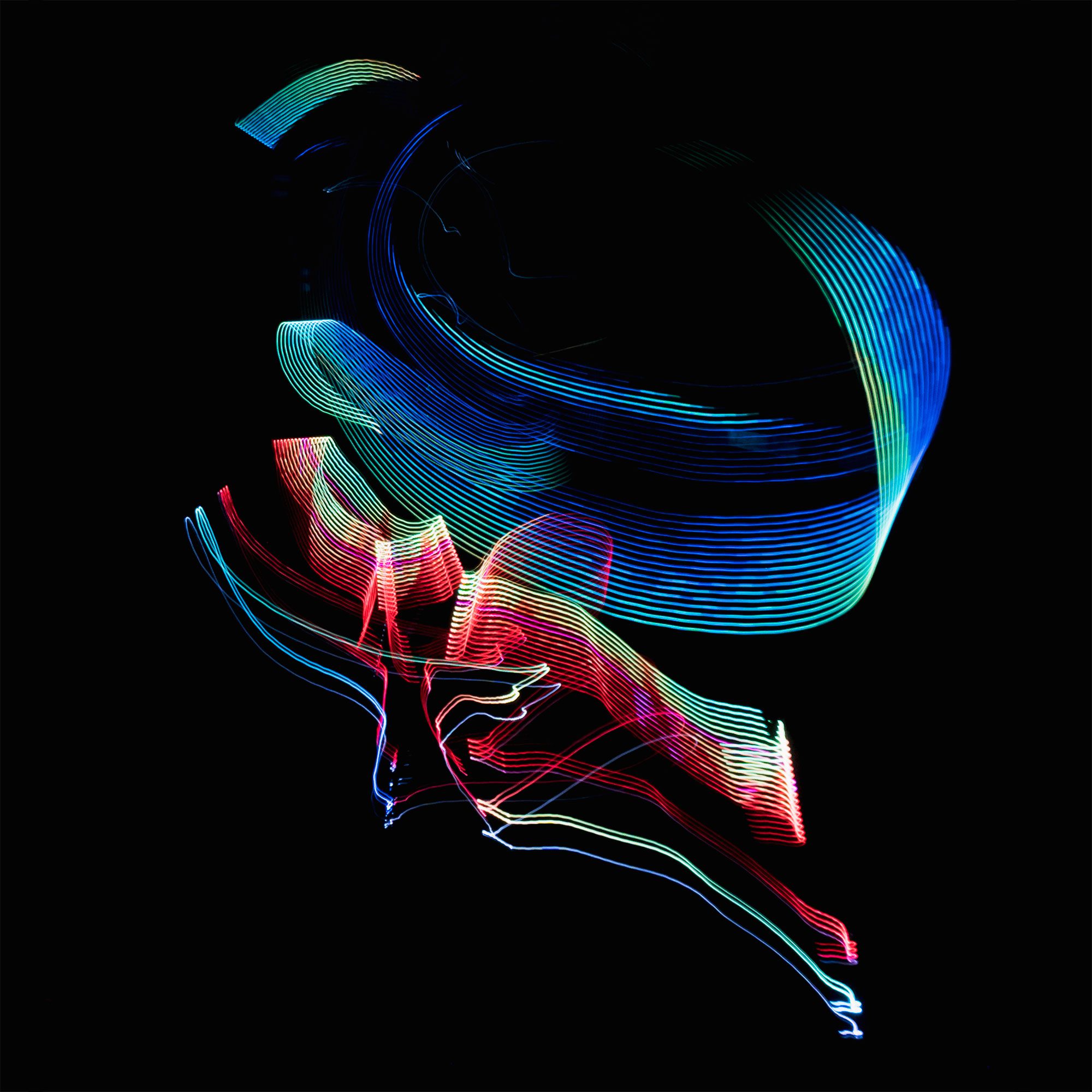
On this particular mission, NOAA Chief Scientist Susan Merle scanned the terrain miles below using multibeam sonar mounted to the ship’s hull—information that was transmitted back to Falkor’s lab for analysis. After a few days, Hepner had enough raw data to work with. Donning her light suit, she holed up in a free bay on the ship’s aft deck and began performing a series of movements that mimicked the topography below. It’s this fidelity to science that defines Hepner’s paintings not as abstract but as translational—work that brings a submerged wilderness to the surface in an entirely new form.
Take a look at the fruits of her labor. Look closely at the bands of color. You may be able to trace the contours of the seafloor mapped by R/V Falkor’s multibeam sonar.
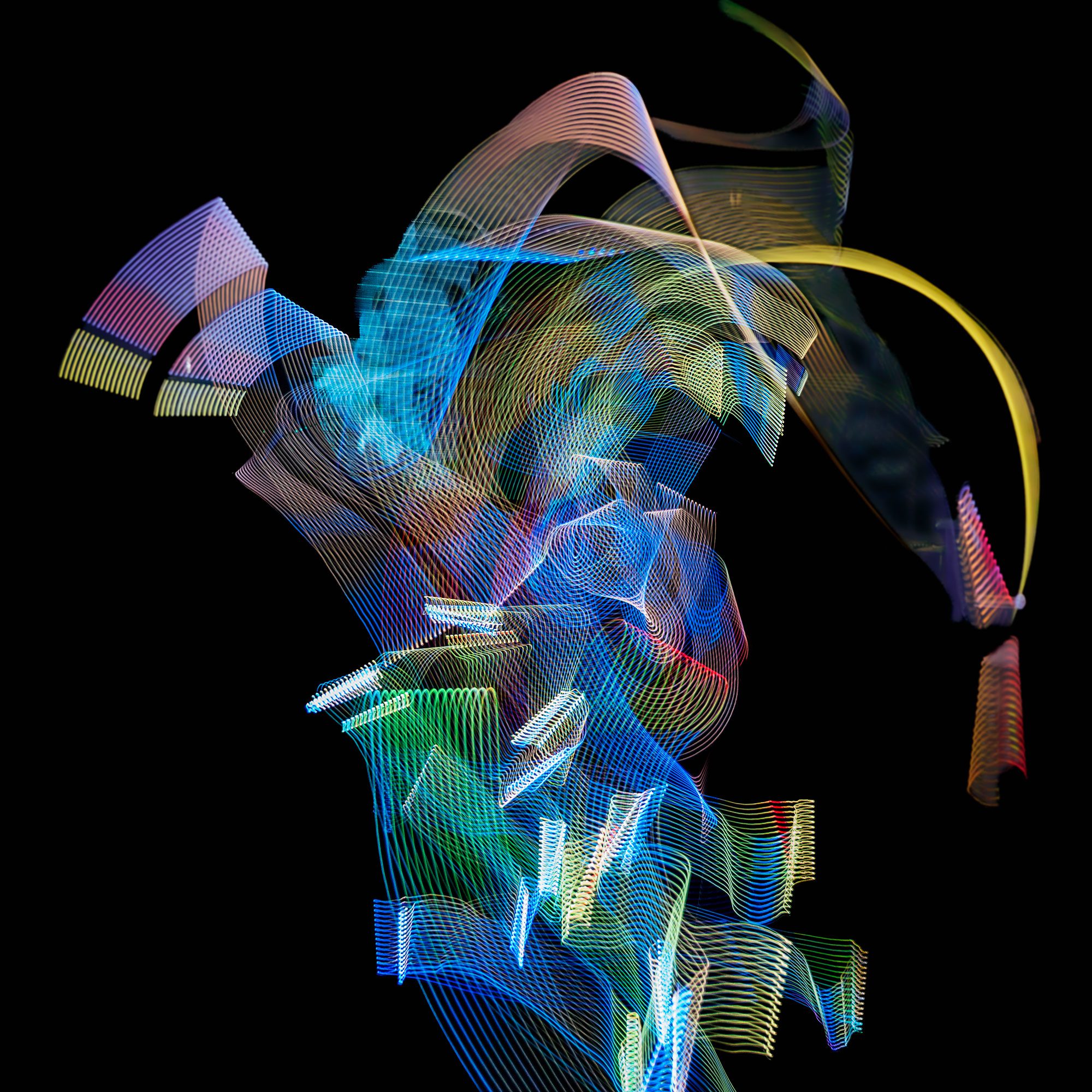
To see the full body of Hepner’s light painting work, head to lorihepner.com. All images are © Lori Hepner.
Correction: The print version of this story incorrectly states that AUV Sentry was deployed from R/V Falkor on a 2018 cruise. While Sentry has been aboard R/V Falkor for other missions, the vehicle was not present on the ship to map the Cascadia Margin 2018.

MEET THE AUTHOR Daniel Hentz
Daniel Hentz is an award-winning science writer and multimedia storyteller at Woods Hole Oceanographic Institution (WHOI). He began his career in science journalism as a...
Read more