Woods Hole Oceanographic Institution link to Woods Hole Oceanographic Institution Oceanus Home Oceanus Home


Oceanus Topics


Subscribe

current printed issues
 

WHOI meets WhOI on www.Whyville.net

Email Print   
Enlarge Image
Related Links

» Whyville.net

» New England Center of Ocean Sciiene Education Excellence

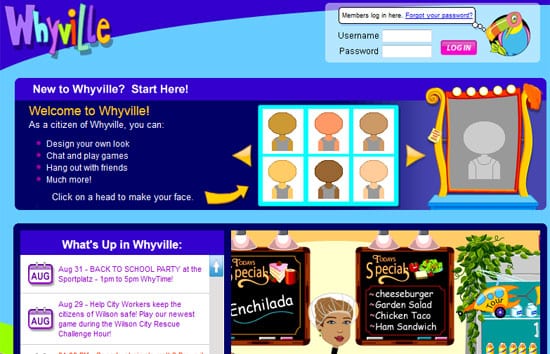
Whyvillians have a problem: Harmful algae are threatening their beaches and coastal ecosystem. To investigate, understand, and mitigate the problem, citizens are turning to the Whyville Oceanographic Institution (WhOI), with its boats, its underwater labo-ratories, and other resources for exploring the ocean.

This interactive experience is part of a new partnership between the developers of Whyville.net, a leading educational Web site for youth, and the Woods Hole Oceanographic Institution. To learn more about how nutrients can fuel plankton blooms, Whyvillians must collect samples from the virtual ocean, use the laboratory to identify the species and nutrient at the root of the problem, trace the nutrient to its source, and stem the nutrient flow by restoring a virtual wetland.

“One of our biggest challenges as a research institution is conveying our work to the public,” said WHOI Associate Scientist Sonya Dyhrman, who helped create the new feature.

 “Whyville.net is an excellent tool for communicating information about the oceans, and their significance to our everyday lives, in a unique and entertaining format.”


For teachers, an inside track into ocean science


WHOI workshops for teachers offer a window into the world of current ocean research, and educators from all parts of New England come for the view.

This spring, Benjamin Walther, who recently earned his Ph.D. in the MIT/WHOI Joint Program, explained his geochemical work using fish ear bones (otoliths) to track American shad migration, and WHOI biologist Simon Thorrold discussed using otoliths to study tropical reef fish populations. Walther and Andrea Thorrold, coordinator for the New England Center for Ocean Sciences Education Excellence (COSEE-NE), gave teachers interactive DVDs they produced containing classroom lessons and an inquiry-based activity using actual otolith data. The workshop also featured WHOI physical oceanographer Peter Winsor (blue jacket in photo) speaking about using computer models and new polar profiling floats to study the fast-changing Arctic climate.

One teacher commented, “I appreciate listening to scientists explain current research. This is interesting to bring back to my class-room. The students feel that they have an inside track.”

Teacher professional development workshops at the WHOI Exhibit Center are jointly sponsored by the WHOI Information Office and the WHOI Academic Programs Office, and Woods Hole Sea Grant, primarily supported by a generous donation from the Ducommun Foundation. COSEE-NE provided a supplemental grant to defray costs for teachers from underrepresented and underserved school districts in New England.


Posted: September 30, 2007

[top]


Letters to the Editor | Subscribe | Contact Us | Feedback | Privacy Policy | RSS Headlines | About Oceanus | WHOI Home
© Woods Hole Oceanographic Institution. Online edition: ISSN 1559-1263. All rights reserved
