2011 News Releases
December 21, 2011
Study Examines How Diving Marine Mammals Manage Decompression
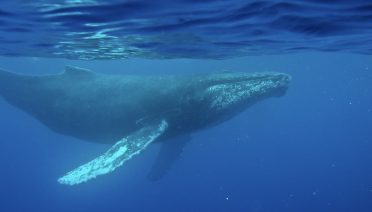
How do marine mammals, whose very survival depends on regular diving, manage to avoid decompression sickness or "the bends?" Do they, indeed, avoid it? A workshop held by WHOI’s Marine Mammal Center brought together the world’s experts in human diving and marine-mammal diving physiology to discuss the issue of how marine mammals manage gas under pressure.
December 6, 2011
Two WHOI Scientists Receive Medals from the American Geophysical Union
WHOI scientists Henry Dick, a geologist, and Joseph Pedlosky, a physical oceanographer, have been selected to receive two of the American Geophysical Union's prestigious medals this year. The awards will be given at an honors ceremony on December 7 in San Francisco at the American Geophysical Union Fall Meeting, the largest worldwide conference in the geophysical sciences, attracting nearly 20,000 Earth and space scientists, educators, students, and policy makers.
December 6, 2011
Researchers Assess Radioactivity Released to the Ocean from the Fukushima Dai-Ichi Nuclear Power Facility
The impact on the ocean of releases of radioactivity from the Fukushima nuclear power plants remains unclear. But a new study by U.S. and Japanese researchers analyzes the levels of radioactivity discharged from the facility in the first four months after the accident and draws some basic conclusions about the history of contaminant releases to the ocean.
November 28, 2011
WHOI Statement on the R/V Atlantis Rescue at Sea of 93 Egyptians
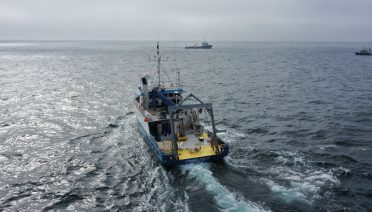
The research vessel Atlantis, operated by Woods Hole Oceanographic Institution (WHOI), rescued 93 Egyptians aboard a disabled fishing boat in the Mediterranean Sea late Friday night (Nov. 25).
November 17, 2011
WHOI Director of Research to Join Mass. Governor Patrick on Innovation Economy Mission to Brazil
Woods Hole Oceanographic Institution (WHOI) Executive Vice President and Director of Research Larry Madin will join Massachusetts Governor Deval Patrick and a coalition of business executives, academic leaders, and government officials on the Massachusetts-Brazil Innovation Economy Mission 2011 this December to pursue job growth and economic development partnerships between Massachusetts and Brazil.
November 3, 2011
Long-Term Carbon Storage in Ganges Basin May Portend Global Warming Worsening
Global warming could destabilize the pool of carbon in the Ganges-Brahmaputra basin and similar places on Earth, potentially increasing the rate of CO2 release into the atmosphere.
October 31, 2011
NSF Announces Major Awards for Biodiversity Research, WHOI Scientists Selected
A WHOI-led project is one of several major awards recently announced by the National Science Foundation’s (NSF) Dimensions in Biodiversity research program. The multi-disciplinary, international collaborative effort will advance our understanding of deep-sea hydrothermal vent microbial communities and their global impact.
October 25, 2011
WHOI and Ocean Leadership Award McLane Research Laboratories OOI Profiler Contract
WHOI and the Consortium for Ocean Leadership announced McLane Research Laboratories, of East Falmouth, Mass., will provide the Wire Following Profilers for the Coastal and Global Scale Nodes component of the Ocean Observatories Initiative (OOI) program.
October 19, 2011
Stranded Dolphins Exhibit Bubbles, and Ability to Recover
In a study published online in the Proceedings of the Royal Society B, a team that includes researchers from the Woods Hole Oceanographic Institution (WHOI) has confirmed that bubbles do form in live, stranded dolphins. But in many cases, those animals are able to “manage” those bubbles and can resume relatively normal lives of swimming and diving in the ocean.
October 18, 2011
WHOI and Ocean Leadership Select Pro-Oceanus Systems to Provide OOI Instrument Packages
WHOI and the Consortium for Ocean Leadership have awarded a contract to Pro-Oceanus Systems, Inc., of Bridgewater, Nova Scotia, Canada, to provide Partial Pressure of CO2, or p(CO2) , air-sea instrument packages for the Coastal and Global Scale Nodes component of the Ocean Observatories Initiative program.
October 12, 2011
Mass. Governor Deval Patrick Makes First Visit to WHOI
The Woods Hole Oceanographic Institution (WHOI) hosted a visit Wednesday, October 12, by Massachusetts Governor Deval Patrick, marking his first visit to the Cape-based non-profit ocean research, engineering, and education organization.
October 12, 2011
Bacterial Communication Could Affect Earth's Climate
Woods Hole Oceanographic Institution (WHOI) scientists have discovered that bacterial communication could have a significant impact on the planet’s climate.
October 11, 2011
WHOI Teaming with Flatley Discovery Lab in Search for Effective Treatments for Cystic Fibrosis
The Woods Hole Oceanographic Institution (WHOI) has signed a $1.18 million agreement with the Flatley Discovery Lab in Charlestown, Mass., to investigate and supply marine microbial extracts as possible treatments for cystic fibrosis (CF).
October 5, 2011
Researchers from WHOI and MBL Receive $1.2 Million Grant for Collaborative Salt-Marsh Study
Scientists from WHOI and the Marine Biological Laboratory were awarded a $1.2 million NSF collaborative grant for studies on the role of sulfur-oxidizing bacteria in salt marsh nitrogen and carbon cycling. The fieldwork will be conducted at the Plum Island Ecosystem Long-Term Ecological Research site on Boston's North Shore.
September 11, 2011
New Coral Dating Method Hints at Possible Future Sea-Level Changes
New evidence of sea-level oscillations during a warm period that started about 125,000 years ago raises the possibility of a similar scenario if the planet continues its more recent warming trend, says a research team led by the Woods Hole Oceanographic Institution (WHOI).
September 6, 2011
WHOI Sponsors Ocean Observatories Event in New Bedford
The New Bedford Whaling Museum is the backdrop for a free community event “Pioneering New Ocean Science Frontiers” on Saturday, September 17, from 10 a.m. – 2 p.m., co-sponsored by WHOI and the Consortium for Ocean Leadership.
September 5, 2011
WHOI-Led Study Sharpens Picture of How Much Oil and Gas Flowed in Deepwater Horizon Spill
In a detailed assessment of the Deepwater Horizon oil spill, researchers led by a team from the Woods Hole Oceanographic Institution (WHOI) have determined that the blown-out Macondo well released oil at a rate of about 57,000 barrels a day, totaling approximately 5 million barrels of oil released from the well between April 20 and July 15, 2010, when the leak was capped. In addition, the well released some 100 million standard cubic feet per day of natural gas.
August 21, 2011
Newly Discovered Icelandic Current Could Change North Atlantic Climate Picture
An international team of researchers, including physical oceanographers from the Woods Hole Oceanographic Institution (WHOI), has confirmed the presence of a deep-reaching ocean circulation system off Iceland that could significantly influence the ocean’s response to climate change in previously unforeseen ways.
August 15, 2011
Woods Hole Oceanographic Institution Hosts Visit by Senator Scott Brown
On Monday, Aug. 15, U.S. Senator Scott Brown visited the Woods Hole Oceanographic Institution (WHOI), the world-renowned research and education organization based on Cape Cod. The visit was Brown’s first to WHOI.
August 10, 2011
WHOI Team Joins NOAA's Battle of the Atlantic
WHOI researchers have embarked on a 10-day mission to provide the first underwater, 3-D optical survey of ships sunk by German U Boats during World War II off the North Carolina coast.
August 2, 2011
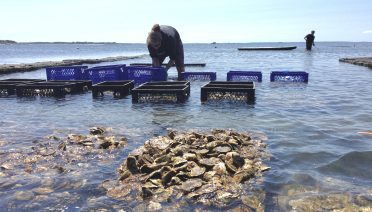
Study Assesses Nations' Vulnerabilities to Reduced Mollusk Harvests from Ocean Acidification
Changes in ocean chemistry due to increased carbon dioxide (CO2) emissions are expected to damage shellfish populations around the world, but some nations will feel the impacts much sooner and more intensely than others, according to a study by scientists at Woods Hole Oceanographic Institution (WHOI).
August 1, 2011
WHOI Study Reports Microbes Consumed Oil in Gulf Slick at Unexpected Rates
In the first published study to explain the role of microbes in breaking down the oil slick on the surface of the Gulf of Mexico, Woods Hole Oceanographic Institution (WHOI) researchers have come up with answers that represent both surprisingly good news and a head-scratching mystery.
August 1, 2011
WHOI Hosts Tours of the Research Vessel Knorr
On Sunday, August 7, from 11 a.m. to 3 p.m., the Woods Hole Oceanographic Institution (WHOI) will host a free community event featuring a rare opportunity to tour the oceanographic research vessel Knorr. The ship is best known as the one used in the discovery of the wreck of the Titanic and of the first hydrothermal vents. Visitors to the event will also be able to attend talks by one of Knorr’s former captains and scientists who have used it to study the world’s ocean.
July 28, 2011
WHOI Announces 2011 Ocean Science Journalism Fellows
Ten writers and multimedia science journalists from the U.S., Canada, France, Great Britain and South Korea have been selected to participate in the competitive Woods Hole Oceanographic Institution (WHOI) Ocean Science Journalism Fellowship program. The program takes place September 11-16, 2011, in Woods Hole, Mass., on Cape Cod.
July 26, 2011
Woods Hole Oceanographic Institution's Advanced Imaging Lab Assists in Location of Thunder Bay Shipwrecks
When a group of five high school students embarked on Project Shiphunt, an expedition in search of lost shipwrecks, in May in Lake Huron, the WHOI’s Advanced Imaging and Visualization Lab was there, surveying and capturing 3D footage of the finds. The work was conducted as part of Project Shiphunt, an initiative developed by Sony and Intel Corp and led by National Oceanic and Atmospheric Association.
July 21, 2011
Identical Virus, Host Populations Can Prevail for Centuries, WHOI Researcher Reports
A Woods Hole Oceanographic Institution (WHOI) scientist, analyzing ancient plankton DNA signatures in sediments of the Black Sea, has found for the first time that the same genetic populations of a virus and its algal host can persist and coexist for centuries. The findings have implications for the ecological significance of viruses in shaping algae ecosystems in the ocean, and perhaps fresh water as well.
July 18, 2011
WHOI Scientists Analyze, Explain the Chemical Makeup of Gulf Plume
Taking another major step in sleuthing the 2010 Deepwater Horizon oil spill, a research team led by the Woods Hole Oceanographic Institution (WHOI) has determined what chemicals were contained in a deep, hydrocarbon-containing plume at least 22 miles long that WHOI scientists mapped and sampled last summer in the Gulf of Mexico, a residue of the Deepwater Horizon oil spill.
July 8, 2011
WHOI Selects Hydroid to Provide Autonomous Underwater Vehicles for Ocean Observatories Initiative
The Woods Hole Oceanographic Institution and the Consortium for Ocean Leadership announced Hydroid will provide Autonomous Underwater Vehicles (AUVs) and docking stations to support the Pioneer Array of the Ocean Observatories Initiative (OOI).
June 30, 2011
WHOI Study Sheds Light on Tunicate Evolution
Woods Hole Oceanographic Institution (WHOI) researchers have filled an important gap in the study of tunicate evolution by genetically sequencing 40 new specimens of thaliaceans, a gelatinous type of tunicate. Their study was featured on the cover of the June issue of the Journal of Plankton Research.
June 21, 2011
WHOI Selects Teledyne Webb Research to Provide Open Ocean Gliders for Ocean Observatories Initiative (OOI)
The Woods Hole Oceanographic Institution and the Consortium for Ocean Leadership announced Teledyne Webb Research will provide open ocean gliders supporting the Coastal and Global Scale Nodes component of the OOI.
June 16, 2011
U.S. Chief of Naval Operations Makes First Visit to WHOI
On June 10, the Woods Hole Oceanographic Institution (WHOI) hosted a visit from Admiral Gary Roughead, the Chief of Naval Operations, marking the first such appearance by a serving Chief of Naval Operations.
June 2, 2011
Woods Hole Oceanographic Institution to Lead Expedition to Measure Radioactive Contaminants in the Pacific Ocean
The Woods Hole Oceanographic Institution (WHOI) will lead the first international, multidisciplinary assessment of the levels and dispersion of radioactive substances in the Pacific Ocean off the Fukushima nuclear power plant—a research effort funded by the Gordon and Betty Moore Foundation.
May 25, 2011
Japan Earthquake Appears to Increase Quake Risk Elsewhere in the Country
Japan’s recent magnitude 9.0 earthquake, which triggered a devastating tsunami, relieved stress along part of the quake fault but also has contributed to the build up of stress in other areas, putting some of the country at risk for up to years of sizeable aftershocks and perhaps new main shocks, scientists say.
May 20, 2011
WHOI to Host Public Forum on Seafood Security
The Woods Hole Oceanographic Institution (WHOI) will host a public forum on May 25 from 2 p.m. to 5 p.m. in Redfield Auditorium on the theme “The Seafood Dilemma: Does it Matter Where We Get Our Seafood? The Balance of US Production, Imports, Wild Capture, and Aquaculture in US Seafood Supply.”
May 19, 2011
Emerging Explorers Award to WHOI's Kakani Katija
Kakani Katija, a postdoctoral scholar at Woods Hole Oceanographic Institution (WHOI), has been selected as one of 14 National Geographic Emerging Explorers for 2011 for her investigation into the role swimming animals might play in mixing and moving the oceans and other large bodies of water.
May 2, 2011
WHOI Unveils Website on its Role in Gulf Oil Spill Research
One year after the explosion of the Deepwater Horizon drilling platform in the northern Gulf of Mexico, the Woods Hole Oceanographic Institution (WHOI) is unveiling a new multimedia website, Science in a Time of Crisis.
April 28, 2011
Eddies Found to be Deep, Powerful Modes of Ocean Transport
Researchers from Woods Hole Oceanographic Institution (WHOI) and their colleagues have discovered that massive, swirling ocean eddies—known to be up to 500 kilometers across at the surface—can reach all the way to the ocean bottom at mid-ocean ridges, some 2,500 meters deep, transporting tiny sea creatures, chemicals, and heat from hydrothermal vents over large distances.
April 26, 2011
Prey-tell: Why Right Whales Linger in the Gulf of Maine
WHOI’s Mark Baumgartner finds that the location, the length of stay, and perhaps the very abundance of the whales may be dependent on an interesting vertical migration pattern by the copepods on which the whales feed. It seems to be a case, he said, of "how the behavior of the prey influences the behavior of the whales."
April 8, 2011
Researchers Report Potential for a Moderate New England 'Red Tide' in 2011
Scientists from the NOAA-funded Gulf of Maine Toxicity (GOMTOX) project issued an outlook for a moderate regional bloom of a toxic alga that can cause ‘red tides’ in the spring and summer of this year, potentially threatening the New England shellfish industry. However, there are signs this year’s bloom could be suppressed by recent changes in ocean conditions in the Gulf of Maine.
April 4, 2011
WHOI-led Team Locates Air France Wreckage
A search team led by the Woods Hole Oceanographic Institution (WHOI) has located the wreckage of Air France Flight 447 some 3,900 meters, or nearly 2.5 miles, below the surface of the Atlantic Ocean off Brazil’s northeastern coast.
March 28, 2011
Study Sheds Light on How Heat is Transported to Greenland Glaciers
Warmer air is only part of the story when it comes to Greenland’s rapidly melting ice sheet. New research by scientists at Woods Hole Oceanographic Institution (WHOI) highlights the role ocean circulation plays in transporting heat to glaciers.
March 25, 2011
WHOI Conducts Latest Search for Air France Flight 447
The Woods Hole Oceanographic Institution (WHOI) is again teaming with French authorities to renew the international search for the deep-sea wreck site of Air France Flight 447 and to retrieve the flight recorders from the Airbus A 330.
March 16, 2011
On the Sizeable Wings of Albatrosses
An oceanographer may be offering the best explanation yet of one of the great mysteries of flight—how albatrosses fly such vast distances, even around the world, almost without flapping their wings. The answer, says Philip L. Richardson of the Woods Hole Oceanographic Institution (WHOI), lies in a concept called dynamic soaring, in which the large bird utilizes the power of above-ocean wind shear while tacking like an airborne sailboat.
March 16, 2011
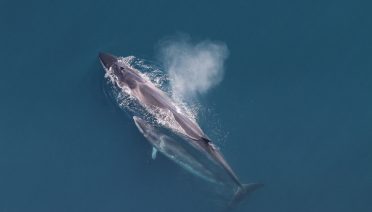
WHOI-Led Report Links Sonar to Whale Strandings
An international team of researchers reports in a paper led by WHOI's Peter Tyack the first data on how beaked whales respond to naval sonar exercises. Their results suggest that sonar indeed affects the behavior and movement of whales.
March 15, 2011
Woods Hole Oceanographic Institution Announces Selection of Teledyne Webb Research to Provide Coastal Gliders for Ocean Observatories Initiative (OOI)
The Woods Hole Oceanographic Institution (WHOI) and the Consortium for Ocean Leadership (OL) announced Teledyne Webb Research, of East Falmouth, Mass., will provide coastal gliders supporting the Pioneer and Endurance Arrays of the Coastal and Global Scale Nodes (CGSN) for the Ocean Observatories Initiative (OOI).
March 14, 2011
Nauset Marsh Estuary Red Tide Study to Begin
A three-year study into the cause of local area red tides is set to begin March 21. A team of researchers from the National Park Service, U.S. Geological Survey, and Woods Hole Oceanographic Institution will be examining the cause of red tides in the Nauset Marsh Estuary and its embayments in Cape Cod, Mass.
March 11, 2011
WHOI Experts Stress Lessons From Japan Earthquake
While Japan’s 9.0-magnitude earthquake and accompanying tsunami represent a devastating natural disaster for the country’s residents, scientists should also seize upon the massive temblor as an important learning tool for future quakes around the world, including the Pacific Northwest coast of the United States, according to experts from the Woods Hole Oceanographic Institution (WHOI).
March 1, 2011
WHOI Ranks No. 2 in Top Ten Places for Postdocs to Work
The Woods Hole Oceanographic Institution ranked second of the ten best places to work for postdoctoral researchers, according to a 2011 survey by the magazine The Scientist. The rankings included 76 US institutions.
February 22, 2011
WHOI Helps Form International Consortium on Iron and the Oceans
With a mission of exploring the potential impact of iron fertilization of the oceans to reduce the amount of carbon dioxide in the Earth's atmosphere, Woods Hole Oceanographic Institution (WHOI) Senior Scientist Ken Buesseler has helped lead the organization of an international consortium to plan, promote and undertake advanced research in that field.
February 21, 2011
First Harmful Algal Bloom Species Genome Sequenced
The microscopic phytoplankton Aureococcus anophagefferens, which causes devastating brown tides, may be tiny but it’s a fierce competitor. In the first genome sequencing of a harmful algal bloom species, researchers found that Aureococcus’ unique gene complement allows it to outcompete other marine phytoplankton and thrive in human-modified ecosystems, which could help explain the global increases in harmful algal blooms.
February 17, 2011
Pollution Triggers Genetic Resistance Mechanism in a Coastal Fish
For 30 years, two General Electric facilities released about 1.3 million pounds of polychlorinated biphenyls (PCBs) into New York’s Hudson River, devastating and contaminating fish populations. Some 50 years later, one type of fish—the Atlantic tomcod—has not only survived but appears to be thriving in the hostile Hudson environment.
February 2, 2011
Scientists Find Part of New Zealand's Submerged "Pink Terraces"
This week, scientists from New Zealand, helped by engineers and scientists from Woods Hole Oceanographic Institution (WHOI) and their colleagues, located parts of the famed Pink Terraces. New Zealand’s Pink and White Terraces, natural formations created by a large geothermal system, were buried in sediment and covered over by Lake Rotomahana after the eruption of Mt. Tarawera in 1886.
February 1, 2011
Hal Caswell Wins Humboldt Research Award
Hal Caswell, a senior scientist in the Biology Department at Woods Hole Oceanographic Institution (WHOI), was awarded a 2010 Humboldt Research Award by the Alexander von Humboldt Foundation in Bonn, Germany.
January 26, 2011
First Study of Dispersants in Gulf Spill Suggests a Prolonged Deepwater Fate
To combat last year’s Deepwater Horizon oil spill, nearly 800,000 gallons of chemical dispersant were injected directly into the oil and gas flow coming out of the wellhead nearly one mile deep in the Gulf of Mexico. Now, as scientists begin to assess how well the strategy worked at breaking up oil droplets, Woods Hole Oceanographic Institution (WHOI) chemist Elizabeth B. Kujawinski and her colleagues report that a major component of the dispersant itself was contained within an oil-gas-laden plume in the deep ocean and had still not degraded some three months after it was applied.
January 11, 2011
WHOI's Avery, Doney Selected AAAS Fellows
Woods Hole Oceanographic Institution (WHOI) President and Director Susan K. Avery and Senior Scientist Scott C. Doney have been elected Fellows of the American Association for the Advancement of Science (AAAS).
January 10, 2011
"Hot-Bunking" Bacterium Recycles Iron to Boost Ocean Metabolism
In the vast ocean where an essential nutrient—iron—is scarce, a marine bacterium that launches the ocean food web survives by using a remarkable biochemical trick: It recycles iron.
January 7, 2011
WHOI Data Library to House and Preserve Ocean Ecosystem Archives
Alexander Graham Bell once said that when one door closes another one opens, and the open doors of the Woods Hole Oceanographic Institution (WHOI) Data Library and Archives are making it possible to help preserve the voluminous archives of GLOBEC, a study of Global Ocean Ecosystem Dynamics, which closed at the end of 2009.