2006 News Releases
November 23, 2006
Nobumichi Shimizu Has Been Named a Fellow of the American Association for the Advancement of Science
Nobumichi Shimizu has been awarded the distinction of Fellow by the American Association for the Advancement of Science (AAAS)
November 23, 2006
Scientists "See" New Ocean Floor Just Before and After It Is Created
A multidisciplinary research team from six institutions has for the first time successfully anticipated and then chronicled a seafloor eruption along the global mid-ocean ridge, the most active volcanic system on Earth. The event along the East Pacific Rise has provided researchers from Woods Hole Oceanographic Institution (WHOI) with a rare opportunity to observe what happens in the immediate aftermath of an eruption.
November 13, 2006
Sea Urchin Genome Yields New Understanding of "Chemical Defensome"
The Sea Urchin Genome Sequencing Consortium, a group of 240 researchers from more than 70 institutions in 11 countries, recently announced the sequencing of the California purple sea urchin, Strongylocentrotus purpuratus.
November 9, 2006
Four WHOI Researchers Recognized for Contributions to Science and Engineering
Staff honored with endowed awards.
November 6, 2006
Picture Perfect Plankton
The Large Area Plankton Imaging System, or LAPIS, is providing biologists with a new tool to study plankton to depths of 500 meters (1,640 feet).
November 6, 2006
Colossal Corer
A 50-meter (165-foot) long coring system nearing completion at WHOI will enable paleoceanographers to reconstruct past climates back tens of millions of years and expand the coring capabilities of the U.S. academic research fleet.
November 6, 2006
Mercury and Fish
WHOI scientists and colleagues at the University of Connecticut have found the first connection between mercury levels in freshwater fish and atmospheric mercury pollution, most of which is derived from fossil fuel combustion.
October 19, 2006
Beaked Whales Perform Extreme Dives to Hunt Deepwater Prey
A study of ten beaked whales of two poorly understood species shows they dive much deeper and longer than reported for any other air-breathing species, a finding of particular interest since beaked whales stranded during naval sonar exercises have been reported to have symptoms of decompression sickness.
October 16, 2006
Harmful Algal Bloom (Red Tide) Models and Forecasts to be Expanded in Gulf of Maine
A new observation and modeling program focused on the southern Gulf of Maine and adjacent New England shelf waters could aid policymakers in deciding whether or not to re-open, develop, and manage offshore shellfish beds with potential sustained harvesting value of more than $50 million per year.
October 16, 2006
Lessons from the 2004 Indian Ocean Tsunami Topic of Public Forum
The public will have an opportunity to hear a first-hand account of
the catastrophe, the lessons learned, and recent developments in
disaster warning programs around the world.
October 12, 2006
Antique Whale Oil Provides Insights to Origin of Pre-Industrial Chemicals
One of the last remaining New England whaling ships has provided unexpected insights into the origin of halogenated organic compounds (HOCs) that have chemical and physical properties similar to toxic PCBs and the pesticide DDT.
October 11, 2006
Rapid Sea Level Rise in the Arctic Ocean May Alter Views of Human Migration
Scientists have found new evidence that the Bering Strait near Alaska flooded into the Arctic Ocean about 11,000 years ago, about 1,000 years earlier than widely believed, closing off the land bridge thought to be the major route for human migration from Asia to the Americas.
September 28, 2006
Digital Tags Provide Evidence that Narwhals May Produce Signature Vocalizations for Communication
Scientists have found preliminary evidence that narwhals, Arctic whales whose spiraled tusks gave rise to the myth of the unicorn, produce signature vocalizations that may facilitate individual recognition or their reunion with more distant group members.
September 1, 2006
Tracking Killer Whales with Technology
WHOI researchers will use a small, non-invasive piece of technology, the digital archival tag or D-tag, in November to tag free-ranging killer whales in northern Norway.
September 1, 2006
Propane-producing Bacteria Found on the Seafloor
Scientists from the University of Bremen in Germany and Woods Hole Oceanographic Institution (WHOI) and have found microorganisms in buried sediment on the ocean floor producing abundant supplies of the gases propane and ethane.
September 1, 2006
ABE Joins Alvin and Jason at Sea
The Autonomous Benthic Explorer, ABE, one of the first autonomous underwater vehicles (AUVs) to routinely work in the deep ocean, has joined the U.S. National Deep Submergence Facility, providing ocean scientists with a full range of tools to explore the deep sea.
August 31, 2006
Gliders Are Changing the Way Ocean Observations are Made
A fleet of gliders from WHOI's Autonomous Systems Laboratory is quietly monitoring the ocean near Monterery Bay, California as part of a month-long experiment to learn more about ocean conditions that support rich fisheries and abundant marine life.
August 29, 2006
Island Ferries Take on Role of Research Vessels Collecting Data about Nantucket Sound
Ferries that connect Cape Cod and the islands of Martha’s Vineyard and Nantucket are taking on another role - research vessels.
August 1, 2006
A First Responder on the Ocean Floor
The Towed Digital Camera and Multi-Rock Coring System, or TowCam, was developed by scientists and engineers at WHOI to meet the U.S. oceanographic community's need for an imaging and sampling system with both routine and rapid-response capabilities.
August 1, 2006
Natural Petroleum Seeps Offer Clues to the Past and the Future
Just a half mile off California’s coast near Santa Barbara, and in coastal areas around the world, natural petroleum seeps are releasing an astonishing amount of methane gas and oil into the environment each yearmuch more than accidental oil spills and runoff from roads on a worldwide basis.
July 14, 2006
Undersea Vehicles to Study Formation of Gold and Other Precious Metals On the Pacific Ocean Floor
Scientists will explore the seafloor near
Papua New Guinea in the western Pacific Ocean later this month, investigating
hydrothermal vents and the formation of mineral deposits containing
gold and other precious minerals with industrial value.
July 11, 2006
Woods Hole Engineering Team from Titanic Discovery to be Honored
Jason Jr. engineers honored 20 years after Titanic exploration for their efforts to advance the routine use of remotely operated vehicles and fiber optics in the deep sea.
July 5, 2006
Study Looks at Ways to Sustain Lobster Fishery
Declining lobster stocks and struggling lobstermen have led to a study that might improve the sustainability of the New England lobster fishery.
July 1, 2006
Silent Stingers
Summer brings millions to the beach, and among the creatures often found in coastal waters are jellyfish. One of the most beautiful but potentially dangerous is Physalia physalis, commonly known as the Portuguese man-of-war, or bluebottle in the southern hemisphere.
July 1, 2006
A New Era in Observing the Ocean
Marine scientists have their fingers crossed that a long-planned Ocean Observatories Initiative (OOI) will make it through the federal budget process this summer and fall and become a reality. OOI, supported by the National Science Foundation, will enable the ocean sciences research community to work together to create a permanent presence in the ocean via an integrated observatory network.
July 1, 2006
Arctic Adventure: Following Bowhead Whales
WHOI scientists will be working on the continental shelf near Barrow, Alaska from mid-August to mid-September, trying to determine the oceanographic conditions that make this region a favorable feeding environment for bowhead whales during their annual migration from the Canadian Arctic south to the northern Bering Sea.
July 1, 2006
Caribbean Corals and Climate Change
Climate scientists are finding interesting clues to ancient climates in the corals of Honduras.
June 30, 2006
Archaeology in the Aegean
An international team of scientists and engineers embarked on the Greek research vessel Aegaeo June 25 for a ten-day survey in local waters.
June 30, 2006
Jellyfish-Like Creatures May Play Major Role in Fate of Carbon Dioxide in the Ocean
Transparent jellyfish-like creatures may be more important to the fate of the greenhouse gas carbon dioxide in the ocean than previously thought.
June 29, 2006
Hurricane Historians
With another hurricane season in full swing and a prediction for a high number of major storms, WHOI geologists are seeking clues from past hurricanes to learn more about the future.
June 27, 2006
A Whale Trail
Three marine research laboratories in Woods Hole have teamed up to sponsor a six-foot right whale sculpture, one of more than 50 whale sculptures that are part of this summer’s Whale Trail, a free public art event on Cape Cod and the Islands.
June 26, 2006
Underwater Microscope Finds Biological Treasures in the Subtropical Ocean
Scientists towing an underwater digital microscope across the Atlantic
Ocean have found possible missing links to the global nitrogen cycle
and ocean productivity.
June 5, 2006
WHOI Director Steps Down After 12 Years
Robert B. Gagosian announced today that he would step down as president
and director of Woods Hole Oceanographic Institution (WHOI), a position
he has held since 1994.
May 31, 2006
Sperm Whale Lingo: Clicks and Buzzes Lead to Prey
Scientists from Woods Hole Oceanographic Institution (WHOI) and the University of St. Andrews in Scotland used digital tags (D-tags) attached with suction cups to the backs of sperm whales to record the sounds the whales made as they dive looking for food.
May 30, 2006
Humans, Mammoths and Horses: The Case of the Fossil Record
Were prehistoric horses extinct before humans arrived in Alaska, or were they hunted to extinction by humans?
May 29, 2006
Smoke and Sulfur: Undersea Vehicle Captures Footage of Volcanic Eruption
Dramatic new video of a long-term volcanic eruption in the western Pacific first discovered in 2004 has been captured during a recent cruise by the remotely operated vehicle JASON, developed and operated by WHOI’s Deep Submergence Laboratory.
May 28, 2006
Ocean Technology Meets Business Needs
Marine scientists and engineers will brief investors, business development executives, commercialization partners and economic development leaders May 24 at a conference at WHOI aimed at showcasing marine technologies and concepts ready for commercialization or licensing.
May 26, 2006
Barcoding Biota: The CMarZ Cruise Finds New Species In the Ocean Depths
Trying to figure out what tiny creatures live in the ocean is no easy task, but thanks to technology, patience and hard work, scientists have explored a section of the tropical Atlantic between the U.S. east coast and the Mid-Atlantic Ridge and found many new species in depths to 5,000 meters (more than 15,000 feet).
May 25, 2006
REMUS and the Coral Reefs
WHOI biologists and physical oceanographers joined forces in May to study the effect of ocean currents on fish larvae spawned on coral reefs in Belize.
May 18, 2006
Test for Dioxin Sensitivity in Wildlife Could Result from New Study
Two very small amino acids make a world of difference in sensitivity to dioxin, and could lead to a test for wildlife.
May 18, 2006
Linking Climate Change Across Time Scales
Scientists have found links in global variations in temperature that
may provide insight to the bigger picture of climate change.
May 18, 2006
Woods Hole Oceanographic Institution Launches On-Line Image Library
WHOI ImageSource provides the interested public and the scientific community with a convenient source for their
oceanographic visual needs.
May 1, 2006
A Picture is Worth a Thousand Words...
ImageSource, a new database of images and illustrations representing years of ocean exploration, is now available to the public.
April 13, 2006
New Maps Provide Clues to the Historic 2005 Red Tide Outbreak in New England And Hints for 2006
WHOI scientists have completed two extensive survey and mapping efforts to better understand why the 2005 New England red tide was so severe and to suggest what might lie ahead.
April 13, 2006
Walrus Calves Stranded by Melting Sea Ice
Scientists have reported an unprecedented number of abandoned walrus calves in the Arctic Ocean, where melting sea
ice may be forcing mothers to abandon their pups.
April 1, 2006
Gliding from Greenland to Spain
In May, the Spray glider will attempt to set yet another record when it will begin the roughly 2,500-mile journey from the tip of Greenland to the coast of Spain to help scientists better understand the role of oceans in global climate.
April 1, 2006
Jenkins Named Head of National Ocean Sciences Carbon Dating Lab
Physicist Bill Jenkins, a senior scientist and 32-year veteran of the WHOI Department of Marine Chemistry and Geochemistry, has been named the new director of the National Ocean Sciences Accelerator Mass Spectrometer (NOSAMS) facility.
April 1, 2006
Marine CSI: Solving the Mysteries of Marine Mammal Strandings
A 12-foot Cuviers beaked whale (Ziphius cavirostris) found stranded on a beach south of Boston in early April is a rare event in New England, although strandings of pilot whales and other marine mammals are not unusual.
April 1, 2006
Live From the Tropics: New Underwater Observatory Monitors Marine Ecosystem off Panama
A new cabled observatory off the island of Canales de Tierra is the latest in a series of underwater laboratories that can monitor marine ecosystems over long periods and transmit live images and data back to scientists around the world.
April 1, 2006
The Last Voyage?
The Deep Submergence Vehicle (DSV) Alvin finished a five-month overhaul in Woods Hole in early April and returned to sea April 19 aboard support vessel Atlantis for what may be Alvin's last voyage.
April 1, 2006
Stamina in the Stream
Despite a ship strike that caused significant damage and harsh winter conditions, a surface buoy and mooring have survived a record six months in the Gulf Stream, recording both atmospheric and ocean conditions.
March 20, 2006
WHOI Scientist Selected As Leopold Leadership Fellow
Chemist Chris Reddy will enhance his communication skills about oil spills, marine pollution and environmental contaminants through a 2006 Leopold Fellowship.
February 24, 2006
Daily Dispatches from Hawaii
Several hundred WHOI scientists and engineers will join the nearly 3,500 researchers at Ocean Sciences 2006, jointly sponsored by the American Geophysical Union, American Society of Limnology and Oceanography, The Oceanography Society, and the Estuarine Research Federation. Starting February 20, visit the link below for daily dispatches from Honolulu.
February 23, 2006
How Does Iron Get Into the Ocean?
Marine scientists and engineers have created a new tool to track an essential ingredient on which life in the oceans depends: iron.
February 22, 2006
A View from Down Under
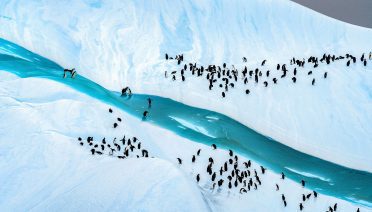
While it may be summer in the southern hemisphere, it is still very cold on Antarctica, where WHOI researchers are conducting a number of projects on and around the continent.
February 22, 2006
New Instrumentation May Help Scientists Understand Earthquake Mechanics
Advances in understanding basic earthquake processes have been limited by available instrumentation, but researchers have solved that problem by developing a device that records both small and large earthquakes at the same time.
February 21, 2006
Monitoring Baleen Whales with Autonomous Underwater Vehicles
Autonomous underwater vehicles are helping scientists monitor
marine mammals, quietly listening and recording their sounds and
behavior.
February 20, 2006
Deep Submergence Vehicle Alvin Overhaul in Action
Watch the latest progress on the overhaul of the three-person submersible Alvin at http://alvincam.whoi.edu/view/view.shtml.
February 17, 2006
Warmer than a Hot Tub: Atlantic Ocean Temperatures Much Higher in the Past
Scientists have found evidence that tropical Atlantic Ocean temperatures may have once reached 107°F, about 25°F higher than ocean temperatures today and warmer than a hot tub. While these high ocean temperatures occurred millions of year ago, the new study suggests climate models underestimate future warming.
February 7, 2006
New Sonar Method Offers Way to Assess Health of Squid Fisheries
California’s $30-million-a-year squid fishery has quadrupled in the past decade, but until now there has been no way to assess the continuing viability of squid stocks. A new sonar technique offers a window onto next year’s potential squid population.
February 2, 2006
Autonomous Underwater Vehicle Maps Ancient Greek Shipwreck
After lying hidden for centuries off the coast of Greece, a 4th century
B.C. merchant ship and its cargo has been discovered and surveyed by a
robotic underwater vehicle that accomplished in two days what it would
take divers years to do.
January 20, 2006
Magnetic Misfits: South Seeking Bacteria in the Northern Hemisphere
Magnetotactic bacteria orient themselves in the earth’s magnetic field much like living compass needles. But an unusual bacterium in New England has been found doing just the opposite, a magnetic misfit of sorts.
January 1, 2006
Changes in the Antarctic Ecosystem: Salps versus Krill
WHOI biologists will travel to Antarctica in mid-February to study salpsa??transparent, gelatinous, planktonic animals that generate massive populations containing individuals 10 centimeters (about four inches) long and colonial chains many meters (more than three feet) long. Salps consume diatoms, the microscopic plant cells abundant in spring and summer.
January 1, 2006
Who Goes to Sea Wishing for Bad Weather?
Some physical oceanographers do, even if it is in January in the North Atlantic. Woods Hole Oceanographic Institution (WHOI) scientists will spend two weeks this month working south of the Gulf Stream in the Northwest Atlantic trying to understand the transfer of energy from deep water to surface waters, and the effect on climate.
January 1, 2006
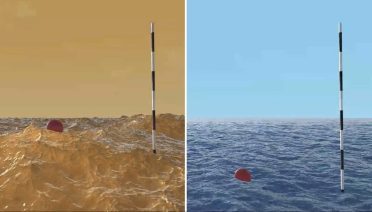
Clues in a Crater: From India to the Surface of Mars
Researchers from WHOI, Harvard, MIT and Princeton will conduct the second part of an intensive field and laboratory study this month at Lonar Crater in Maharashtra, India, looking for clues about the surface of Mars.