Estimated reading time: 4 minutes
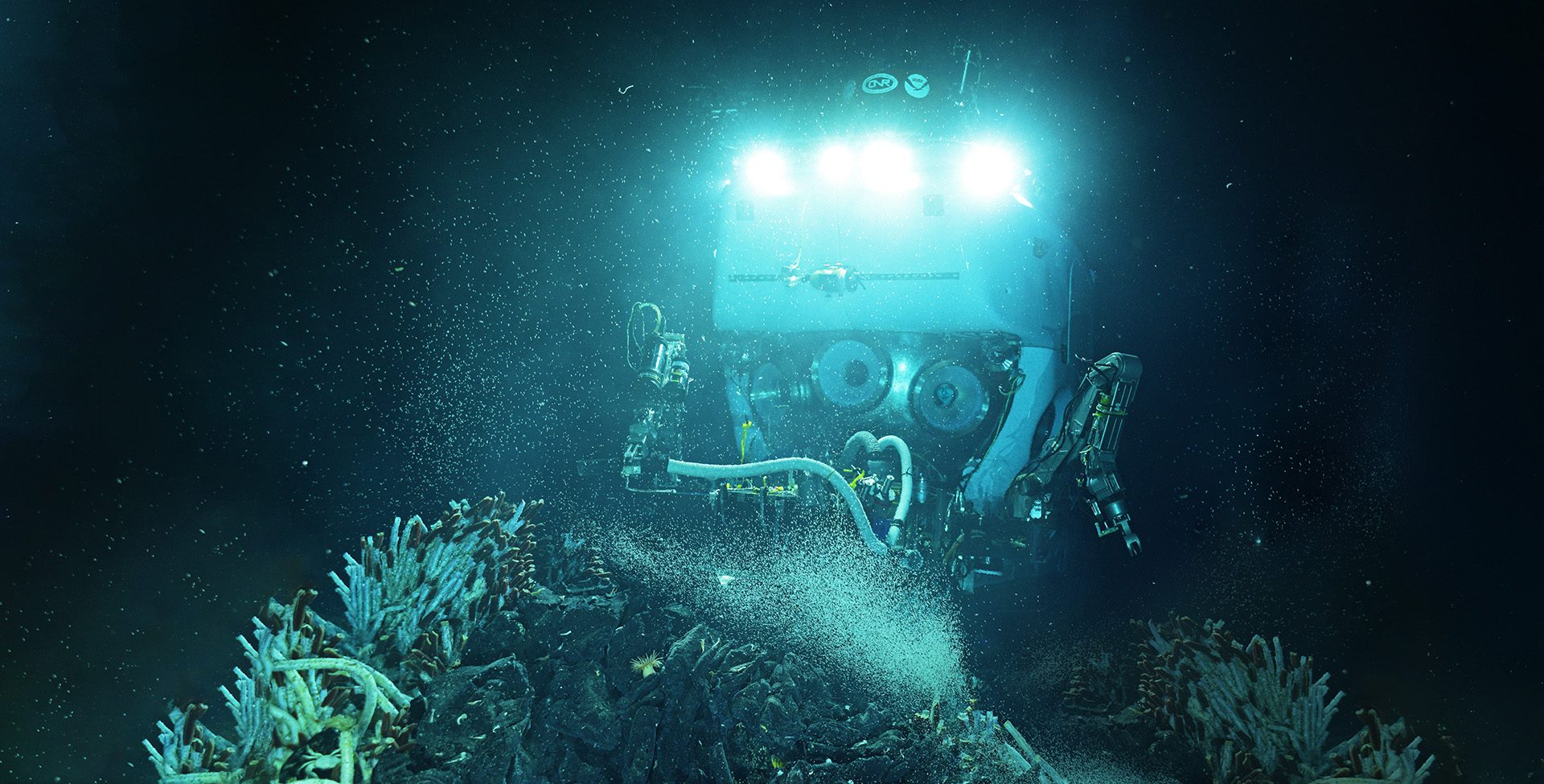
Space exploration often makes the news, but ocean exploration not so much. Perhaps it’s because the mysteries of the night sky beckon whenever we look up, but the deep ocean remains out of sight—and therefore out of mind. As a result, many people think the deep ocean is flat, lifeless, and isolated from human impact. But decades of ocean exploration have revealed a very different picture: the deep, in reality, is highly dynamic undersea world.
“When you look at the planet, most of it is what we call abyssal plain,” said deep-sea biologist and WHOI guest investigator Johanna Weston. This ocean floor lies between depths of 3,000 and 6,000 meters (9,840 and 19,690 feet). Here, no light from the surface reaches the seafloor and the pressure from water above is extremely high. The temperature drops to below 4° Celsius (39° Fahrenheit), unless there’s a hydrothermal vent, which can heat water to a searing 400° Celsius (750° Fahrenheit).
Despite the flat-sounding moniker, these muddy plains are riddled with thousands of seamounts and trenches that create elevational changes. “We've got ridges and canyons larger than the Grand Canyon that cut and plunge from the continental slope to [the] abyssal planes,” Weston said. There’s “a lot of dynamic seafloor.” Even large undersea mountain ranges like the Mid-Atlantic Ridge extend well beyond the narrow ridge we see on maps. The ridge’s fractures radiate out into the surrounding seafloor, creating hills, valleys, and cliffs that rival those seen on land.
In the Pacific, Atlantic, and Indian Oceans, large areas of abyssal plain are covered with polymetallic nodules that can reach the size of a potato or baseball. These curious structures “are very slowly forming rocks,” Weston said, growing at a rate of 1 to 5 millimeters per million years. They form as minerals like manganese and iron precipitate from seawater and coat a small nucleus—such as a rock fragment, shell, or shark tooth—coating it in layer after layer of minerals.
These nodules aren’t simply bare rocks. Rather, they provide the foundation for a diverse ecosystem found nowhere else on Earth. Sponges, tube worms, and soft corals anchor themselves to the hard nodules. Although these animals resemble species found elsewhere in the ocean, many “are unique to living on these nodules,” Weston said. “And then on the seafloor and in the mud, there's also a lot of unique animals that live there,” including sea urchins and isopods that traverse the muddy spaces between the metallic islands.
Like all deep-sea life, the animals in these ecosystems are well-adapted to their habitats. Able to survive in dark, cold, high-pressure environments, they thrive in these remote locations. Similarly, animals that live in the deep ocean water column are far more than the bizarre, primitive organisms many people consider them to be. Their unusual features allow them to thrive in high pressure, low temperature conditions. “Or, if they're at hydrothermal vents, high pressure, high temperature,” Weston noted. They are uniquely suited to live under these extreme conditions, just as animals living at high altitudes on land are adapted to their cold, windy, low-oxygen environments.
Animals in the deep ocean have pressure-tolerant proteins that help keep their cell membranes from collapsing under the weight of the water above. And they communicate in the dark through bioluminescence and highly specialized eyesight that allows them to see tiny glimmers in the otherwise dark waters. “Those are all well-evolved traits,” Weston noted. The animals in this part of the ocean, strange as they may seem, are “not primitive animals.”
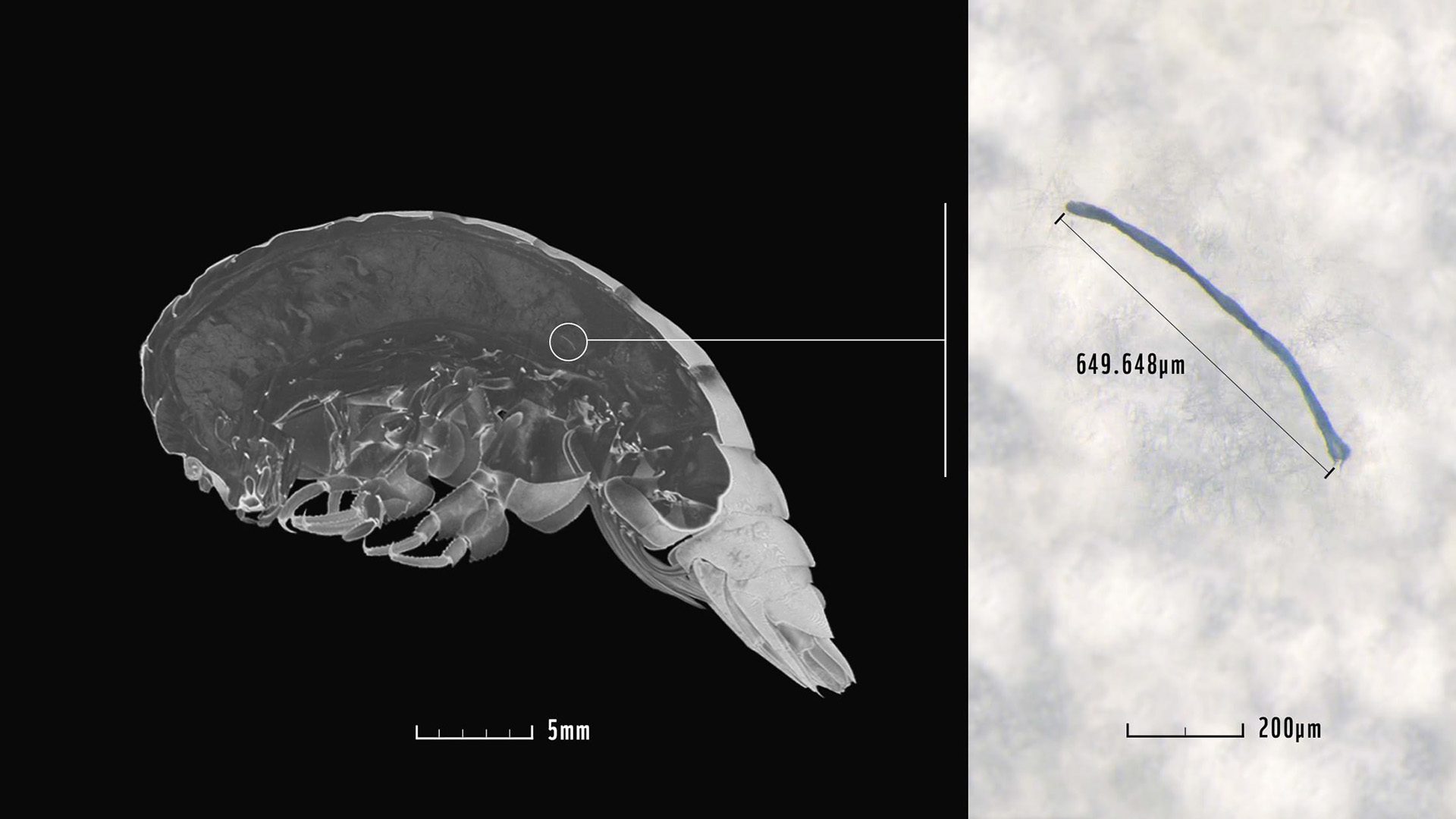
Although it’s easy to believe deep ocean animals are too far removed for us to have much impact on them, even the deepest trenches show impacts of human activity. Six-thousand meters (19,685 feet) down, in the Mariana Trench, Weston found microplastics in the stomach of a deep-ocean amphipod, which she named Eurythenes plasticus. Amphipods from deeper depths are similarly affected. “Most of those amphipods seem to have at least one microfiber in there,” she said. They also harbor high levels of “forever chemical” PCBs in their tissues—levels equal to those found in some of the world’s most polluted rivers.
In another troubling development, the deepest reaches of the oceans are also warming. “The water down there is going to heat up a lot slower” than the rest of the ocean, Weston said, but animals on the abyssal plain are adapted to a very narrow temperature window. Even small shifts from that range are likely to affect these organisms’ ability to survive and reproduce.
Why care about the ocean’s depths? Because the deep ocean quietly helps regulate the planet we live on. It stores vast amounts of carbon for centuries to millennia, helping slow climate change, and plays a critical role in cycling nutrients that sustain life throughout the ocean. The deep sea is also one of the largest and most biologically diverse ecosystems on Earth, home to remarkable animals and microbial communities that scientists are only beginning to understand.
“We are living on a 60% deep-ocean planet,” Weston said. Yet most of this vast realm remains unexplored and unseen. Discoveries from the deep sea have already led to new medicines and insights into how life survives extreme environments.
“Just as people value mountains, prairies, or wetlands, the deep ocean is a habitat worth caring about—one that supports the health of the entire ocean and performs extraordinary functions for the planet,” she said.