Please note: You are viewing the unstyled version of this website. Either your browser does not support CSS (cascading style sheets) or it has been disabled. Skip navigation.

NOSAMS Graduate Student Internship Program

  Email    Print  PDF  Change text to small (default) Change text to medium Change text to large

Enlarge Image

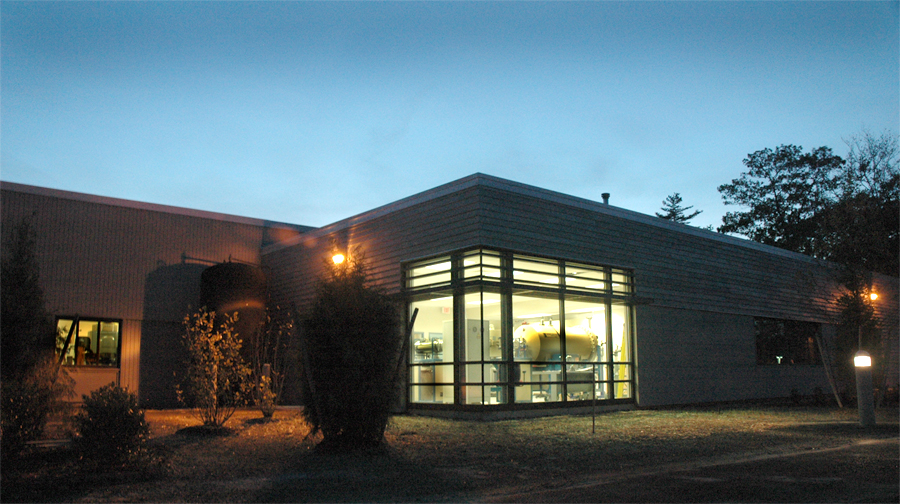
Brett Walker extracts compounds for radiocarbon dating. (Tom Kleindienst)


Each year two internships are awarded to U.S. graduate students for research at the National Ocean Sciences Accelerator Mass Spectrometry (NOSAMS) radiocarbon facility at the Woods Hole Oceanographic Institution. The internships involve application of radiocarbon measurements to an important research problem and/or development of new techniques for radiocarbon measurement and provide 2 to 6 weeks at NOSAMS. Available funds cover all analytical costs, a travel allowance, accommodation and subsistence at Woods Hole, but not field work and sampling.


Past Interns

2012
Nicole Khan (University of Pennsylvania) worked on chronologies of paleo-environmental and relative sea-level change in mangrove environments, using radiocarbon AMS analyses of sedimentary mangrove leaf, wood, bark and root fragments.

As part of Elizabeth Williams' study of the transport of terrestrial carbon to the marine environment, Elizabeth extracted and determined the radiocarbon content of lignin from differentially treated terrestrial and marine sediment.

Ben Gaglioti (University of Alaska, Fairbanks) studied permafrost behavior during past warming events using ramped pyrolysis.

Brittany Kruger (University of Minnesota, Duluth) isolated fatty acids from sediment to study terrestrial and aquatic inputs to Lake Malawi.

2011
Mara Dougherty isolated biomarkers for sulfate reducing bacteria isolated from Beaufort Sea sediments and measured their radiocarbon content.  She will use the results to shed light on the anaerobic oxidation of CH4.

2010
Brett Walker (University of California) analyzed compound classes isolated from particulate matter collected in a nearshore upwelling environment.

Ian Ball (Scripps Inst. of Oceanography) analyzed lignin phenols standards to test a method he is developing to study the radiocarbon content of lignin in oceanic DOC.

2009
Prosper Zigah (University of Minnesota) analyzed the radiocarbon content of compound classes isolated from high molecular weight DOC collected in Lake Superior.

Jeff Salacup (Brown University) used compound-specific 14C-AMS analysis of sedimentary alkenones from a muddy coastal setting to constrain and reconstruct climatic events in Naragansett Bay.

2008
Andrew Kemp (University of Pennsylvania) used high precision radiocarbon measurements to date the historical onset of accelerated relative sea-level rise.

Branwen Williams (Ohio State University) measured radiocarbon in bamboo corals to study the western Pacific warm pool.

Juzhi Hou (Brown University) developed and HPLC method to isolate and measure the radiocarbon content of lignin phenols extracted from lake sediments.

2007
Haiwei Shen (GSO, University of Rhode Island) developed a method to isolate and measure the radiocarbon content of formaldehyde collected from ambient air.

Andrew Wozniak (Virginia Institute of Marine Science) used both stable and radio- carbon isotopes to characterize the total and water-soluble fractions of organic matter in aerosol samples from watersheds.


Last updated: February 15, 2013


whoi logo

Copyright ©2007 Woods Hole Oceanographic Institution, All Rights Reserved, Privacy Policy.
Problems or questions about the site, please contact webdev@whoi.edu
Site Map | Privacy Statement | Contact | WHOI Home Page