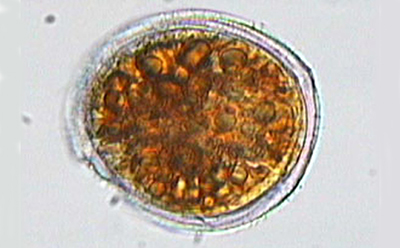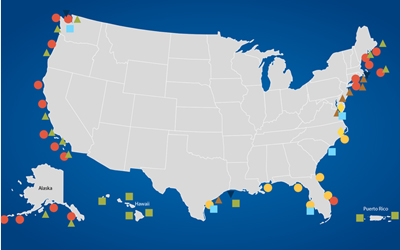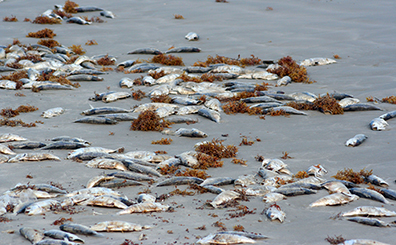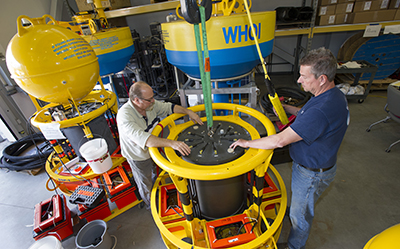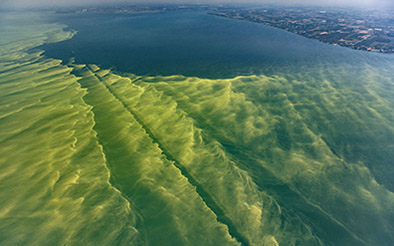
Reports of harmful algal blooms in U.S. waters and around the world have drastically increased in the past three decades. Researchers attribute the increase partly to excessive nutrient pollution of the water and partly to better detection of HABs by coastal monitoring programs. (Don Anderson and Jayne Doucette, WHOI Graphic Services)
Recent Trends: National changes
The nature of the U.S. HAB problem has changed
considerably over the last several decades in both marine and
freshwaters. Whereas 30 years ago the problem was scattered and
sporadic, today virtually every state is threatened by harmful or toxic
algal species. Few would disagree that the number of harmful blooms,
the economic losses from them, the types of resources affected, and the
number of toxins and toxic species have all increased dramatically in
recent years in the U.S. and around the world.
There are several reasons for this expansion, including both natural
and human-mediated. The organisms responsible for HABs have been on
earth for a long time, so seemingly “new” bloom events may also simply
reflect better detection methods and more observers rather than species
introductions or dispersal events. For example, the appearance of ASP
along the west coast is not attributable to a recent introduction or
coastal pollution, but rather to increased communication among
scientists and improved chemical detection methods that led to the
identification of a toxin that was surely present in those waters for
many years. Another factor contributing to the rise in HAB detection is
the dramatic increase in aquaculture activities over the past few
decades, which necessitated increased monitoring of product quality and
safety and consequently revealed indigenous toxic algae that were
probably always there.
Many also believe that pollution or
other human activities are involved. On close inspection, however, many
of the new or expanded HAB problems in the U.S. occurred in waters
where pollution is not an obvious factor. For example, the 1987 NSP
event in North Carolina was caused by a Florida bloom carried by the
Gulf Stream to North Carolina waters - a totally natural dispersal
event with no linkage to human activities. Likewise, a massive 1972 red
tide was responsible for introducing dormant cysts of the PSP-producing
species Alexandrium tamarense to southern New England waters. After
this introduction, these waters experienced sporadic outbreaks until a
massive HAB event occurred in 2005 that was unprecedented in geographic
range and intensity. Although those coastal waters have seen an
increase in pollution over the years, the initial introduction of the
species and subsequent outbreaks were primarily the result of ocean
currents and environmental forcings, such as a hurricane which preceded
the 1972 bloom and the unusual weather patterns that occurred prior to
the 2005 event. Pollution may have enhanced subsequent blooms of this
species; however, this has not been conclusively demonstrated.
However,
the linkage to pollution should not be ignored as the increase of
nutrient inputs into our coastal waters can stimulate the growth of
naturally-occurring populations of microscopic and macroscopic algae
(seaweeds) to bloom proportions. Some scientists even argue that the
nutrients that humans supply to coastal waters are delivered in
proportions which differ from those that naturally occur, which alters
the species composition of the algae by favoring the growth of certain
groups that are better adapted to our nutrient supply ratios. Among
such groups are some well-known HAB species. One example where nutrient
inputs have been linked to harmful blooms is with the dinoflagellate Pfiesteria and closely related fish-killing species, which seem to thrive in polluted waters.
One
way to view the expansion of HAB phenomena in the U.S. is that we are
better defining the boundaries of the problem - boundaries that may be
expanding somewhat due to pollution or other global change issues, but
which were always bigger than we thought. As we identify new toxins and
new toxic species, we begin to understand the true nature and extent of
the problem. This does not negate our concern about the expansion, nor
does it alter the manner in which we must mobilize resources to
mitigate HAB impacts. The national HAB problem is serious and large -
much larger than we thought. If it is also growing due to human
activities, then our concerns are even more urgent.
Last updated: July 31, 2012

© Copyright WHOI 2007. All rights reserved.