
Oceanography
Mercury cycle illustration
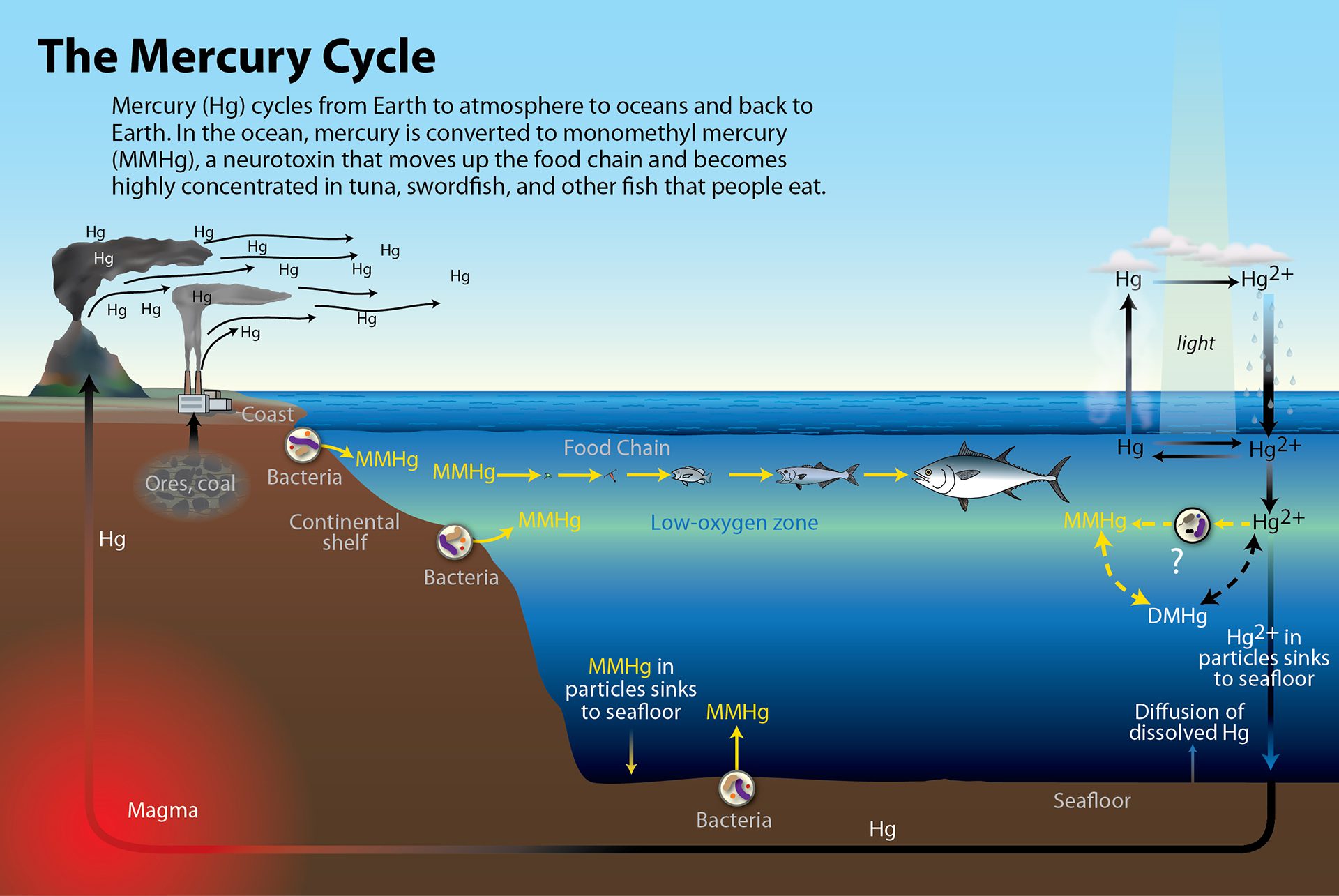
Mercury cycles between Earth, air, and ocean, where it becomes toxic monomethylmercury that builds up in tuna, swordfish, and other fish we consume.
Read MoreSubsea oil seep
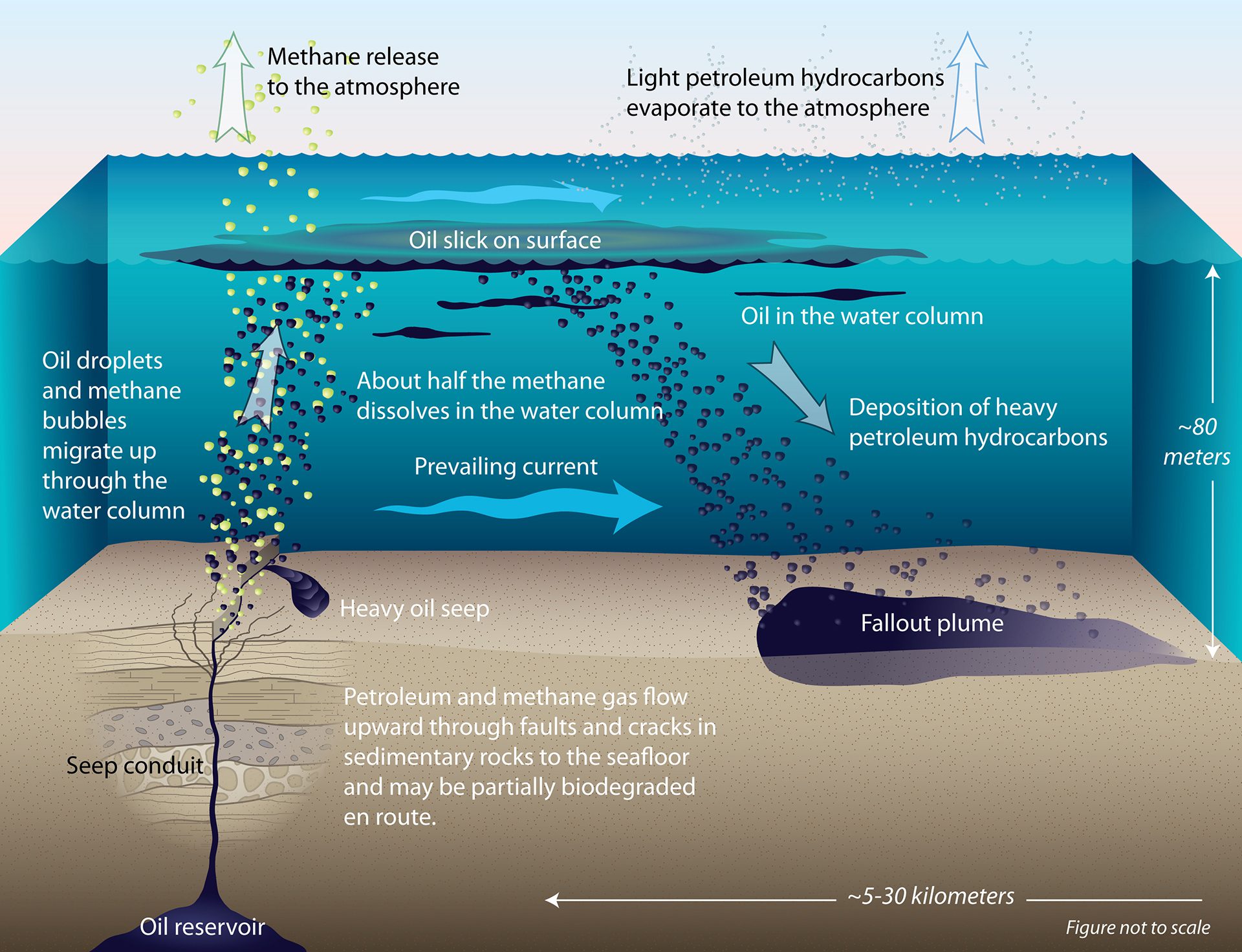
About half of ocean oil comes from natural seeps. Studying their path helps scientists better understand how oil moves and settles after spills.
Read MoreIllustration of Alexandrium life cycle Red tide research
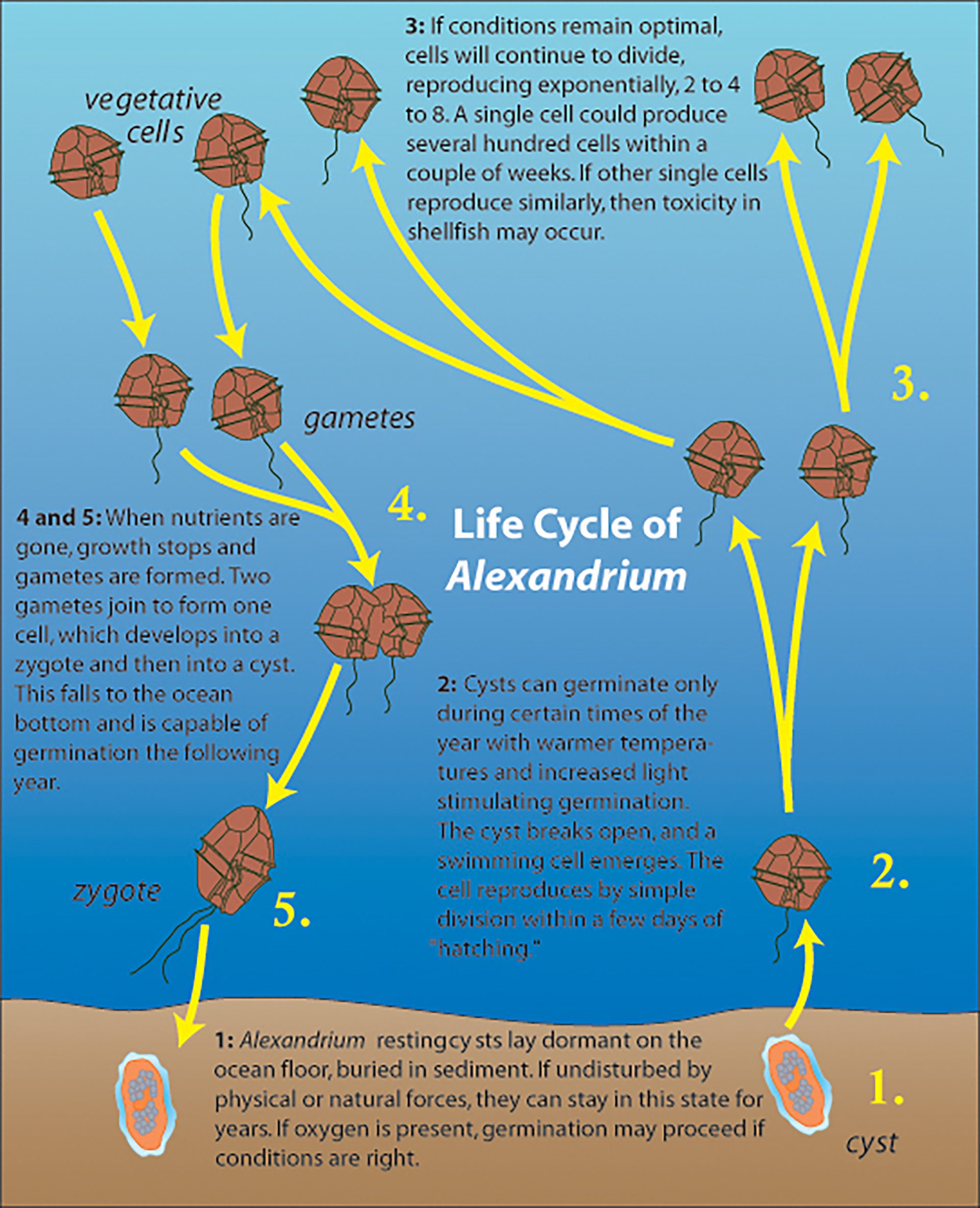
Dinoflagellates such as Alexandrium, which can cause harmful algal blooms, have effective strategies for survival and dispersal.
Read MoreIllustration of a whale-detection DMON buoy system
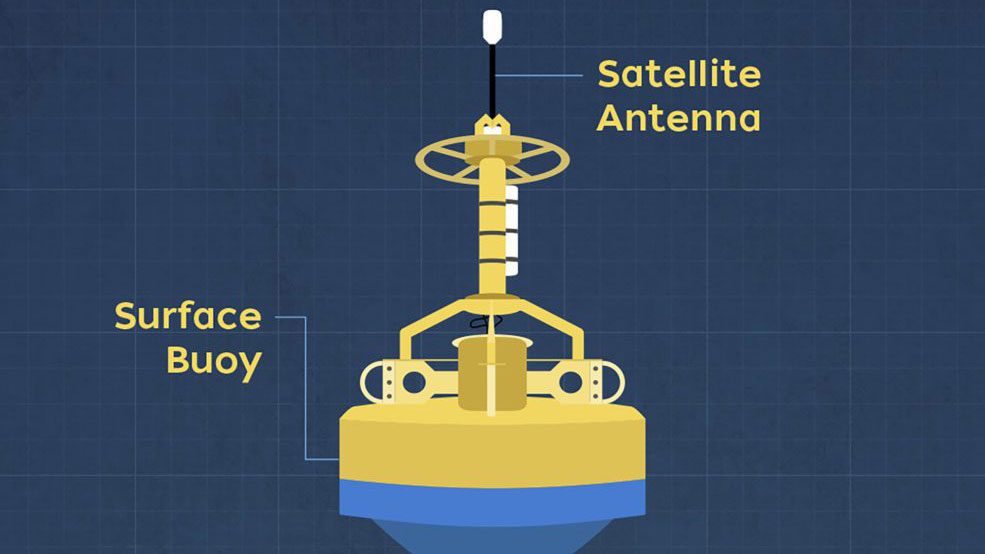
This whale detection system transmits information about whale sounds to shore in near real time.
Read MoreMass spectrometry process
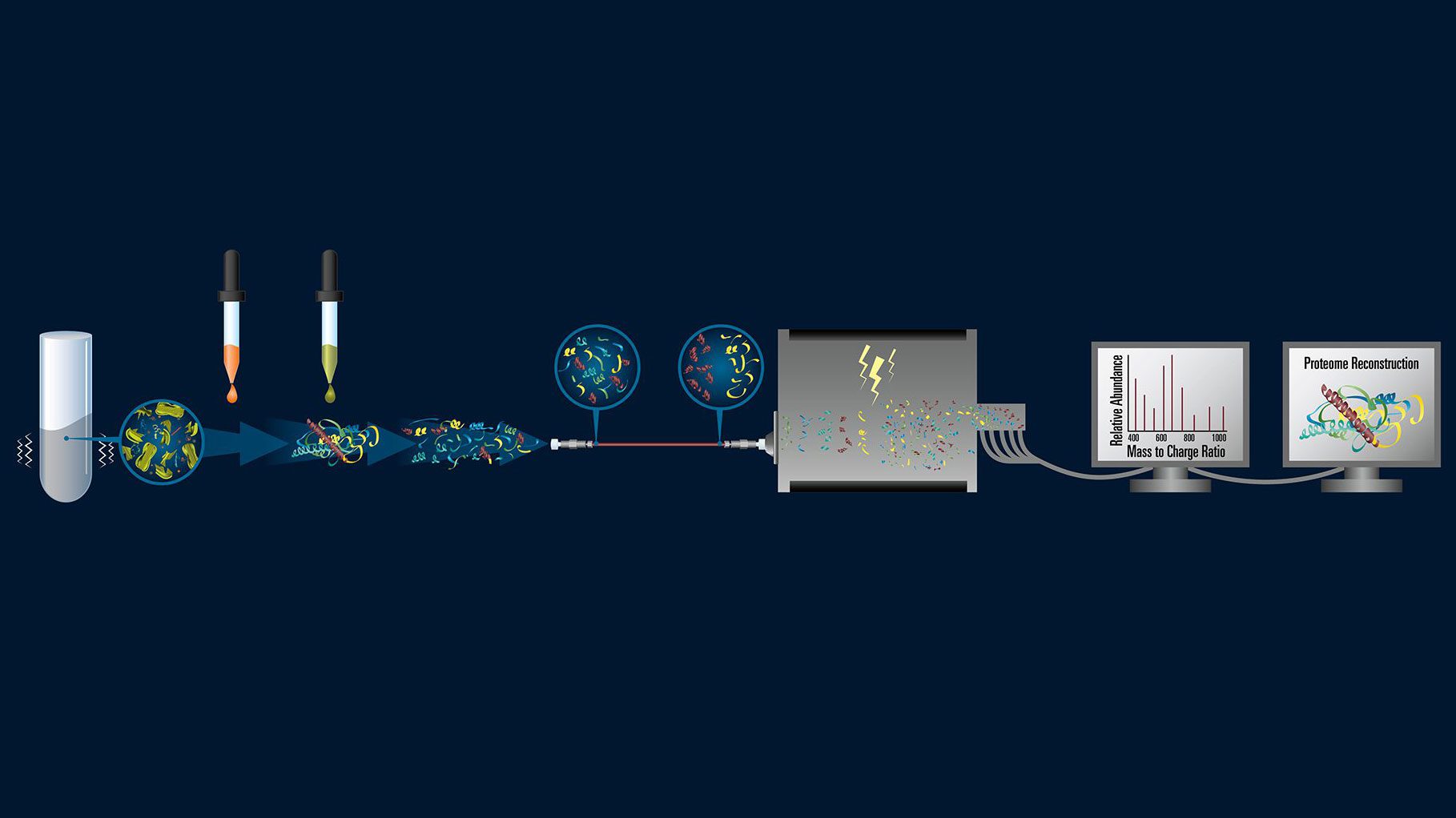
Proteomics helps scientists see how ocean organisms respond to change by analyzing the proteins they produce—not just what they can do, but what they are doing.
Read MoreSperm whale path
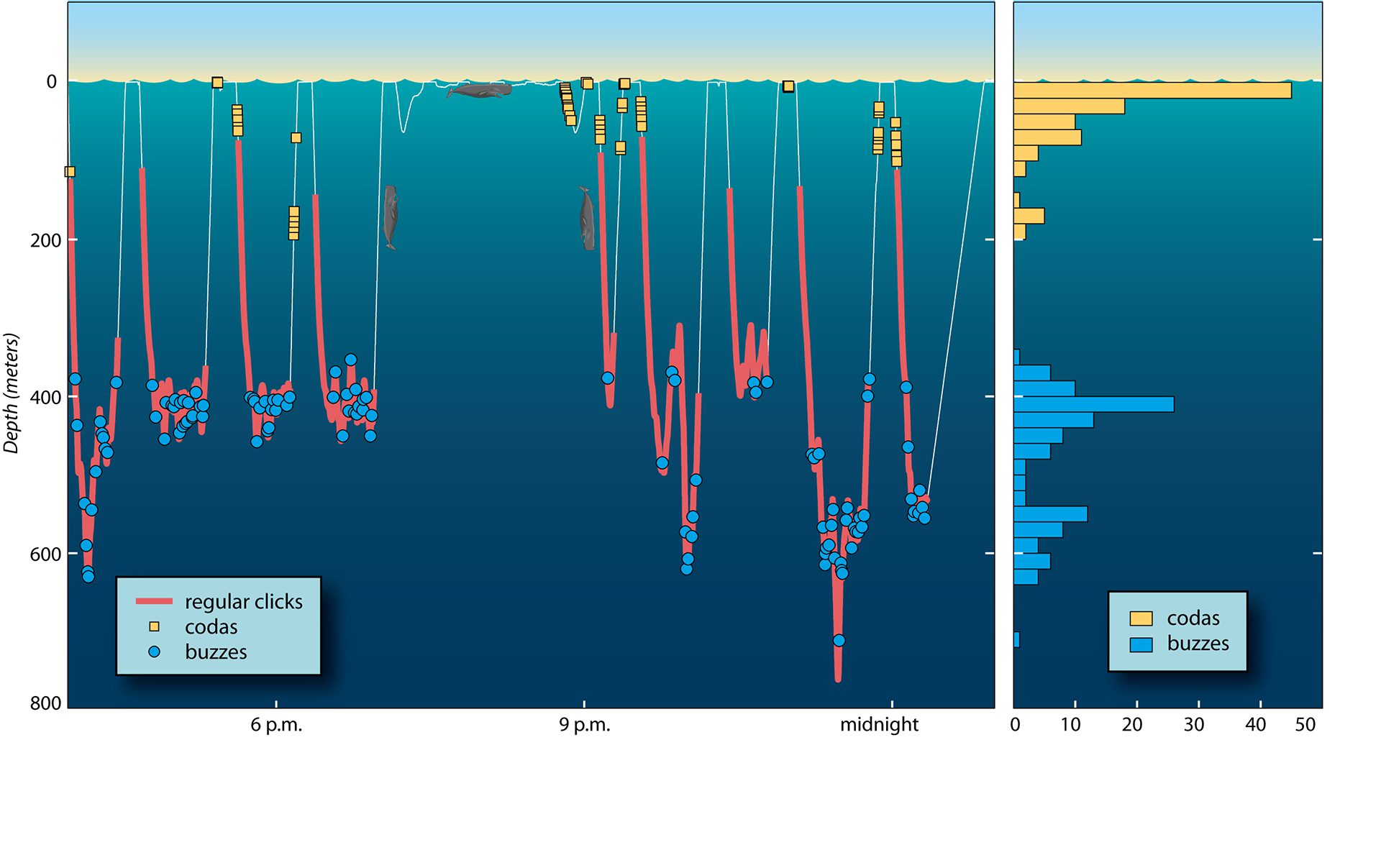
D-tag data show sperm whales use rhythmic “codas” to communicate and rapid “buzzes” to pinpoint prey, revealing how they navigate and hunt in the deep.
Read MoreSubsea asphalt volcano
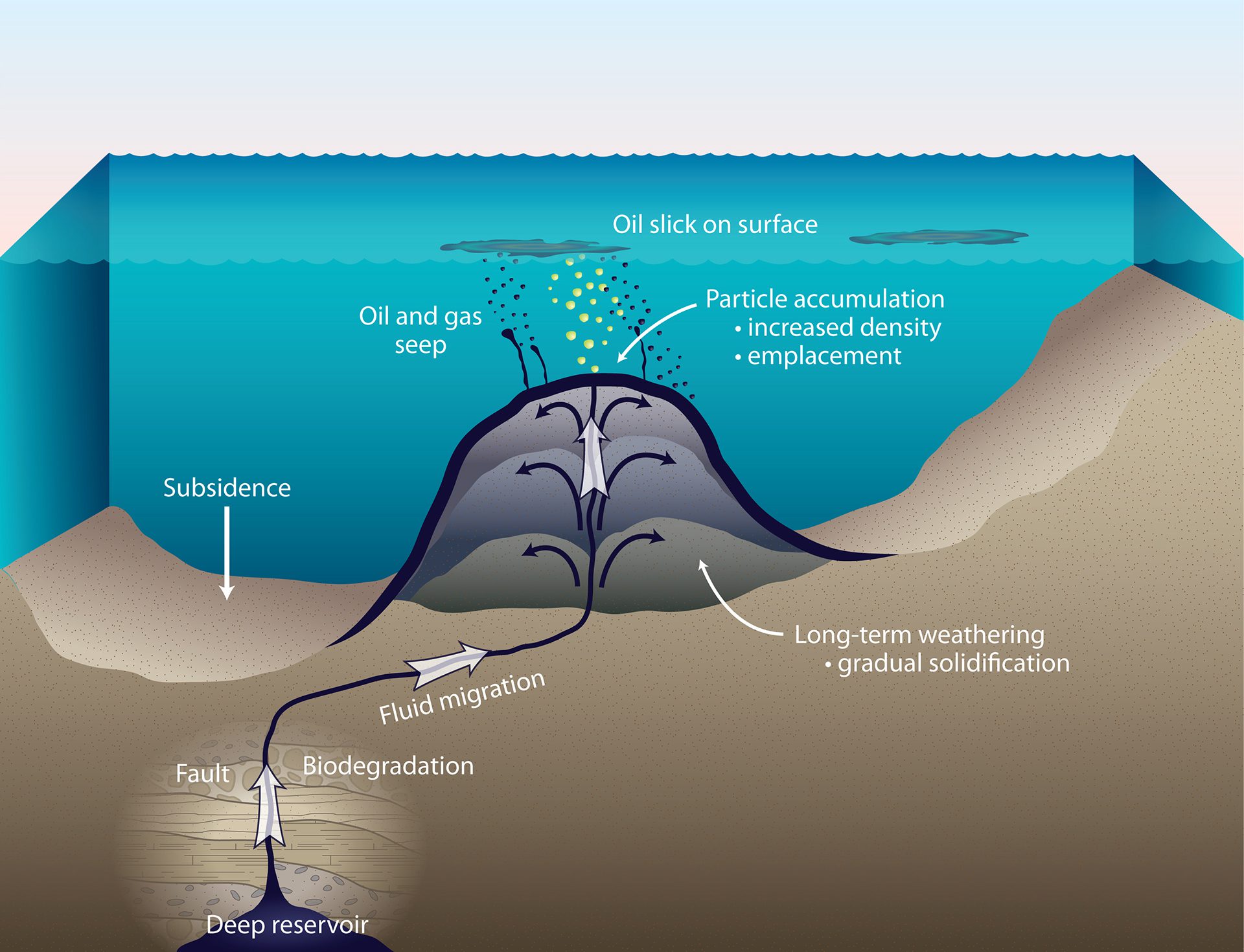
Faulting or rupturing in the Earth around allows oil and gas from subterranean reservoirs to seep up to the seafloor, while some oil solidifies to create asphalt volcanoes.
Read MoreHow multibeam sonar works
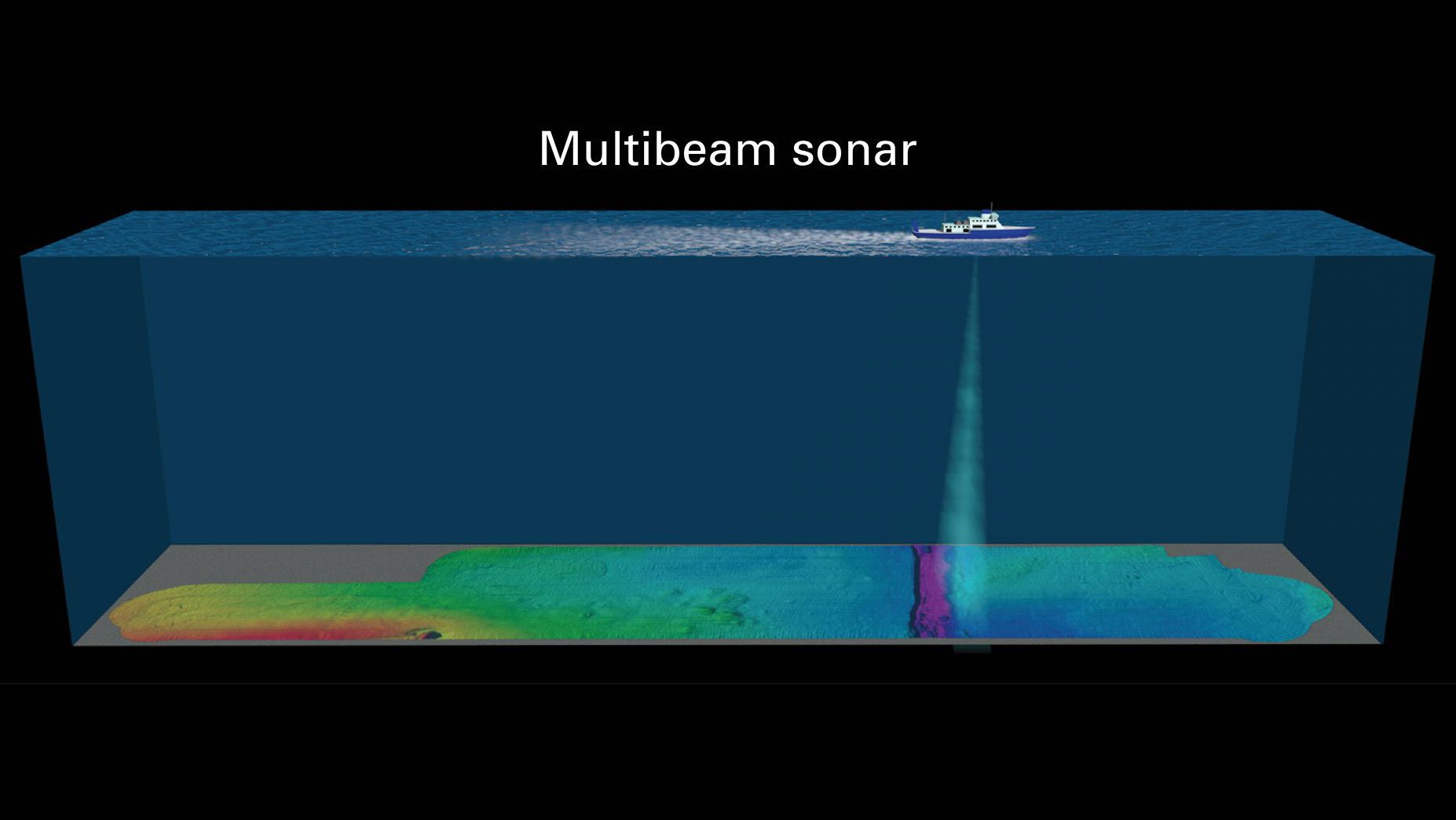
Multibeam sonar maps the seafloor by sending sound waves from ships or vehicles and measuring echoes to reveal depth, shape, and surface features.
Read MoreHow Right whale buoy detection system works
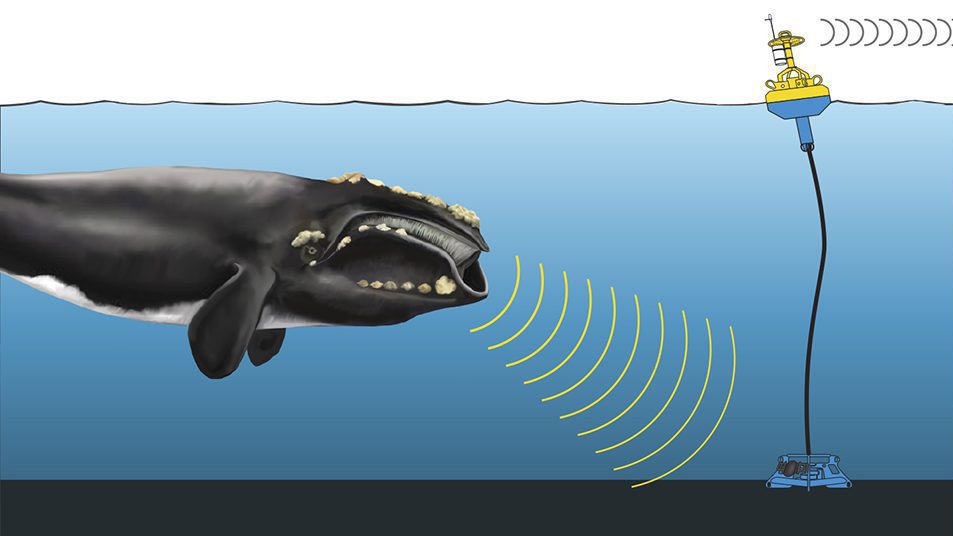
The DMON buoy detects whale calls, sends data via satellite to scientists in near-real time, helping identify species and reduce ship-whale collisions.
Read MoreHow sidescan sonar works
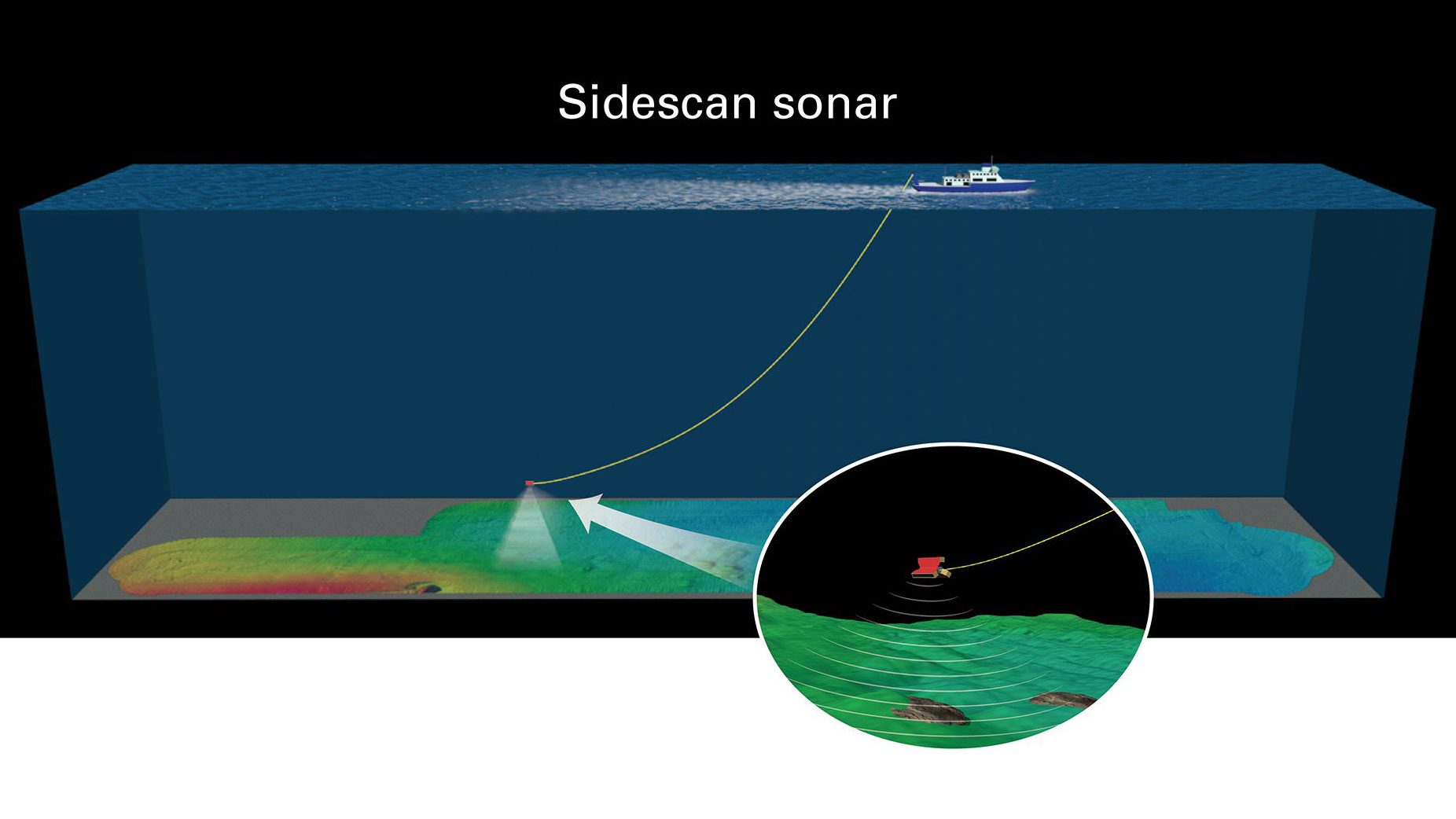
Sidescan sonar towed 500m above the seafloor maps surface textures. Soft mud appears dark; hard features like crusts or shells show up as bright images.
Read MoreThe carbon exchange cycle
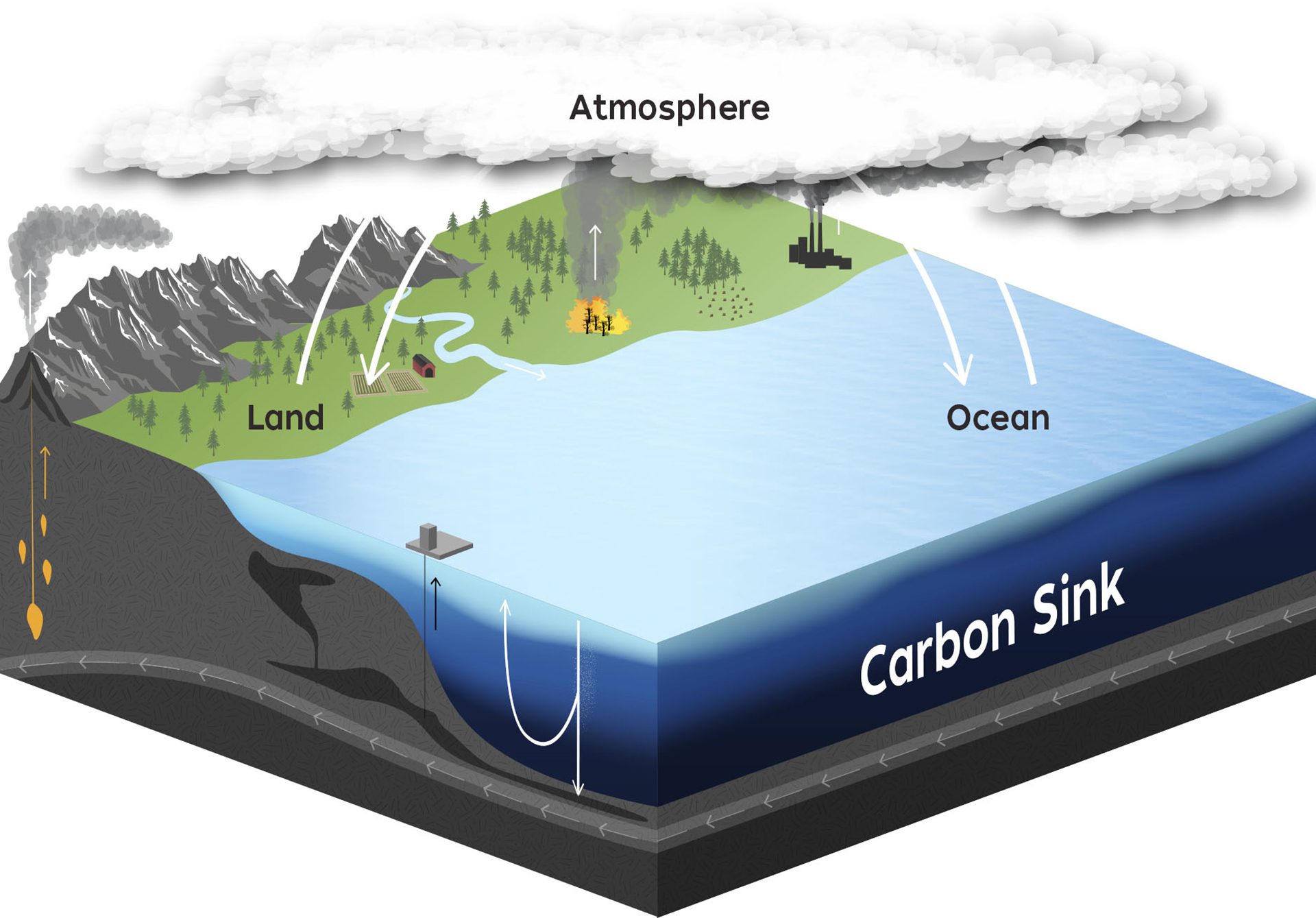
Carbon moves between air, land, and sea. In the ocean, CO? dissolves, is used by life, or stored in deep rocks—key to climate and life on Earth.
Read MoreThe effects of ocean acidification on sound waves
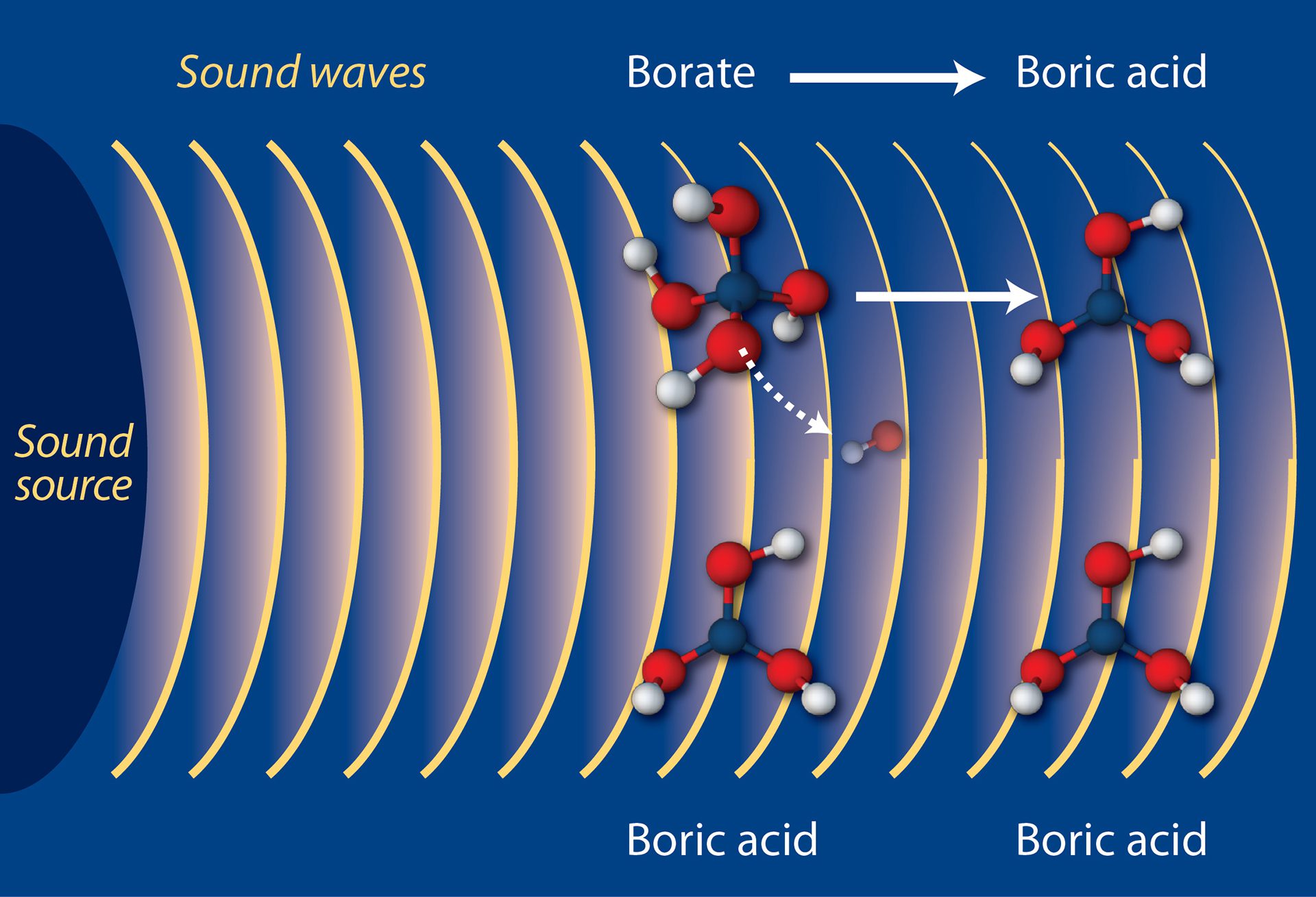
Low-frequency ocean sound causes borate to change to boric acid, absorbing energy. Ocean acidification may reduce this, but WHOI scientists found the effect on sound travel is minimal.
Read MoreTransport of copepods through the water column
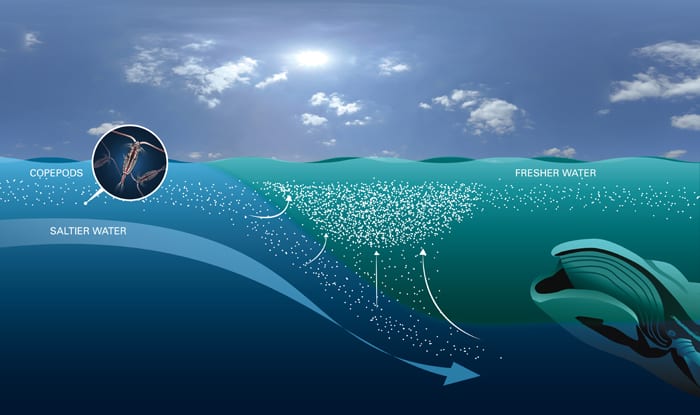
The Great South Channel ocean front forms where fresh coastal water meets saltier water, causing copepods to gather in dense patches as they sink and swim back up the front.
Read MoreThe Great South Channel ocean front
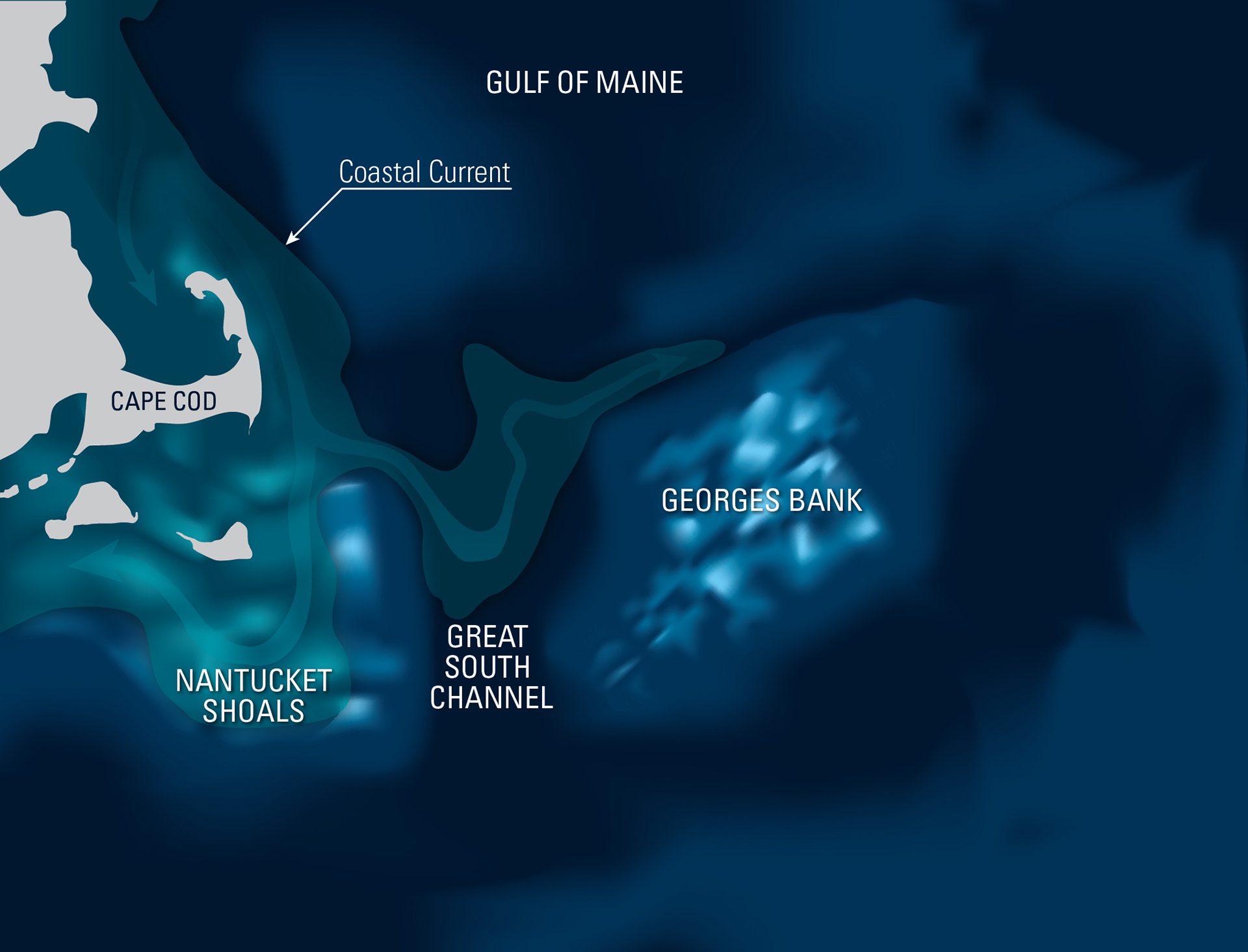
Map showing an ocean front where cold, dense water from the Great South Channel meets fresher flows from the New England Coastal Current.
Read MoreAir-sea daily rhythm
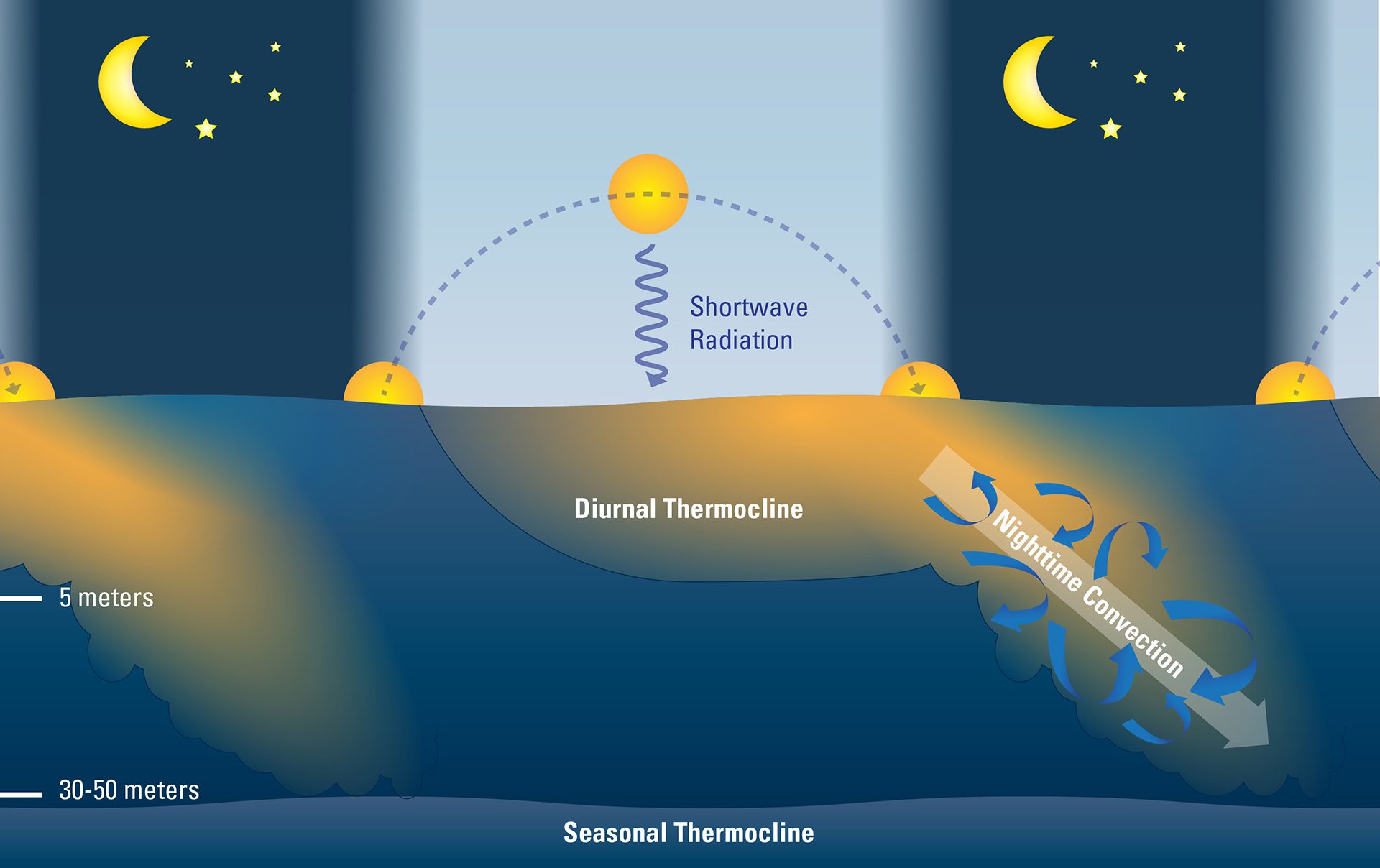
Daily, sunlight warms ocean surface waters; at night, cooled, heavier water sinks and mixes down, renewing the surface for the next day’s heat exchange cycle.
Read MoreIllustration depicting Air-Sea exchanges
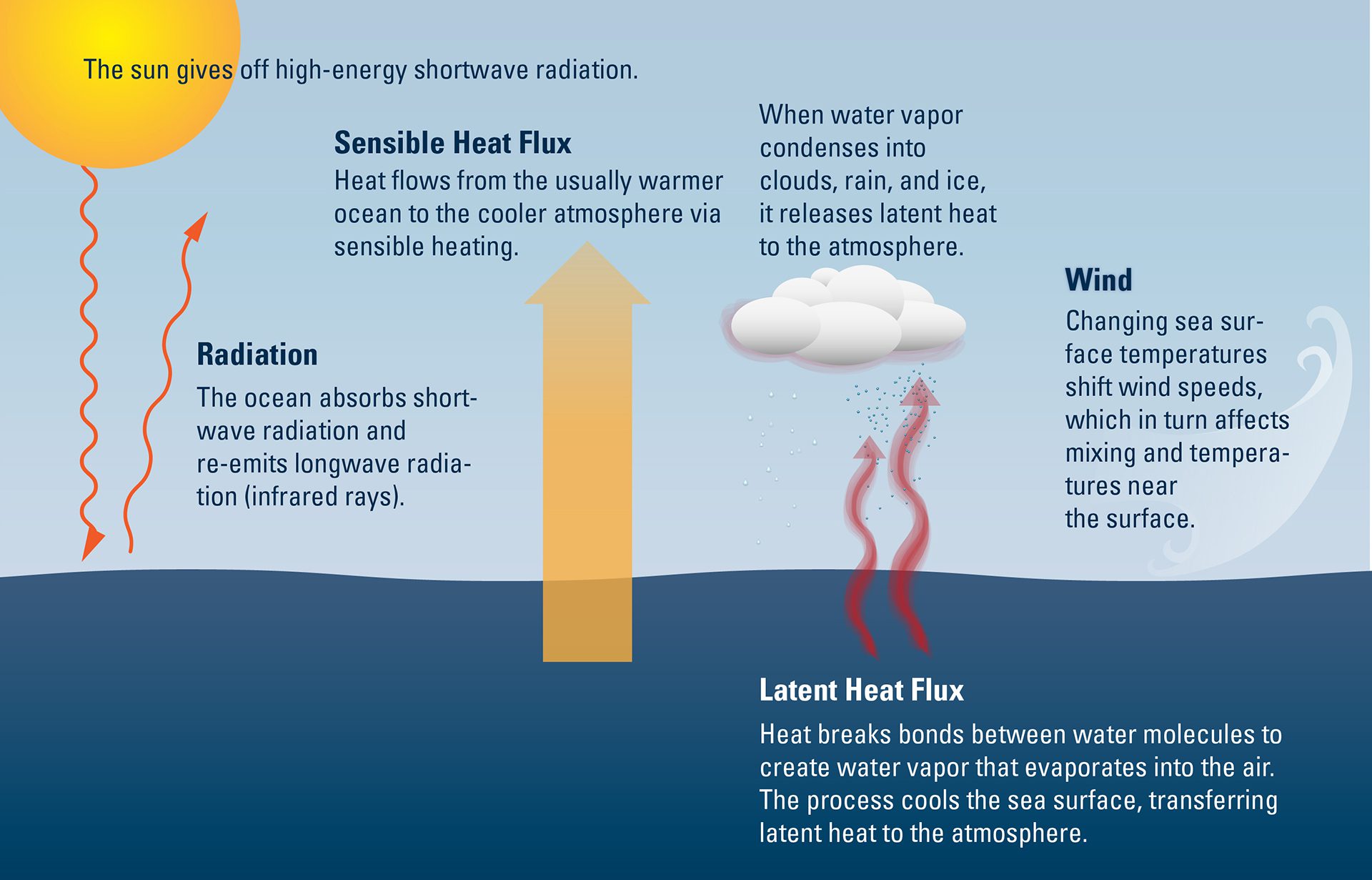
Scientists have assumed that under calm conditions, the ocean’s surface layer doesn’t mix with deeper waters. New observations suggest that this may not be true.
Read MoreHow the Dimethylsulfoniopropionate (DMSP) compound affects the environment
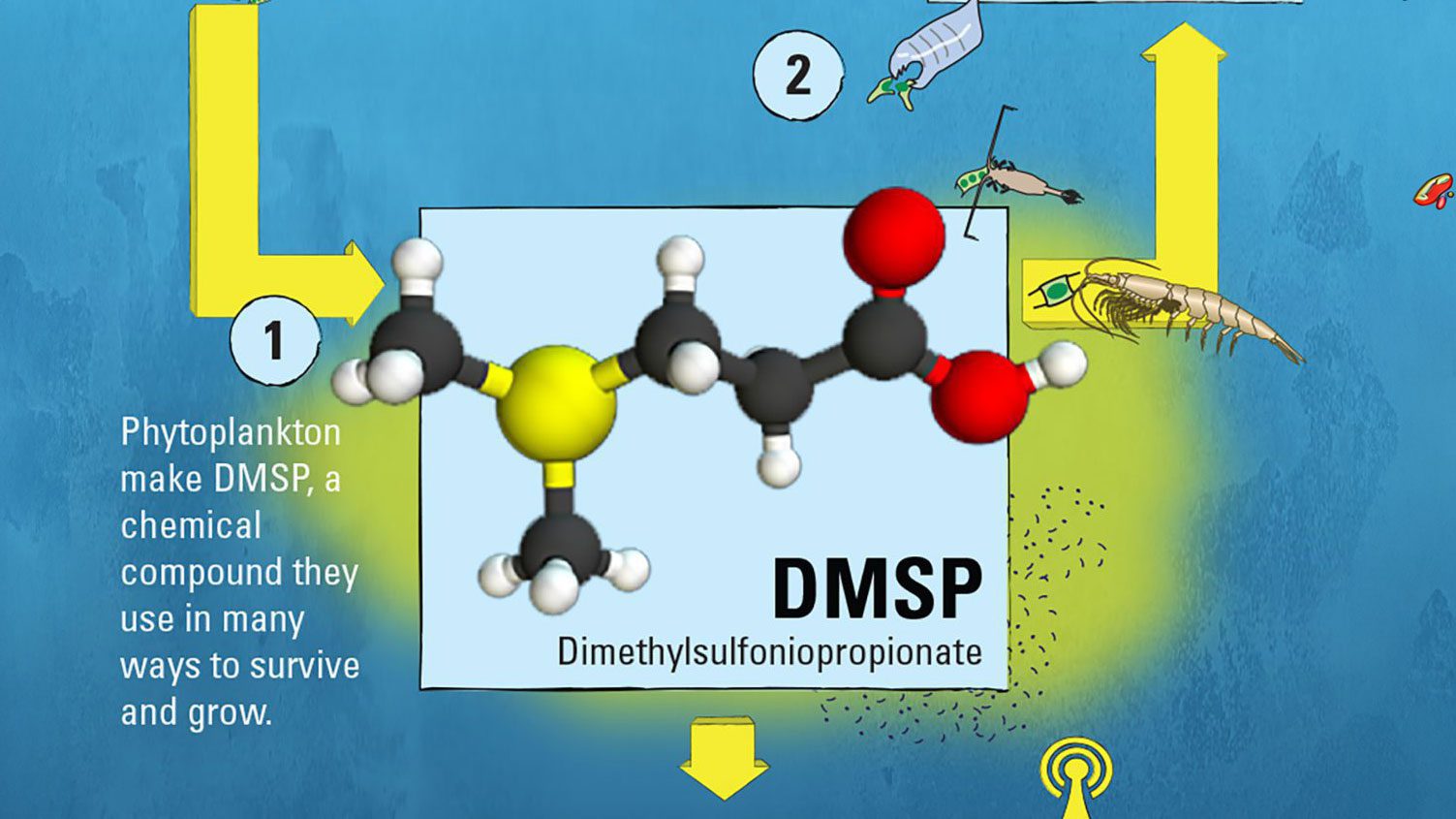
DMSP is synthesized by phytoplankton—the microscopic marine plants at the heart of the ocean food web—for a variety of beneficial uses.
Read MoreHow biomagnification works
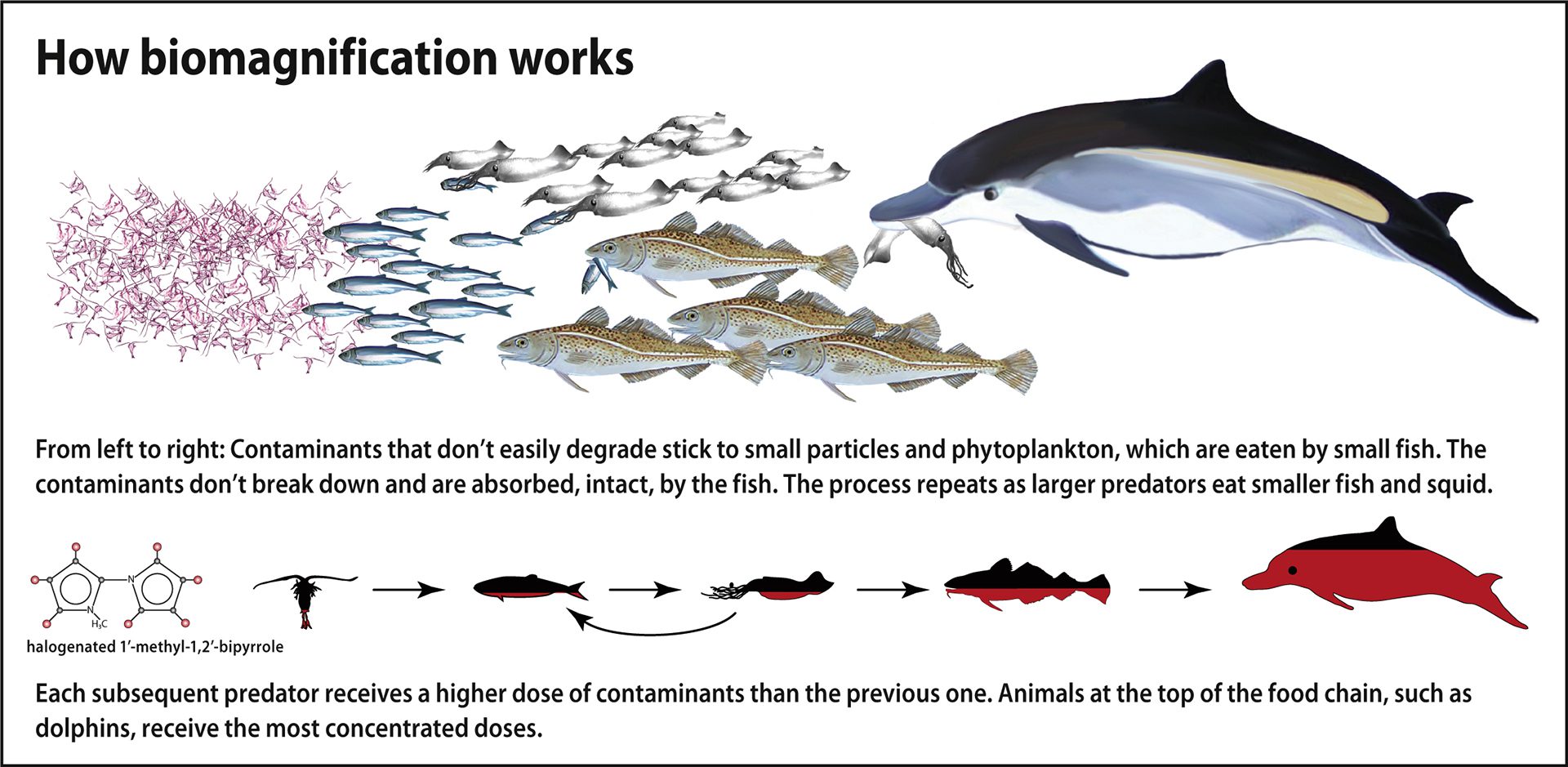
Contaminants cling to tiny particles eaten by small fish, then concentrate up the food chain. Top predators like dolphins get the highest contaminant doses.
Read MoreLiquid Chromatography – Mass Spectrometry
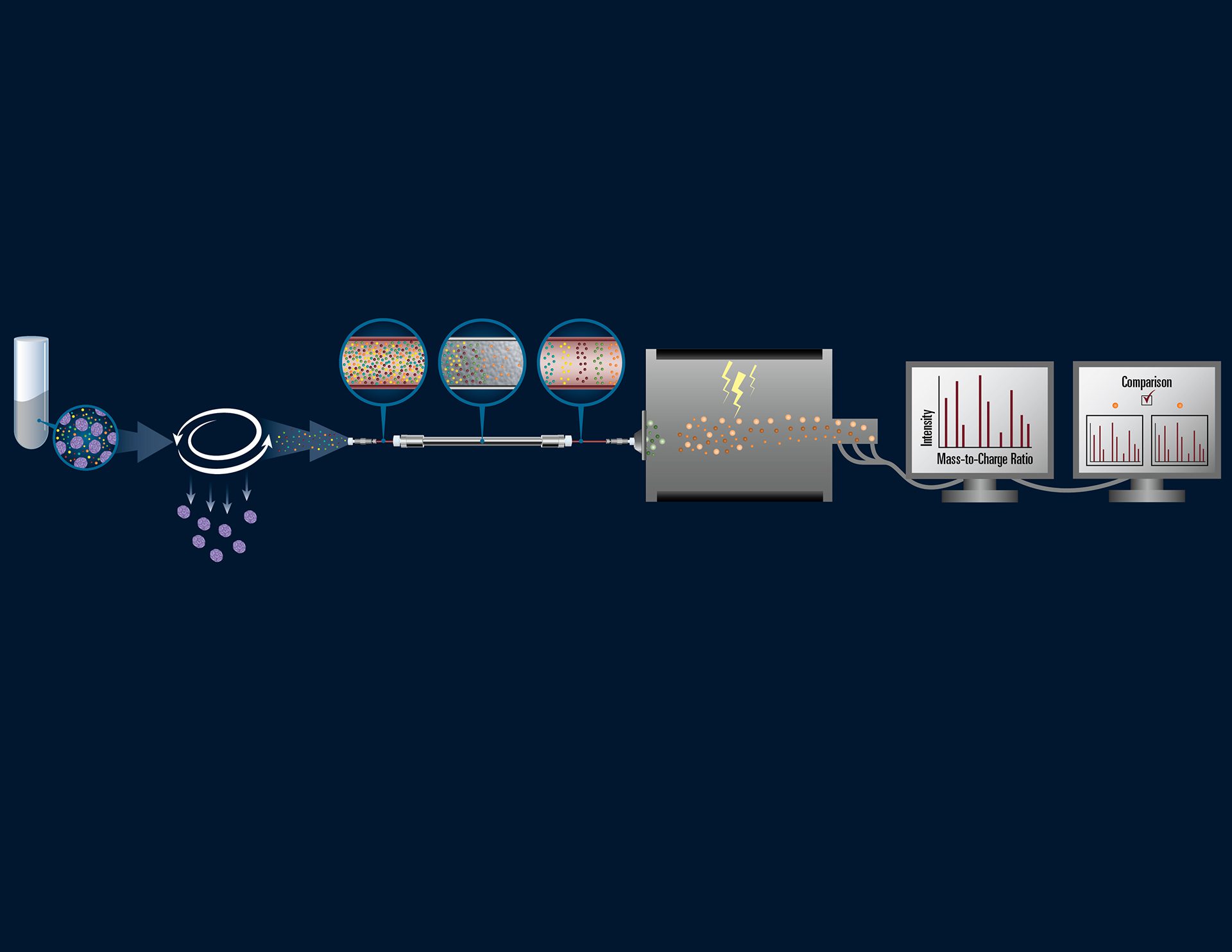
Phytoplankton samples are filtered, compounds extracted and separated by chemistry, then analyzed by mass spectrometry to identify and compare organic carbon types.
Read MoreSources of dissolved iron in seawater
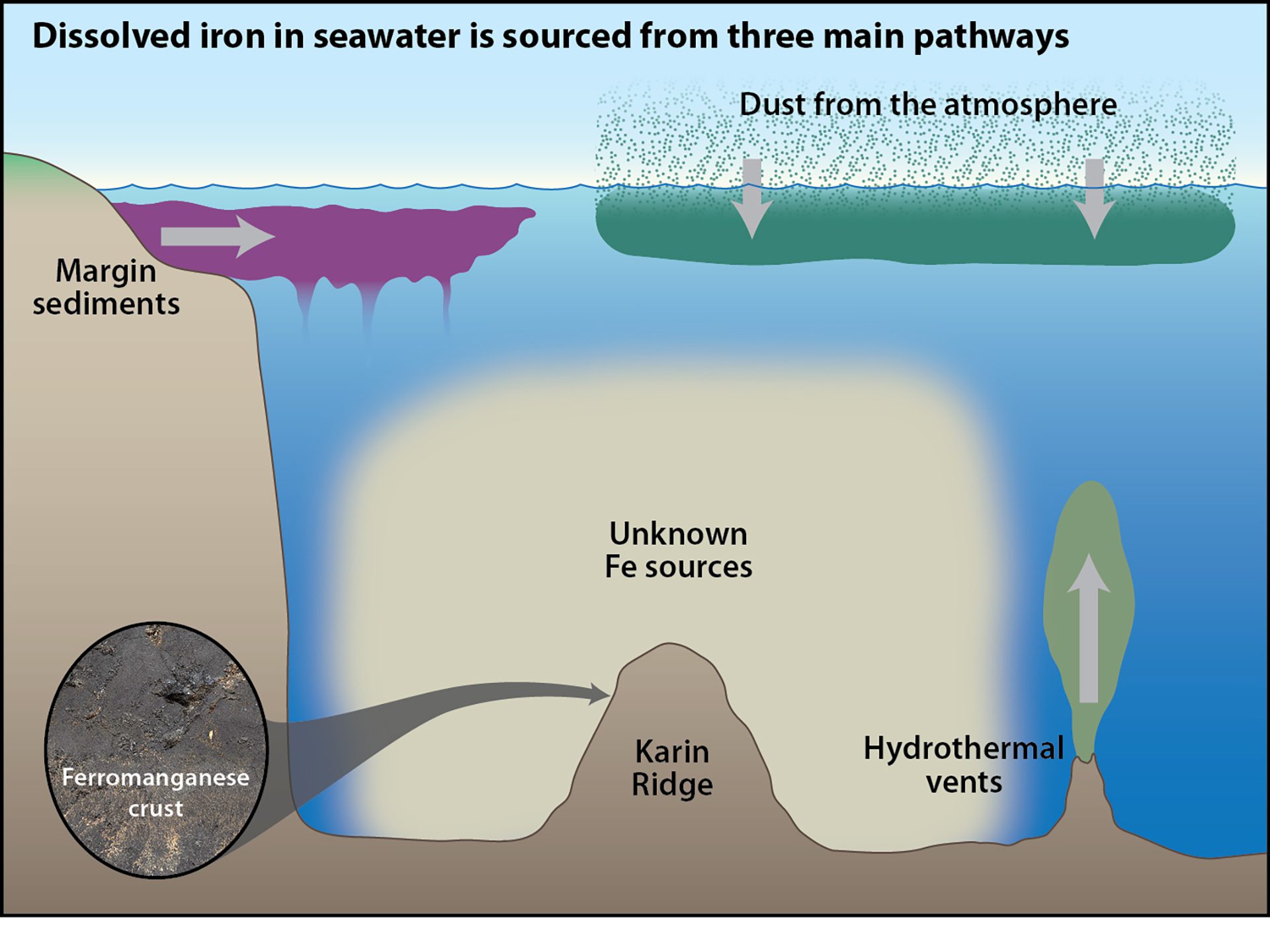
New research shows deep-ocean vents and sediments supply much dissolved iron to the central Pacific, traveling far—challenging the dust-only iron source view.
Read MoreIllustration depicting the chemical journey of leaf wax
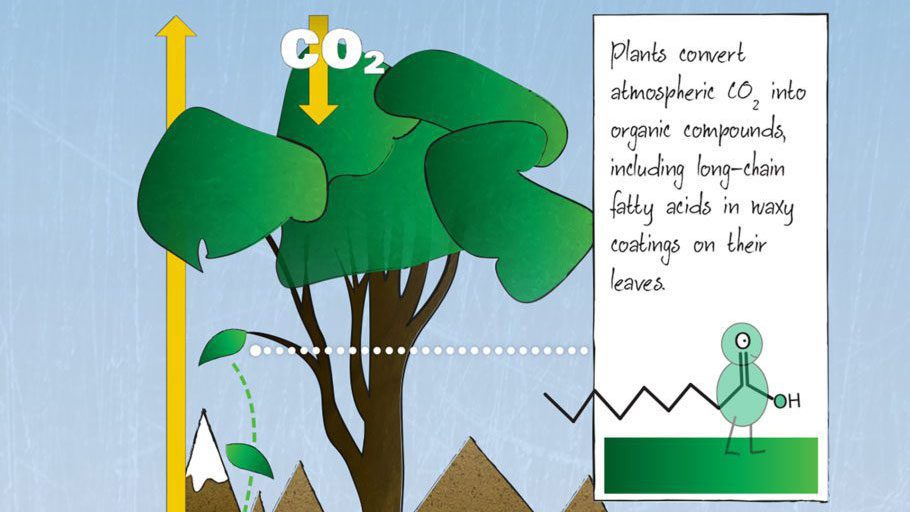
By dating leaf waxes, scientists can examine links between climate changes and carbon storage on land.
Read MoreDeep Western Boundary Current Circulation
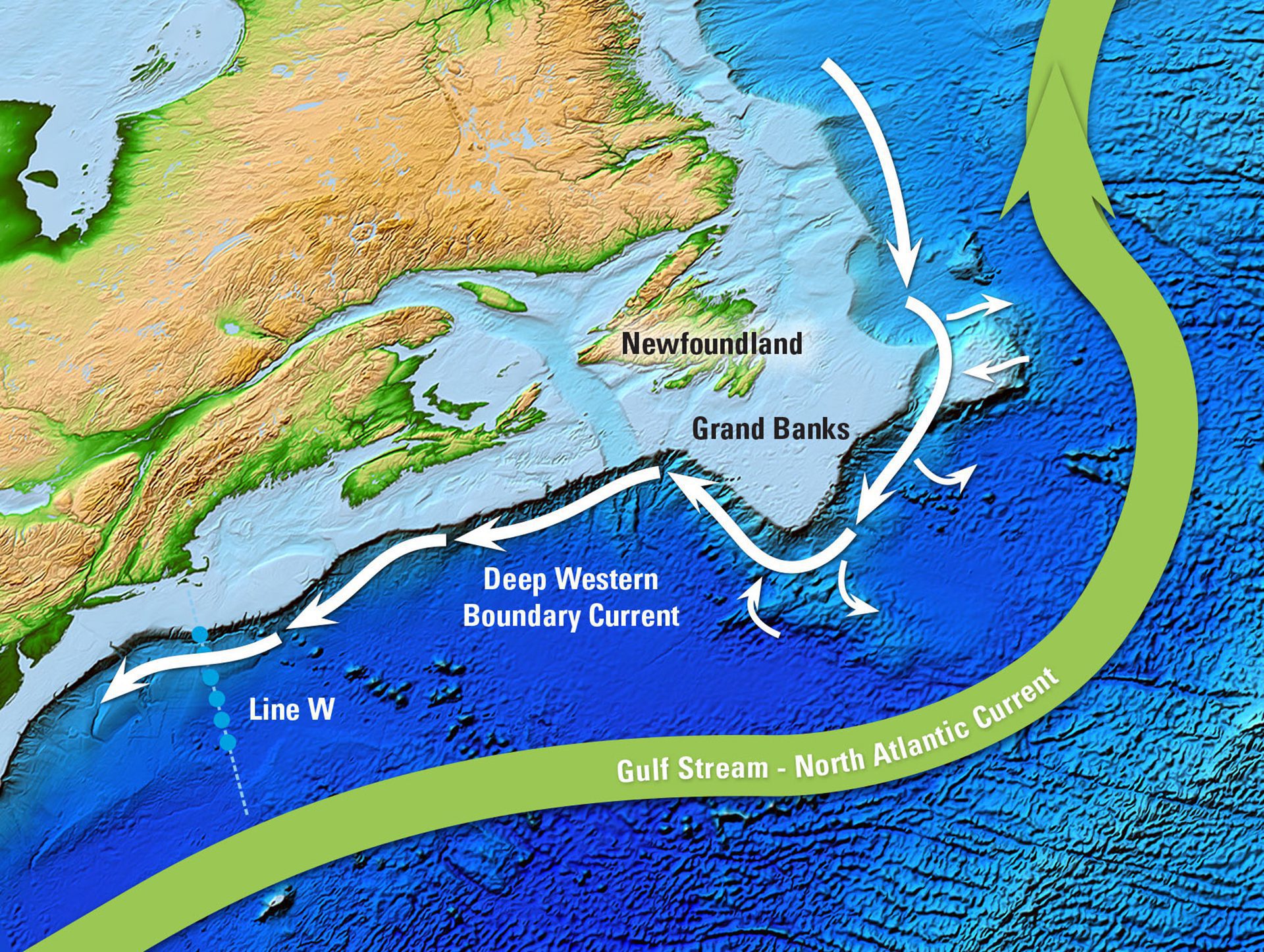
Map of Newfoundland coast showing drifter data revealing most of the Deep Western Boundary Current flows offshore near the Grand Banks.
Read MoreFormation cycle of piteraq winds
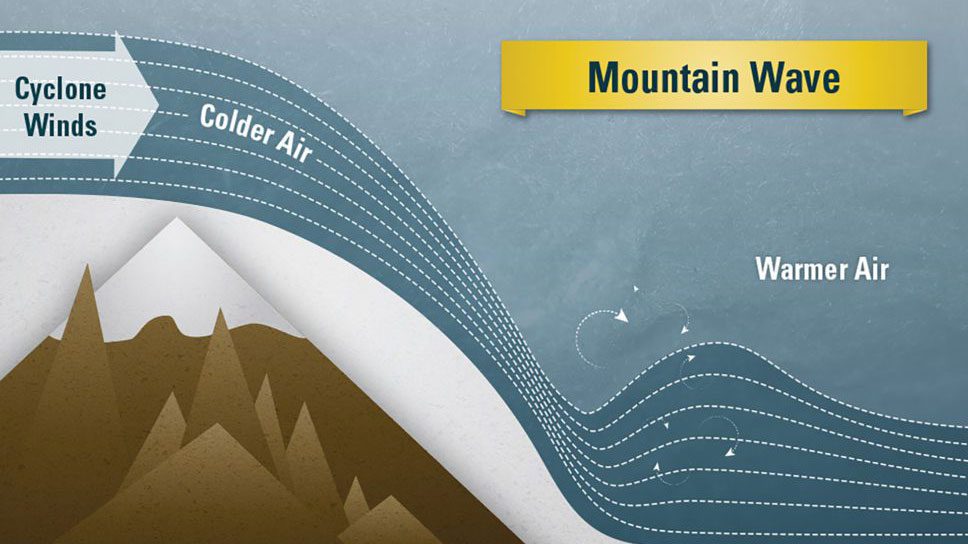
Piteraqs form when cyclones push cold air downhill, creating fast, turbulent winds funneled by valleys that accelerate and crash like giant mountain waves.
Read MoreIllustration depicting the formation of the Samoan Islands chain
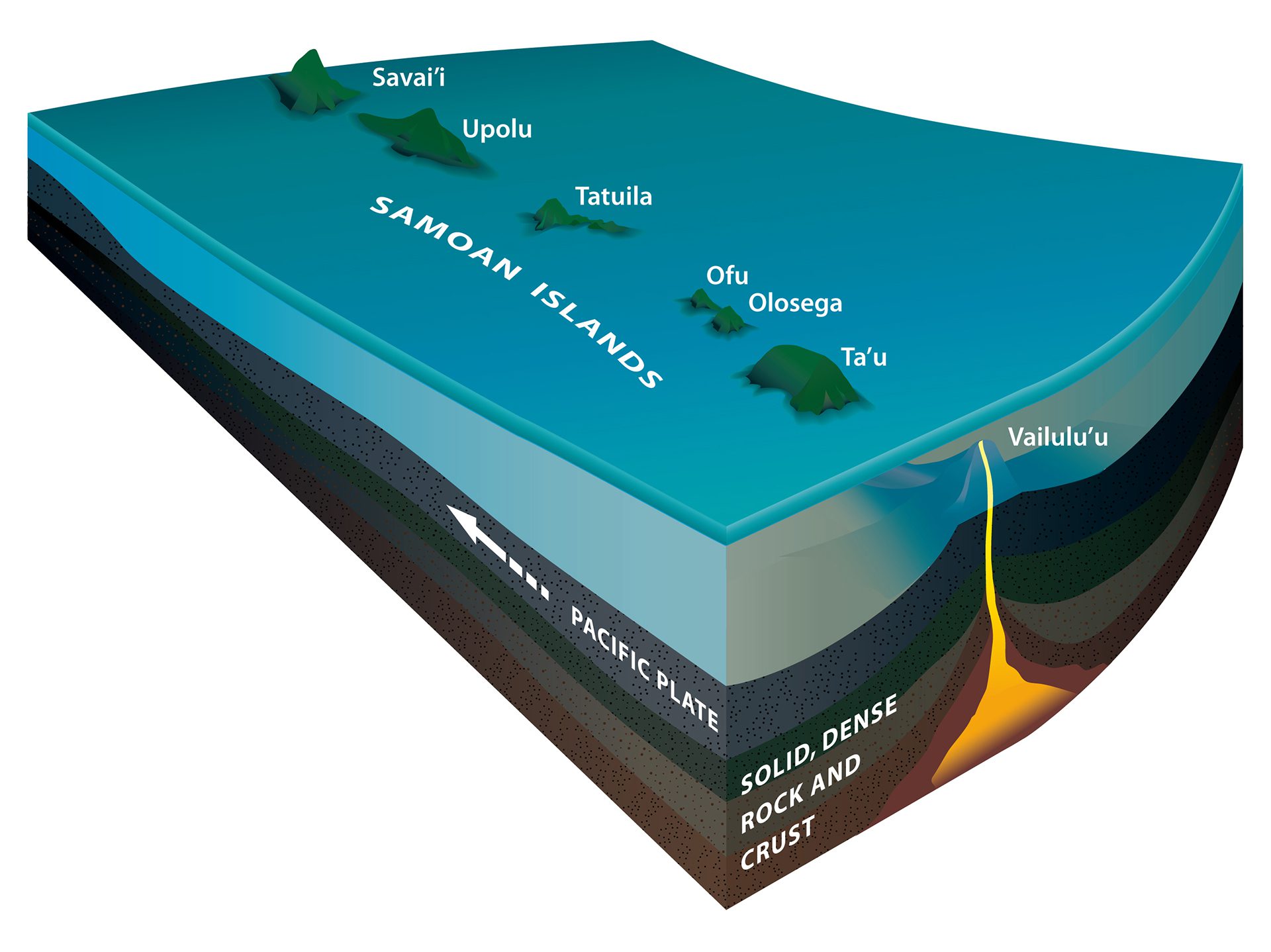
Like Hawaii, the Samoan Islands formed over a volcanic hotspot.
Read More