
Earth Science
Arteries of the Ocean
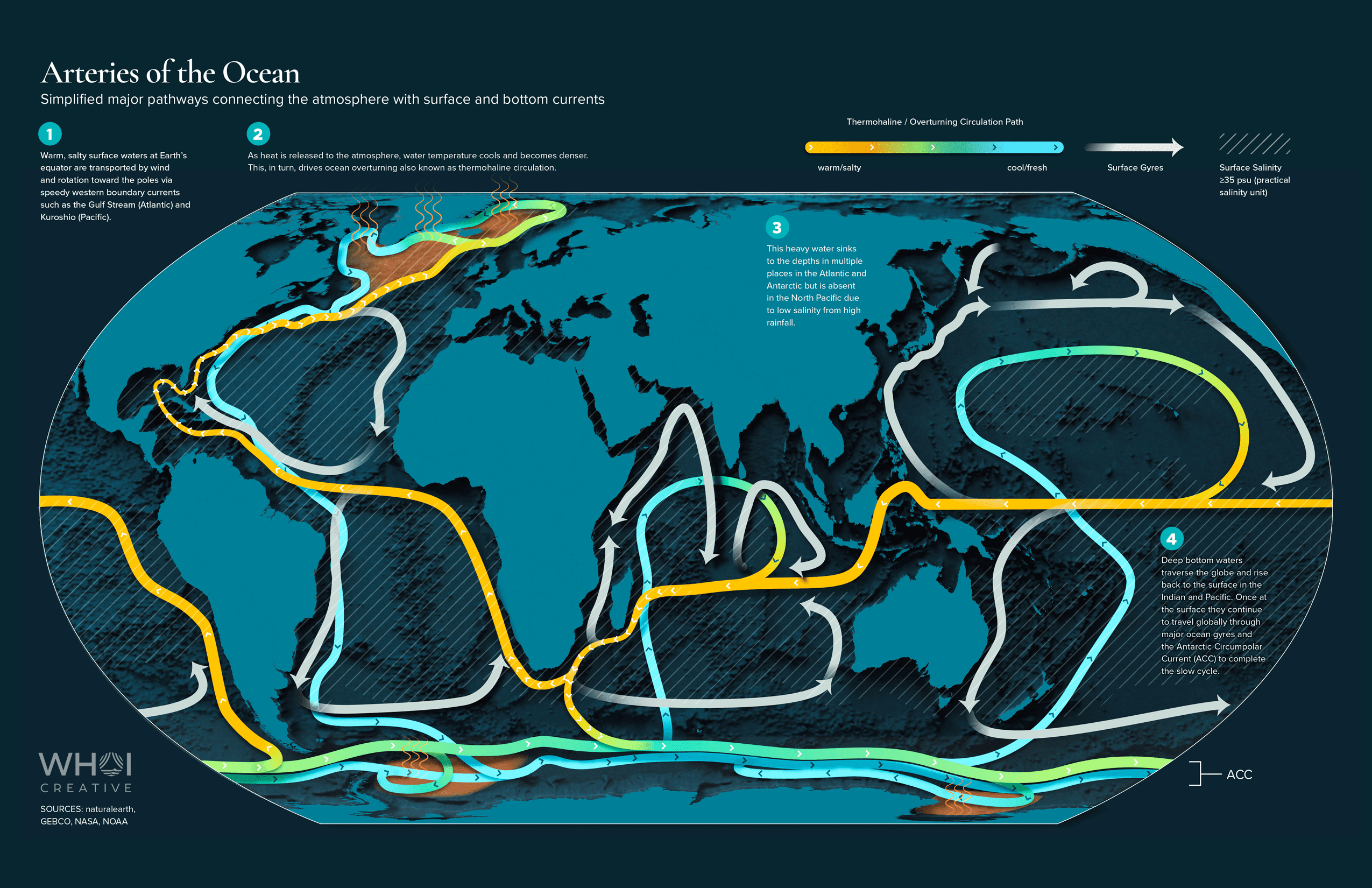
Learn more about how the ocean’s complex and chaotic physics define life on our planet.
Read MoreAntarctica’s ice shelf loss
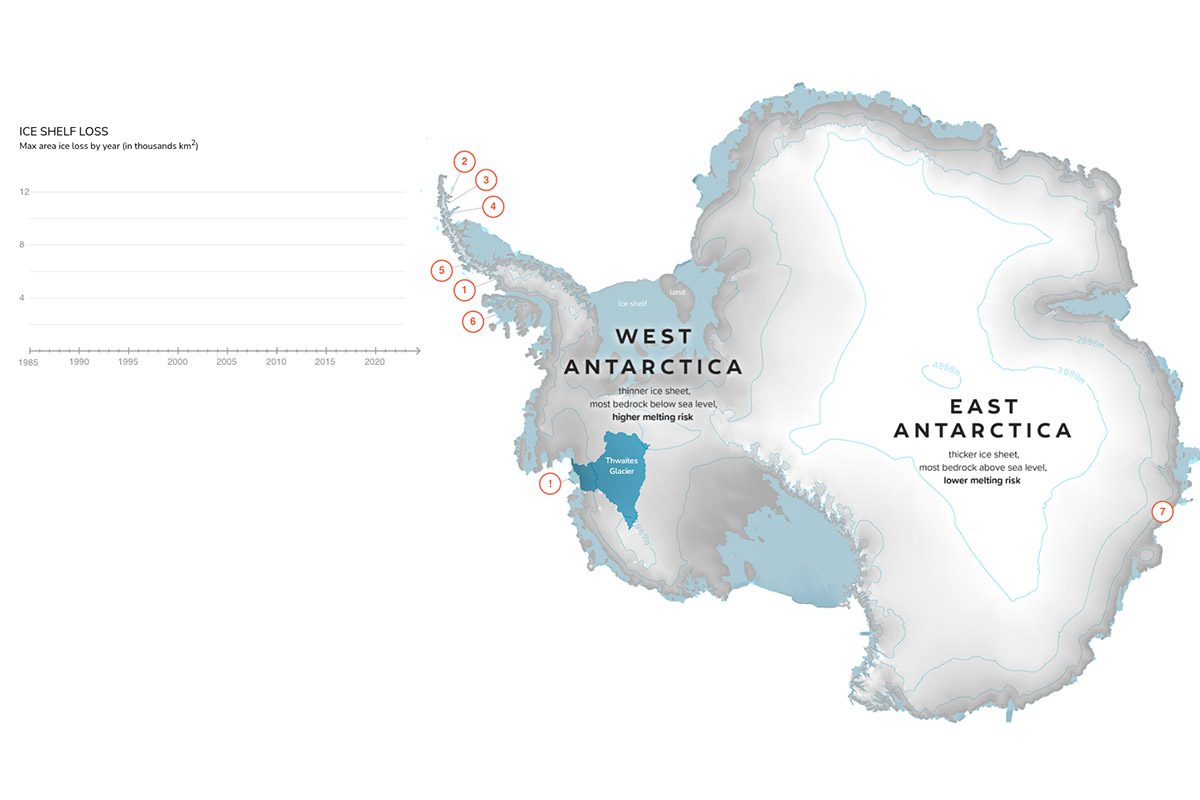
Find out how Antarctica’s seven largest ice shelf collapses size up in this climate.
Read MoreWhat goes into a HAB forecast?
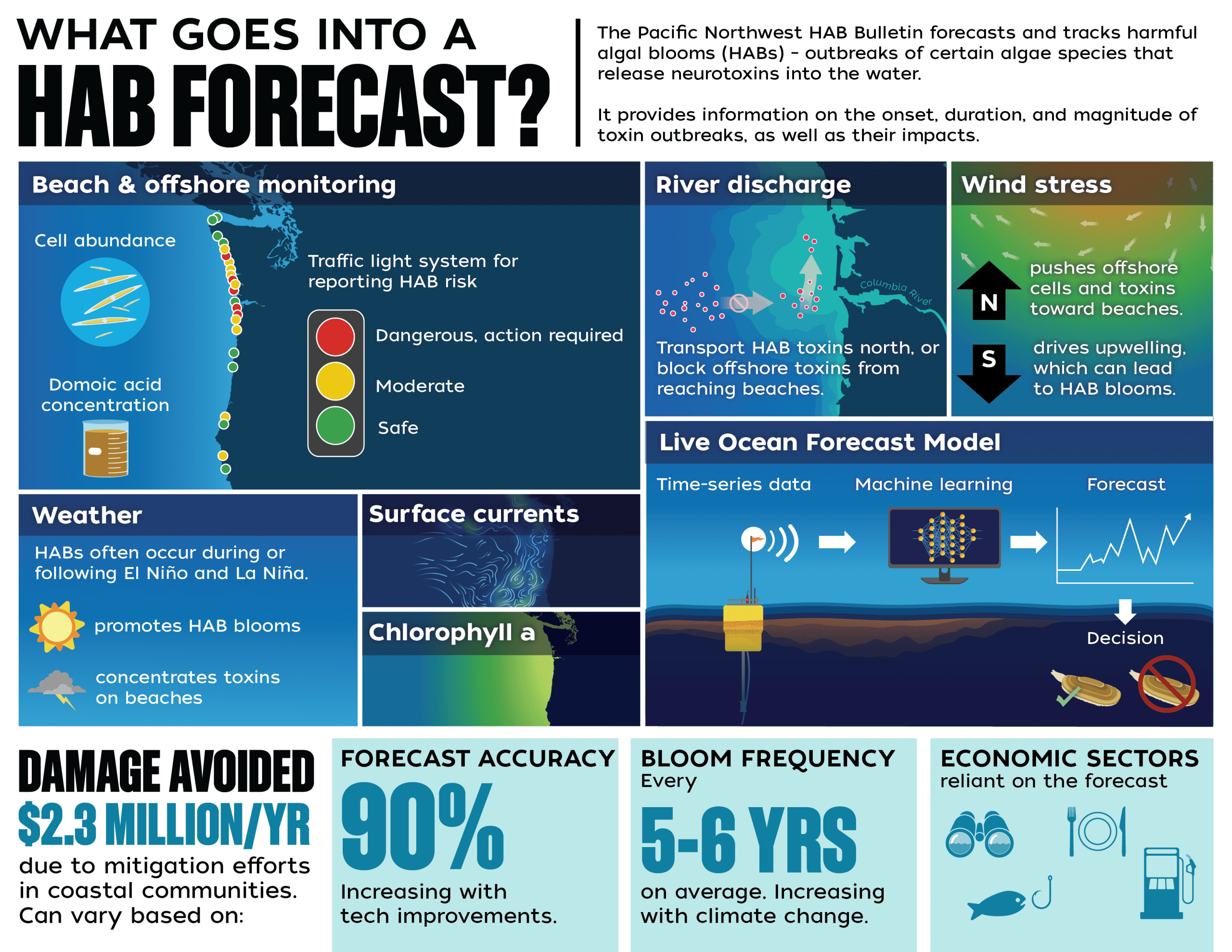
Harmful algal bloom (HAB) forecasts rely on a combination of satellite data, water samples, and predictive modeling to track the proliferation of toxic algae, essential for protecting coastal ecosystems and public health.
Read MoreAre the ice sheets really melting?
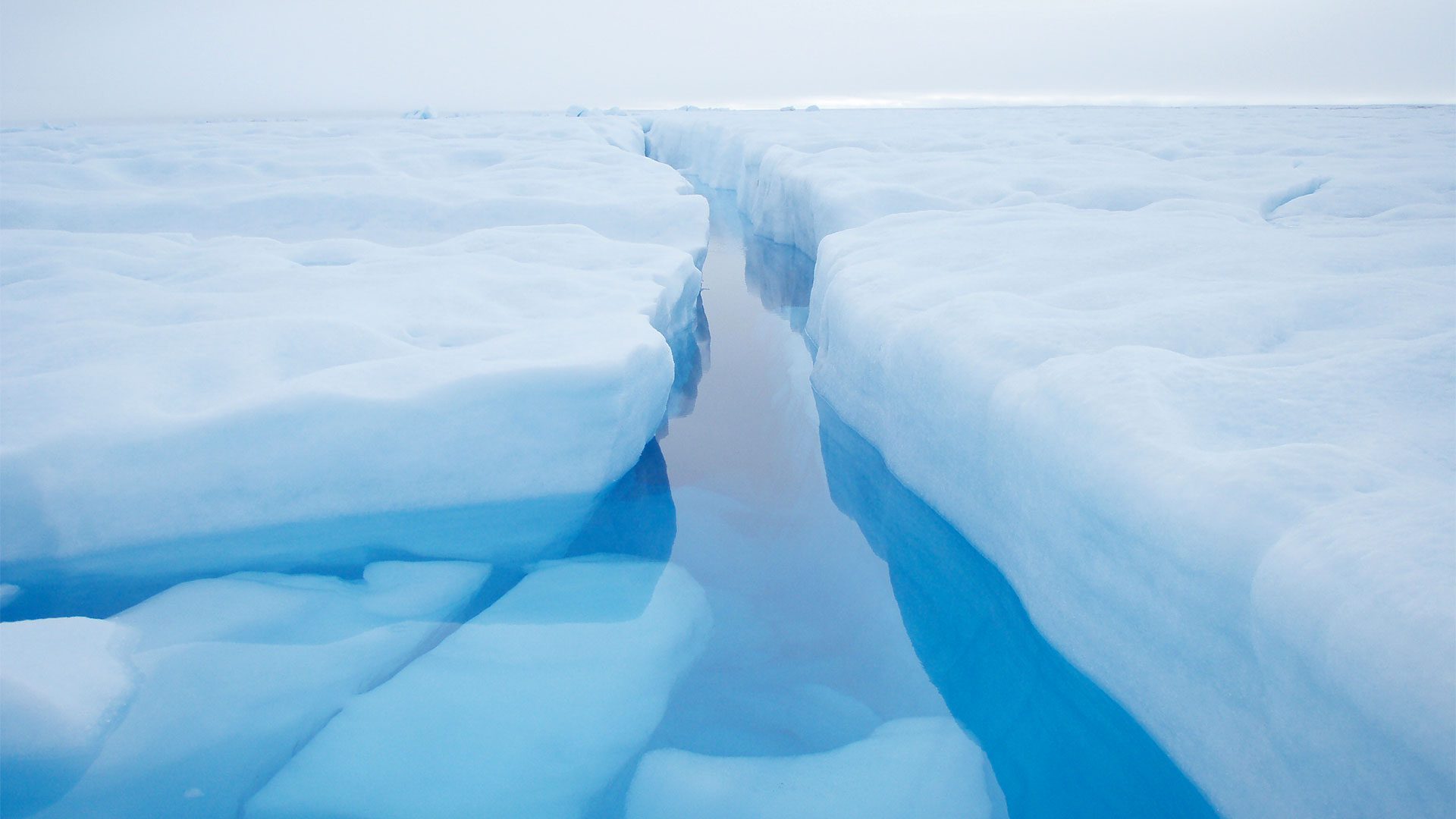
Despite record snowfall, Antarctica’s ice sheets are still shrinking. WHOI scientists explain why short-term gains can’t offset long-term warming and rising sea levels.
Read MoreAre shark attacks on the rise?
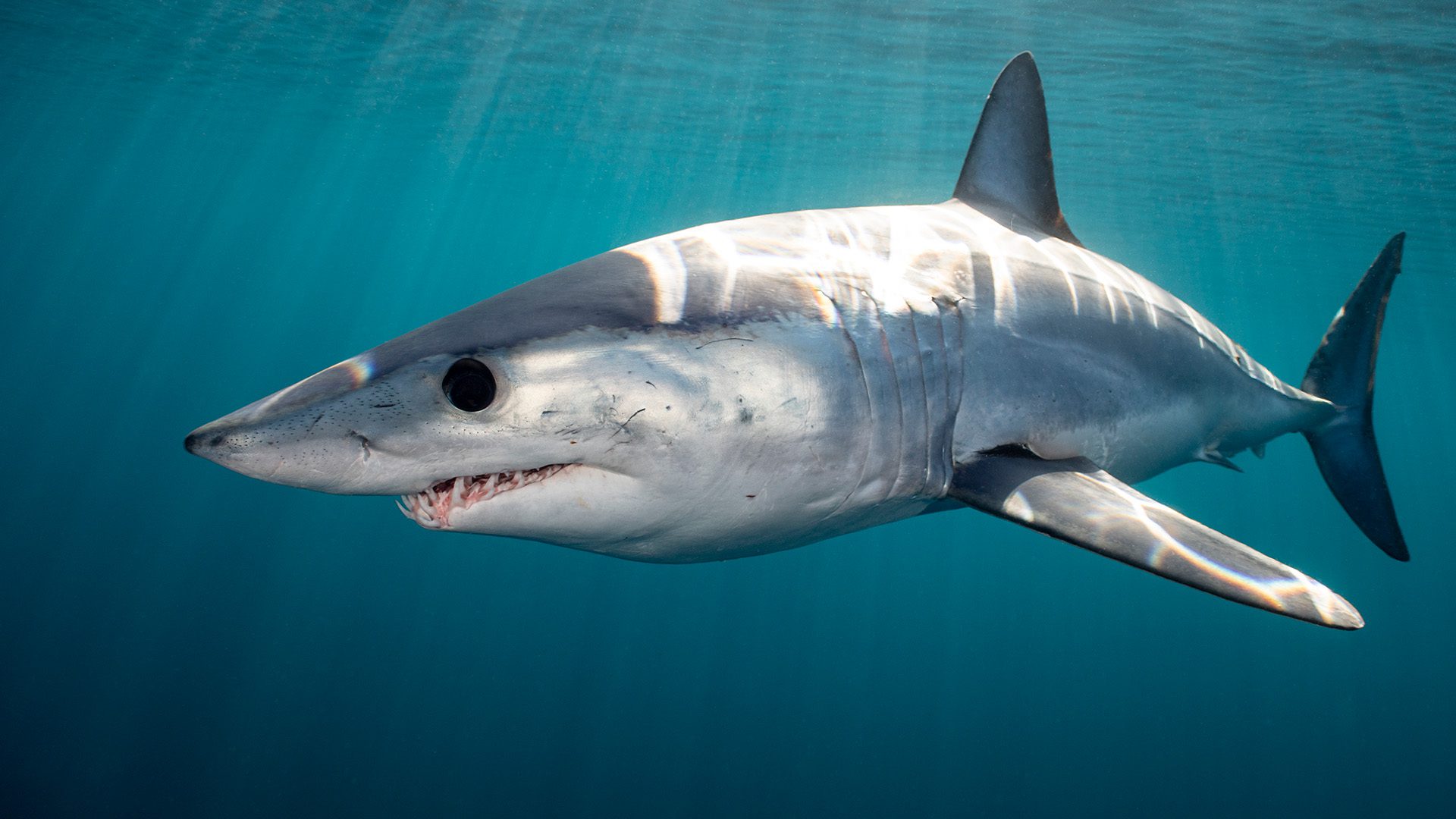
Shark attacks are not on the rise, contrary to popular belief; marine ecologist Camrin Braun from WHOI emphasizes that these incidents often result from mistaken identity and that the odds of being bitten are just one in 4.3 million.
Read MoreDoes plastic last for thousands of years in the environment?
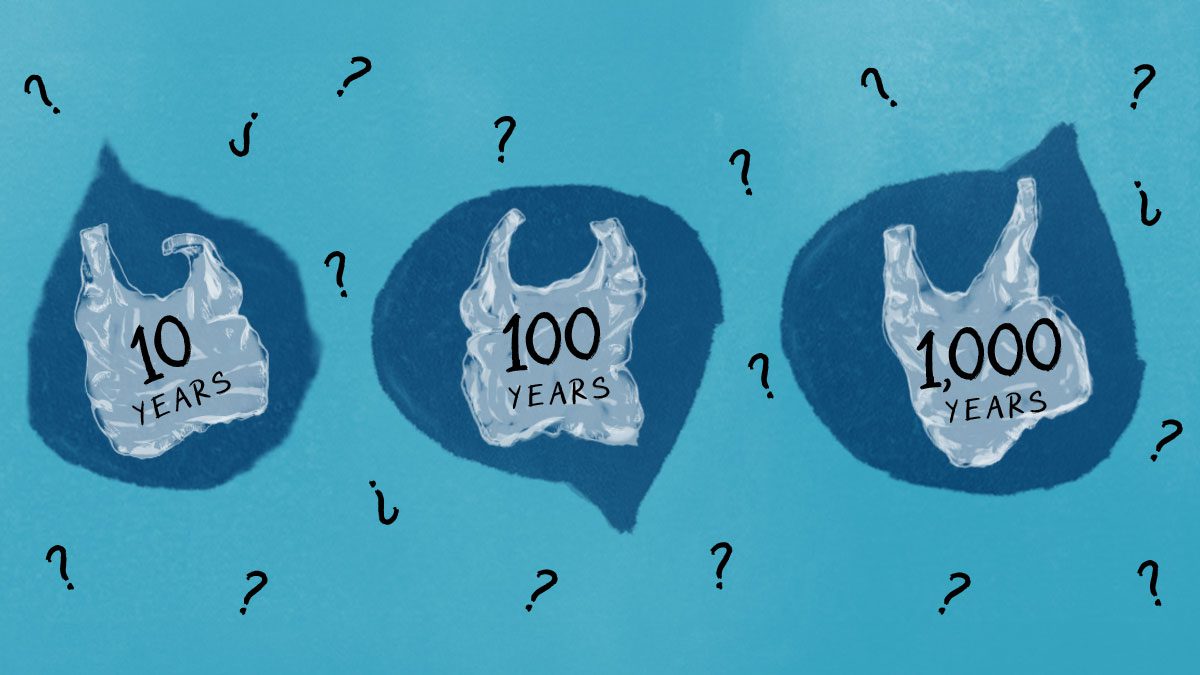
Plastic pollution is a serious-and growing-environmental problem, with millions of tons of bags, bottles, fishing gear and more piling up on land and floating out to sea.
Read MoreAtlantic Ocean currents circulation
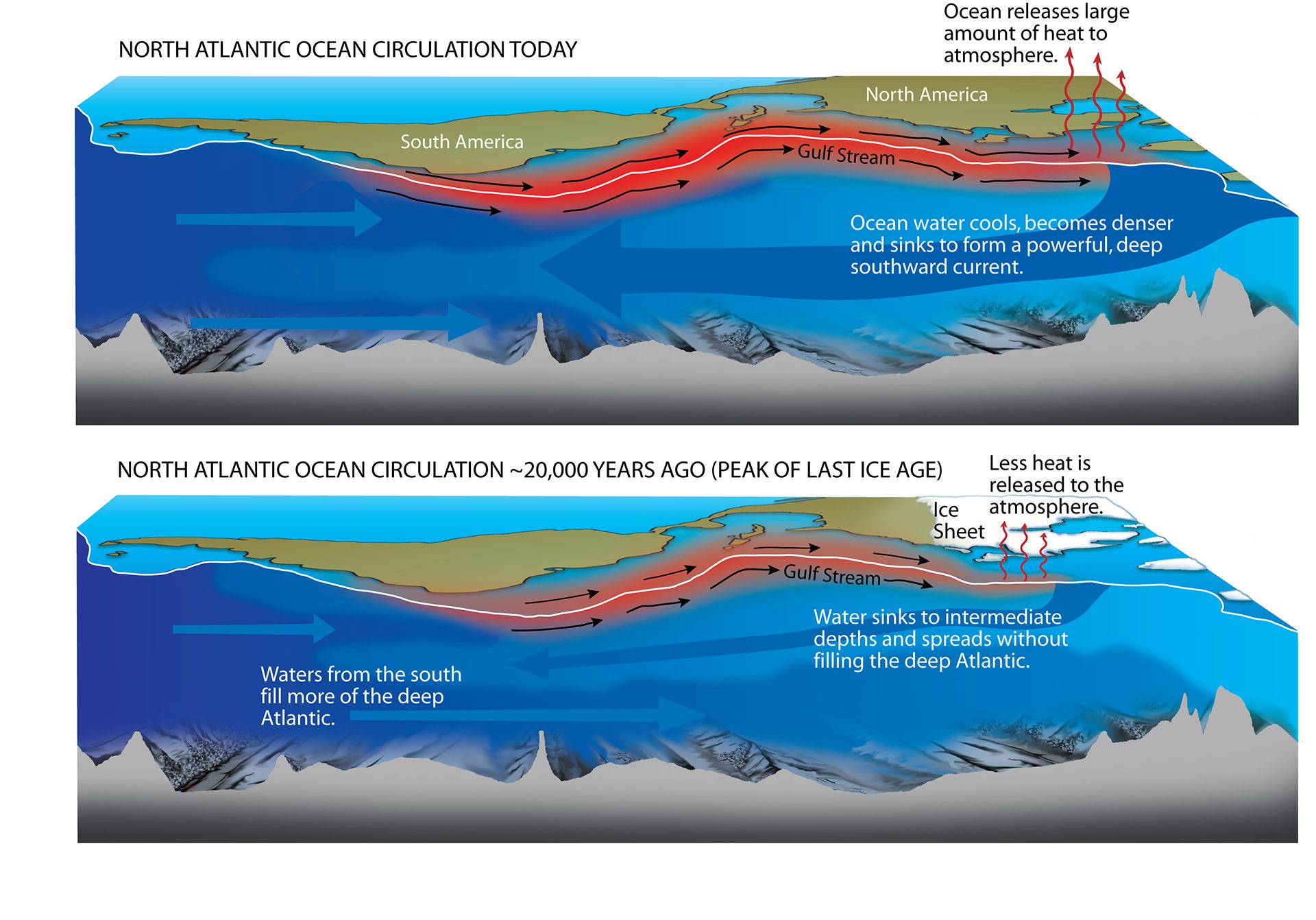
Scientists use models to reveal how shifts in ocean currents—like a global heat conveyor—can trigger major climate changes across millennia.
Read MoreChanges from 2007 to 2015 on the release of radium in the Arctic
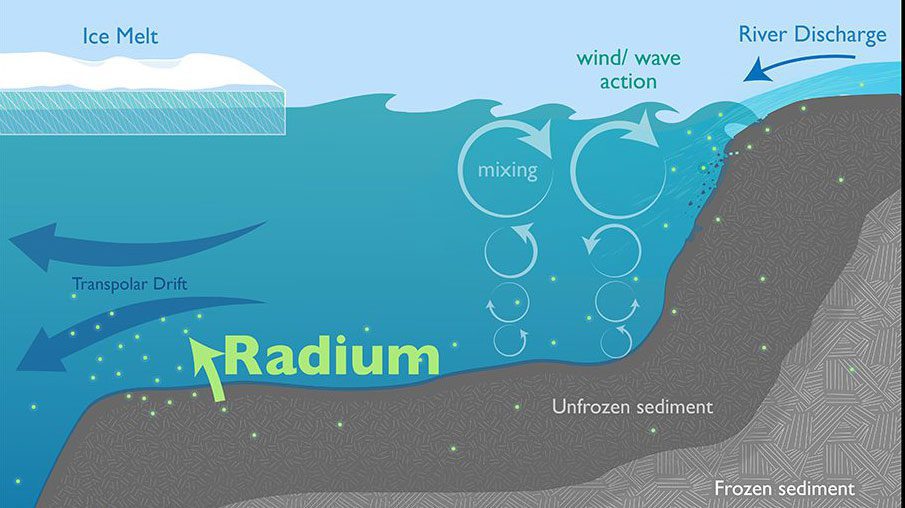
As Arctic sea ice melts, waves stir up coastal sediments, releasing chemicals into the ocean—signaling rapid climate-driven changes that may disrupt Arctic ecosystems.
Read MoreWhy is the ocean vital for our survival?
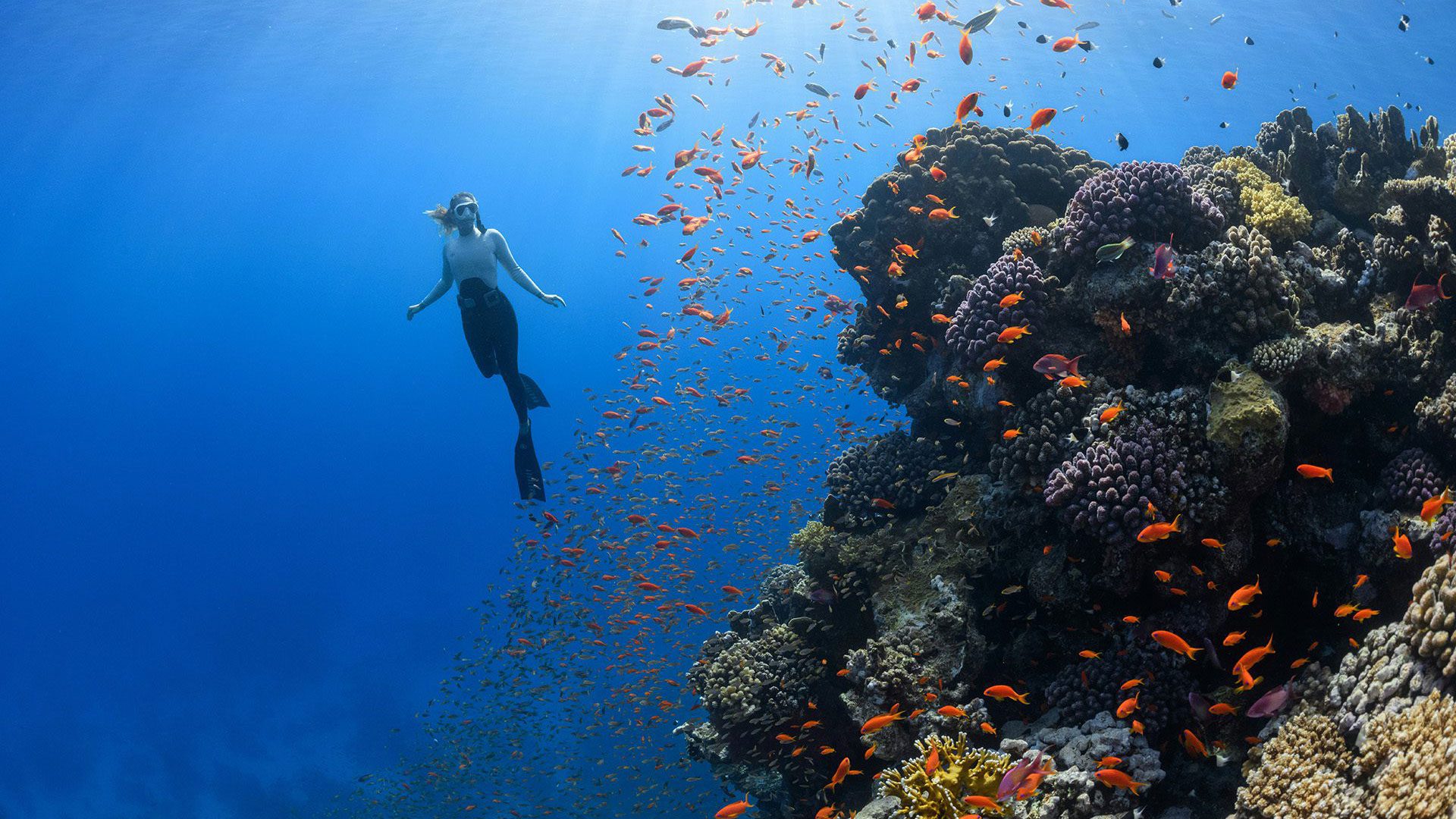
Without the ocean, life as we know it wouldn’t be possible.
Read MoreMixing layer diagram
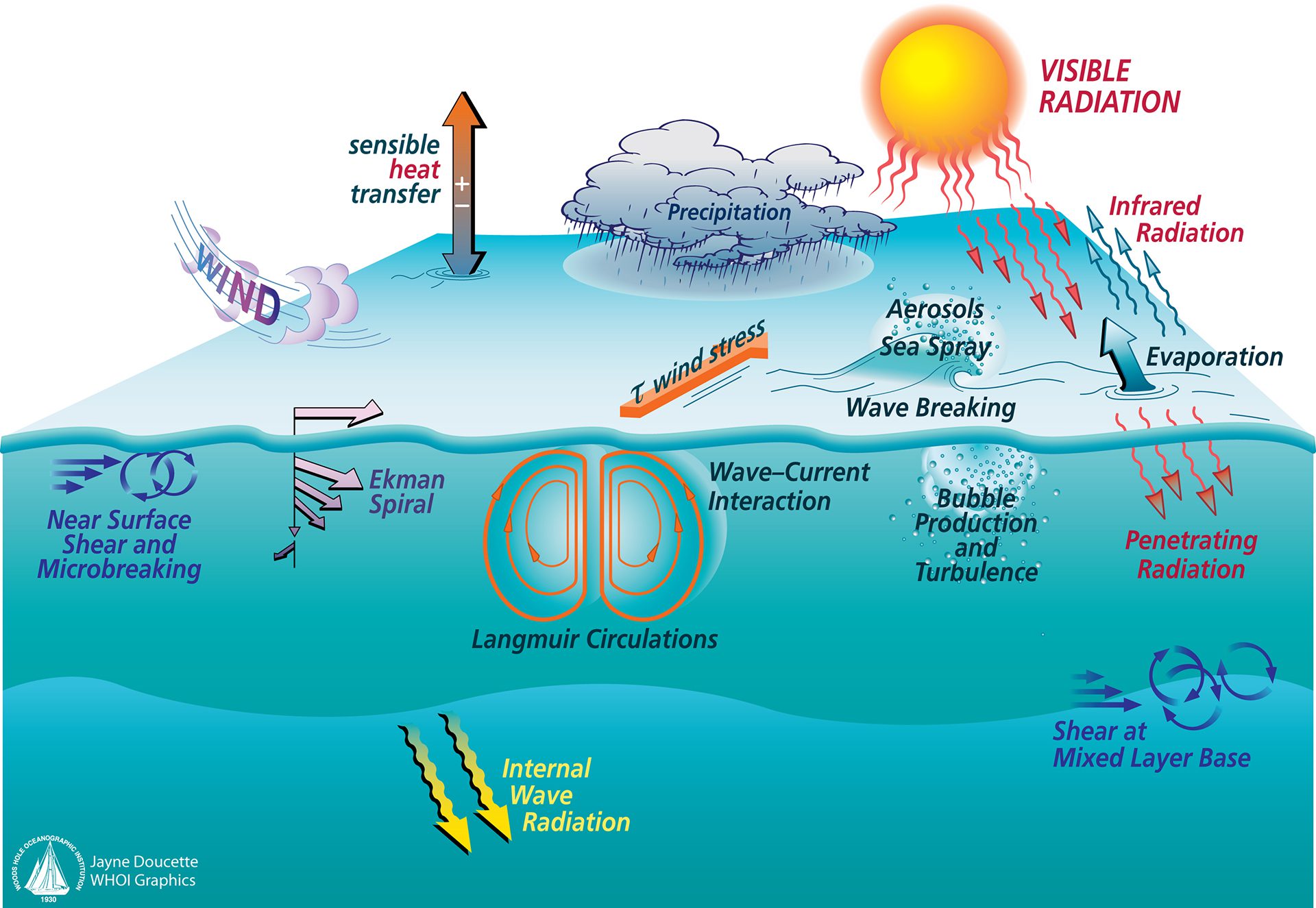
Interactions between the ocean and the atmosphere, illustrating how energy and matter are exchanged between these two systems.
Read MoreThe life cycle of Greenland’s meltwater lakes
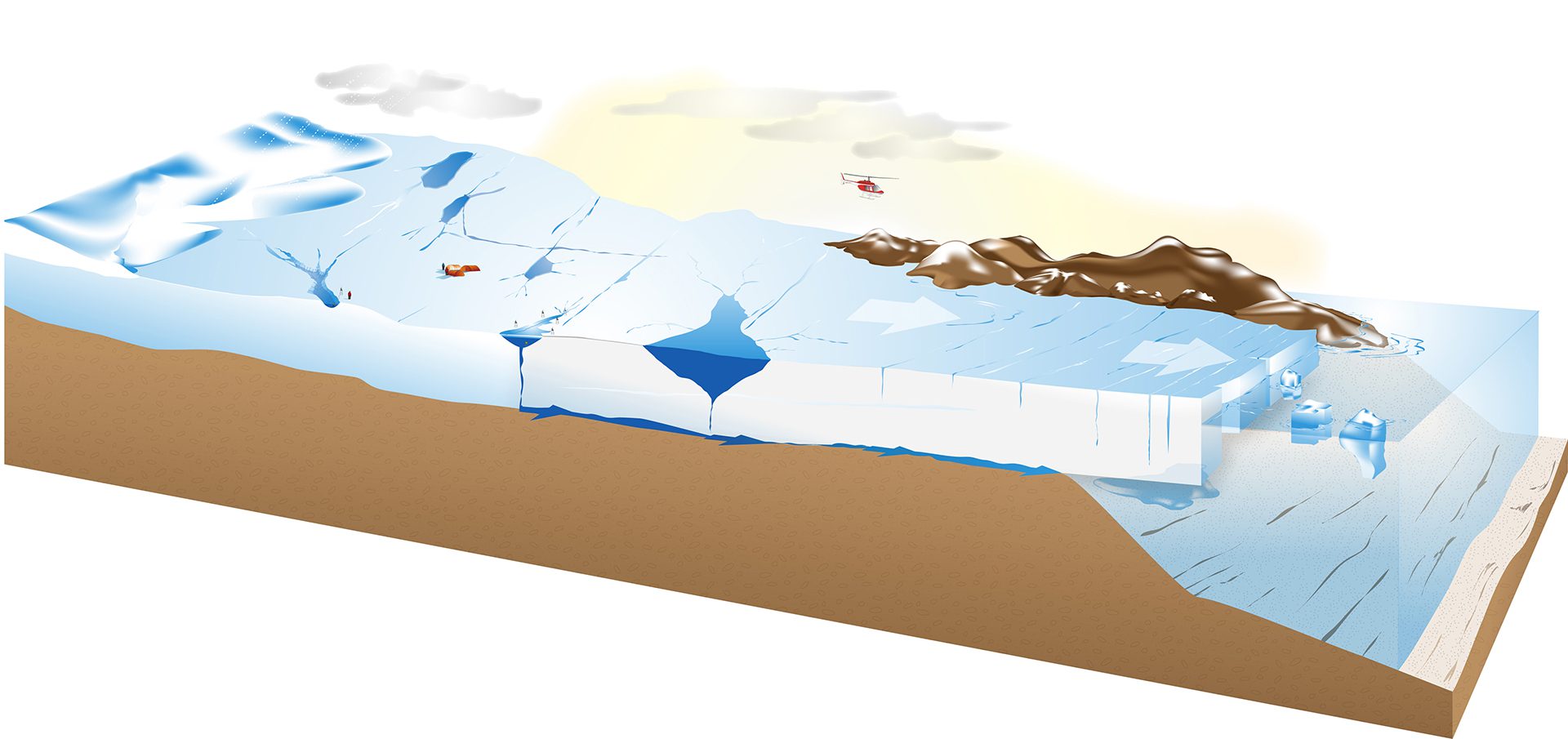
Meltwater lakes on Greenland’s ice sheet drain to bedrock each spring, potentially speeding ice loss and accelerating global sea level rise.
Read MoreCesium-137 movement from Fukushima in coastal saters
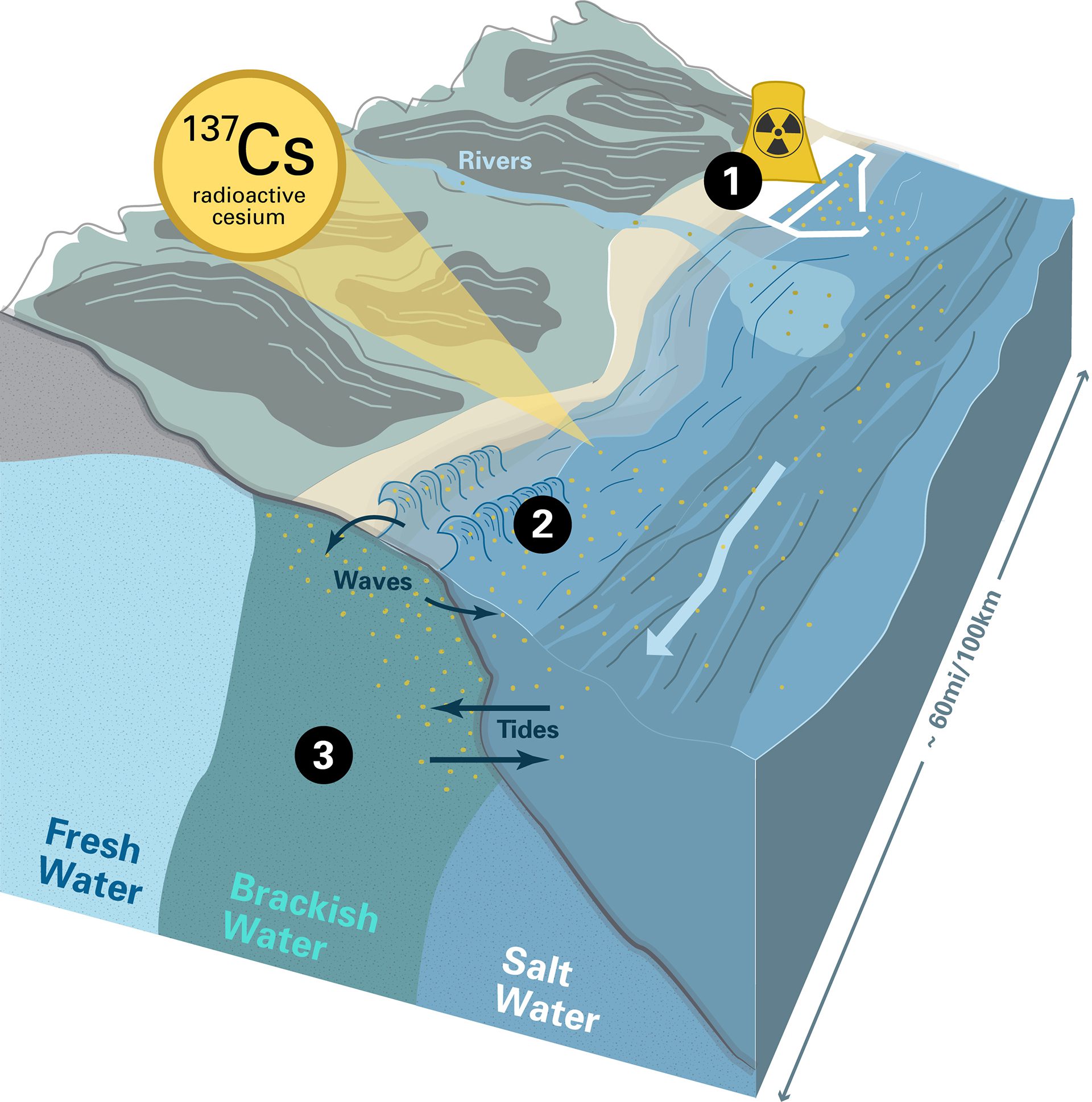
Radioactive cesium from Fukushima was carried by currents, trapped in beach sands, then released back to the ocean as saltwater conditions changed.
Read MoreIs the mantle one big pot or is it double-decked?
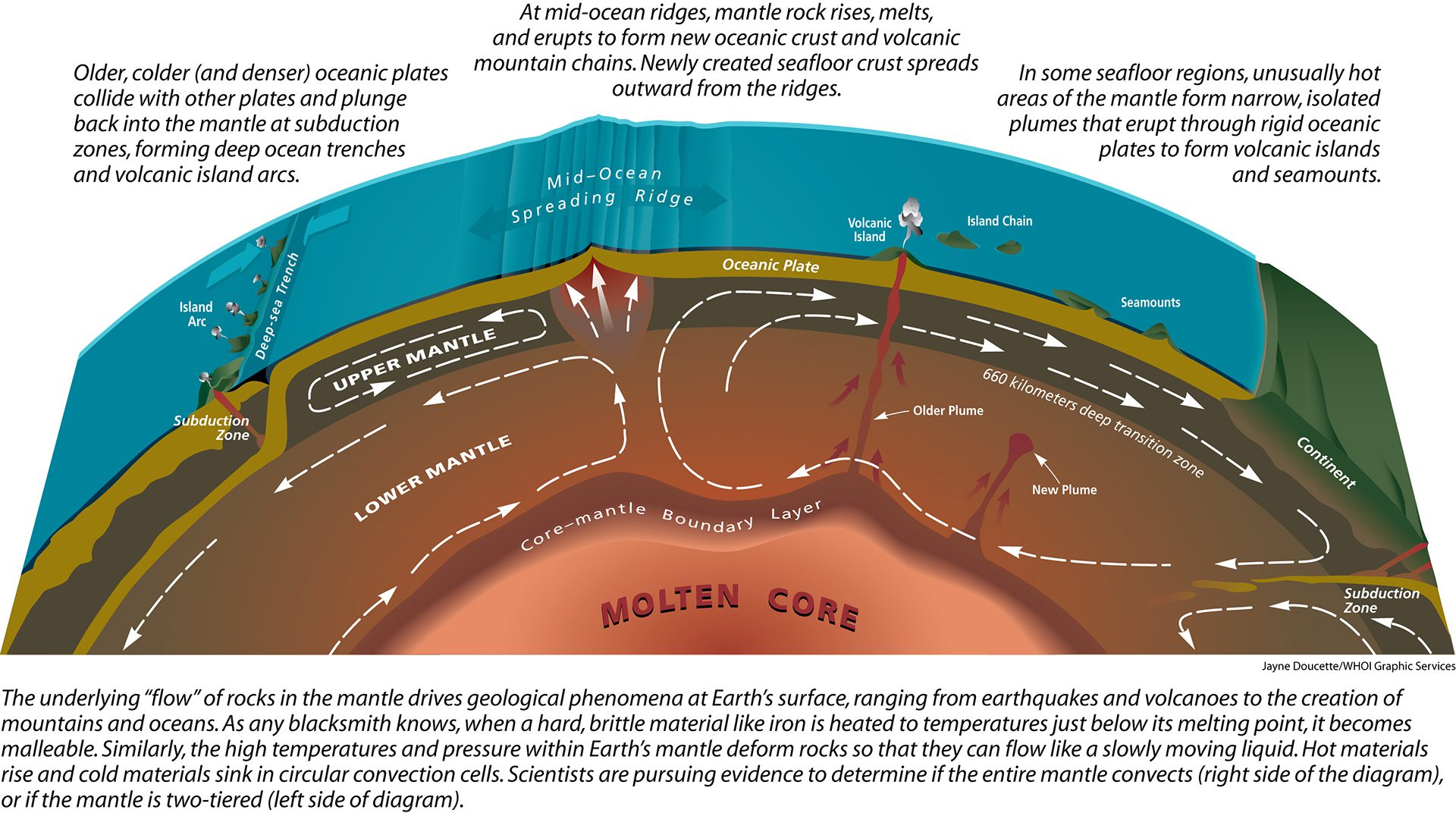
The flow of rocks in the mantle drives geological phenomena like earthquakes and volcanoes. Scientists are studying if the mantle convects as a whole or in layers.
Read MoreThe birth of a black smoker
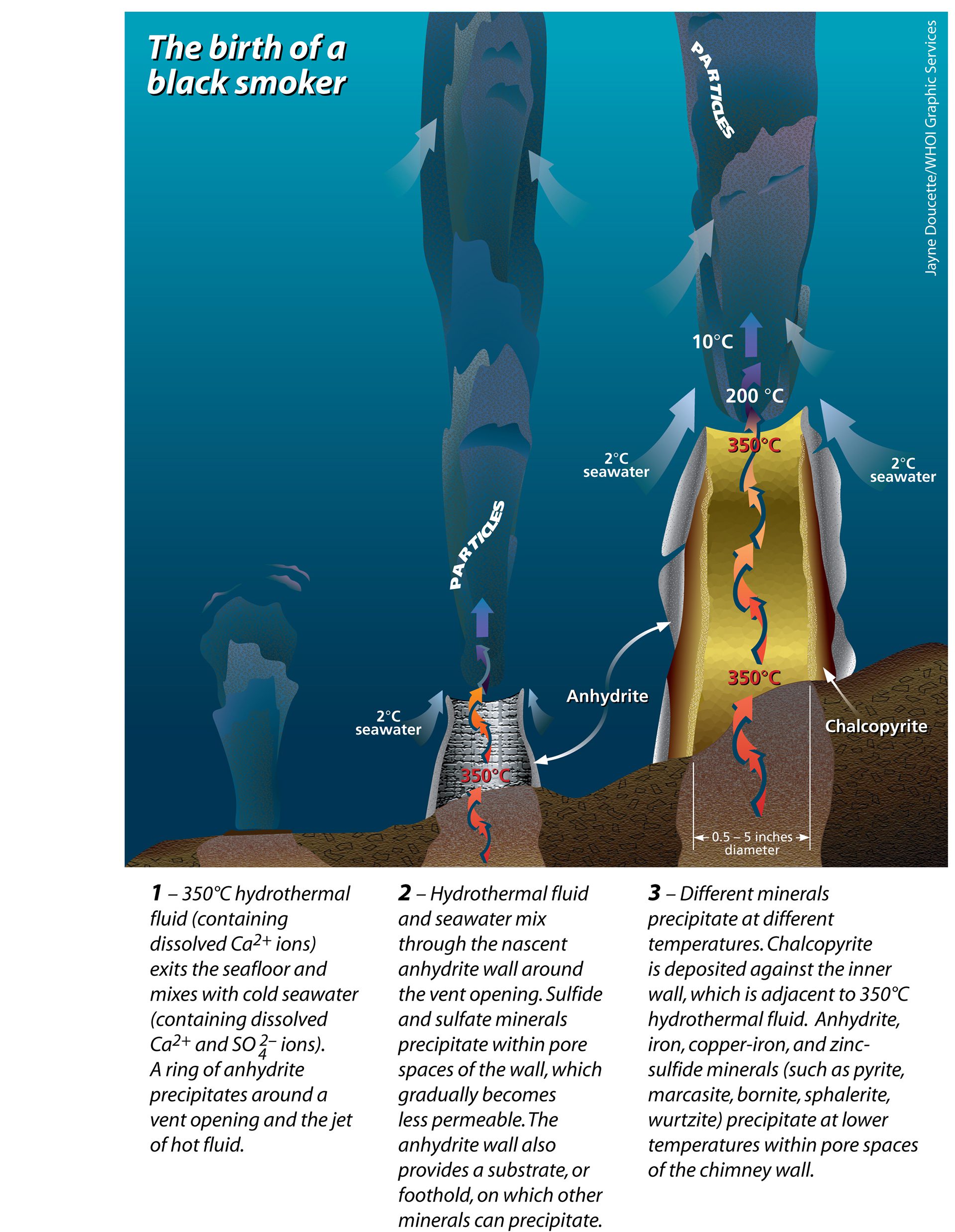
Black smoker chimneys form as hot vent fluids mix with cold seawater, first building walls of anhydrite, then layering on metal sulfides over time.
Read MoreThe seafloor is teeming with methane
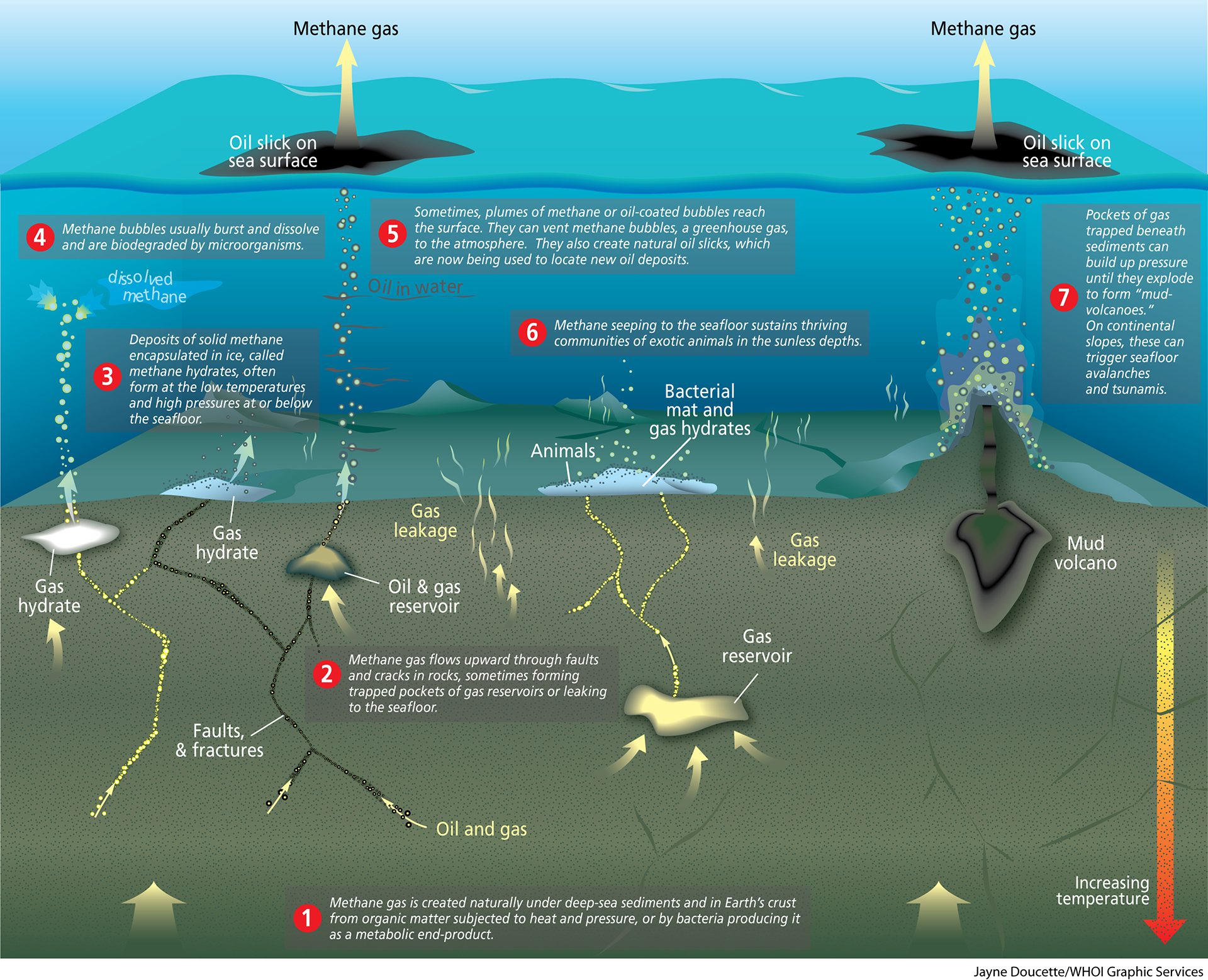
Methane seeping from the seafloor fuels deep-ocean ecosystems where microbes use it for energy, supporting unique animals in dark, sunlight-free habitats through chemosynthesis.
Read MoreLibrary of Sand
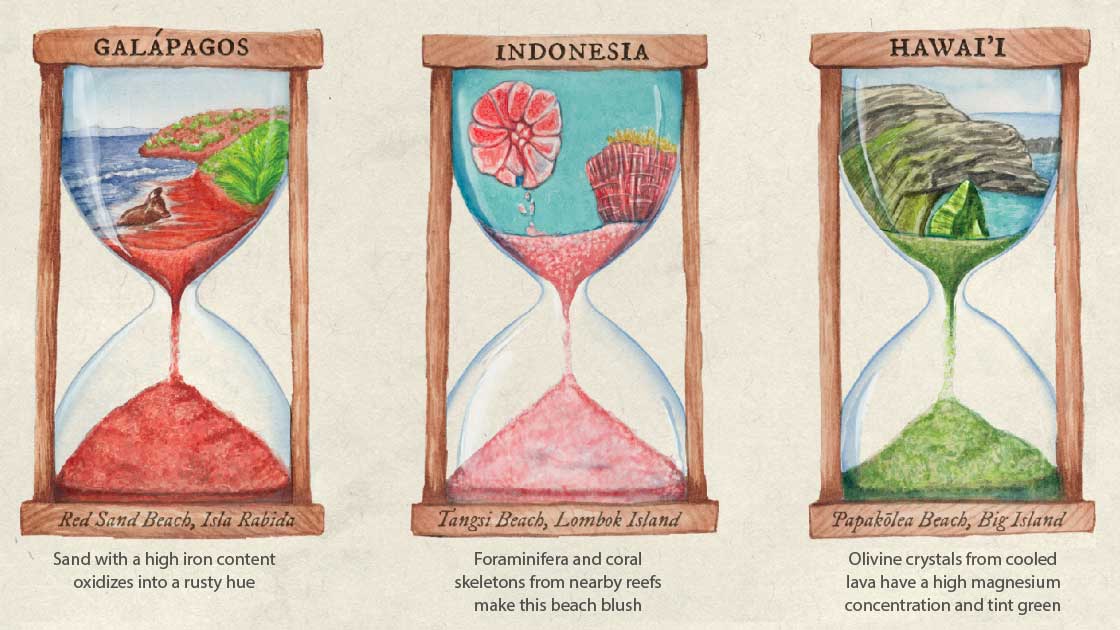
Nothing says coastline like sand, that soft edge between land and sea. Sand takes millions of years to form, created as nearby rock weathers into fine grains.
Read MoreLife and chemistry at deep-sea hydrothermal vents
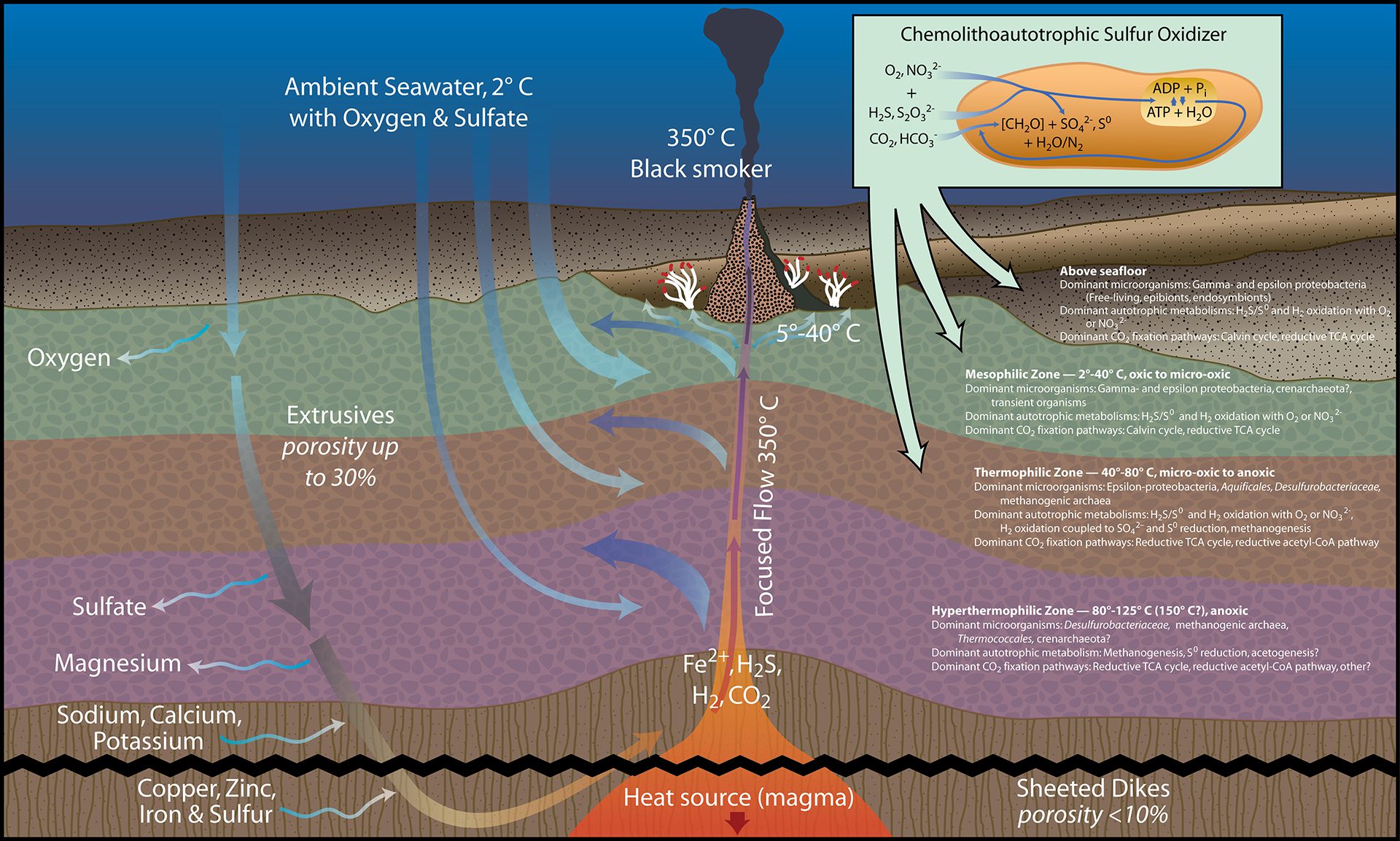
Hydrothermal vents host extreme microbes that drive key chemical cycles—oxidizing sulfur, fixing CO?, and producing methane in a hot, mineral-rich environment.
Read MorePlankton blooms at ocean fronts
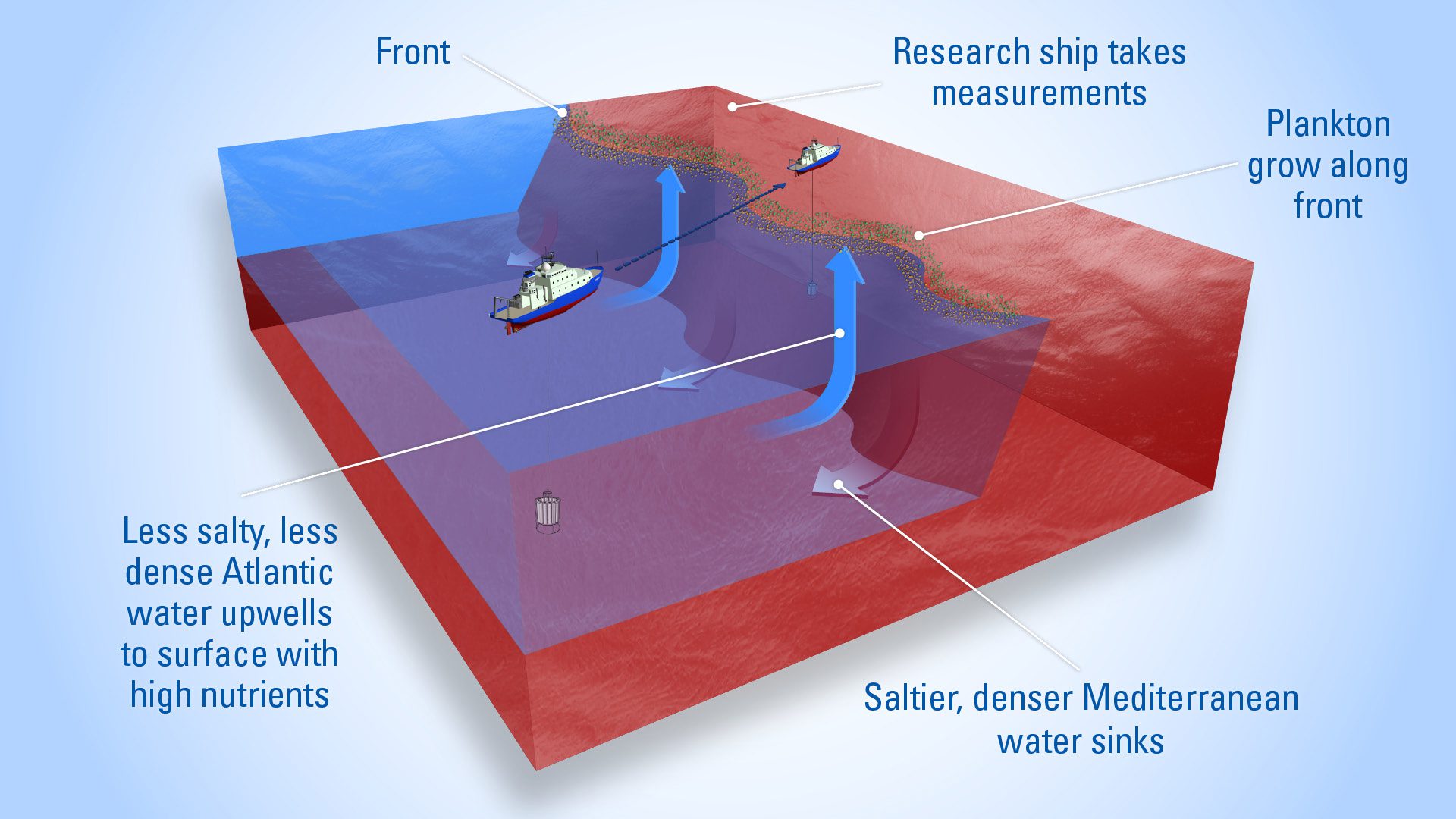
Plankton thrive where water masses meet—rising lighter water brings nutrients to the surface, fueling blooms in sunlit layers of the ocean.
Read MoreGlobal thermohaline circulation
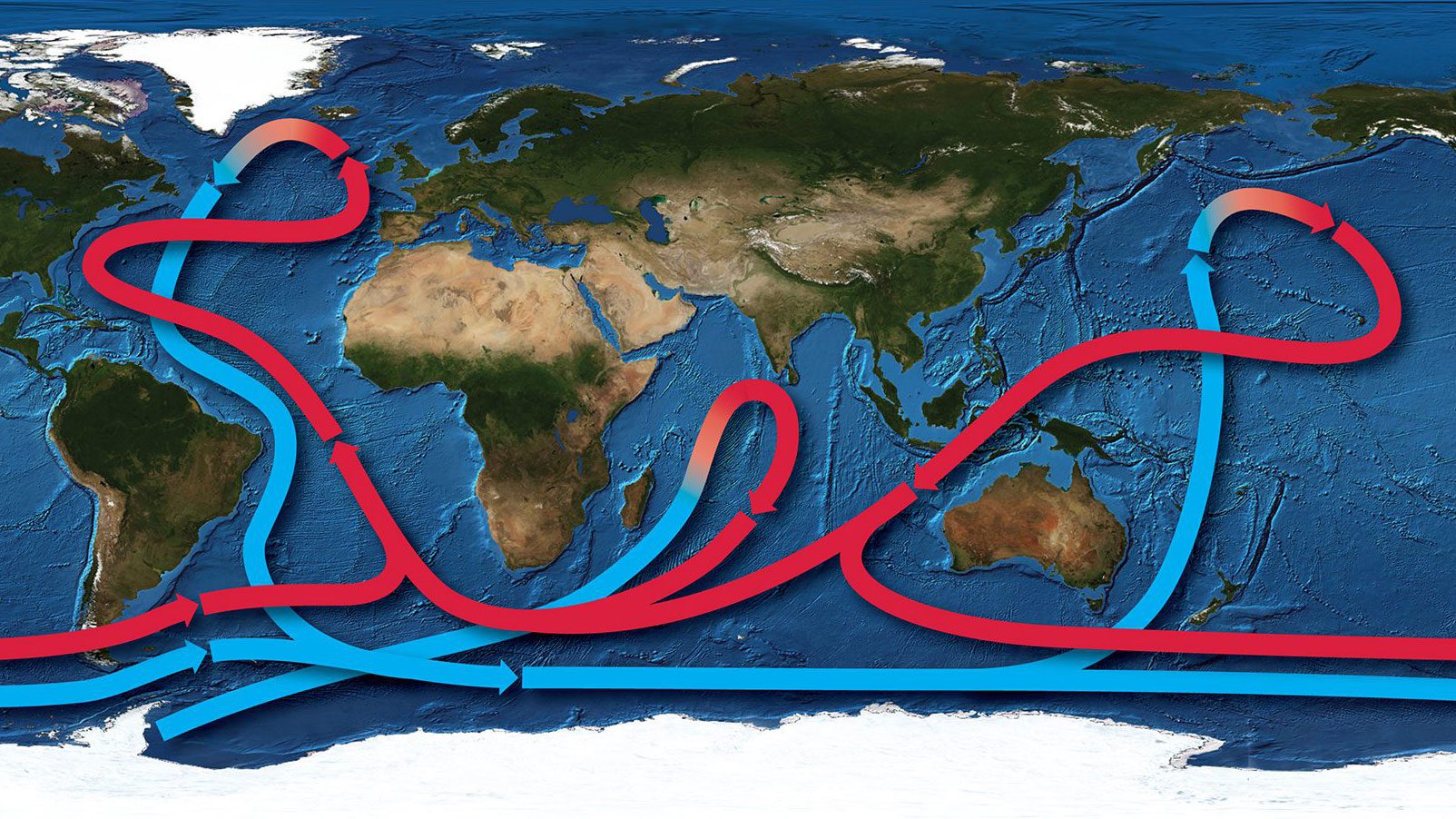
Map with bathymetry and generalized ocean currents driven by temperature and density differences, forming the global ocean conveyor belt.
Read MoreOcean circulation roadmap
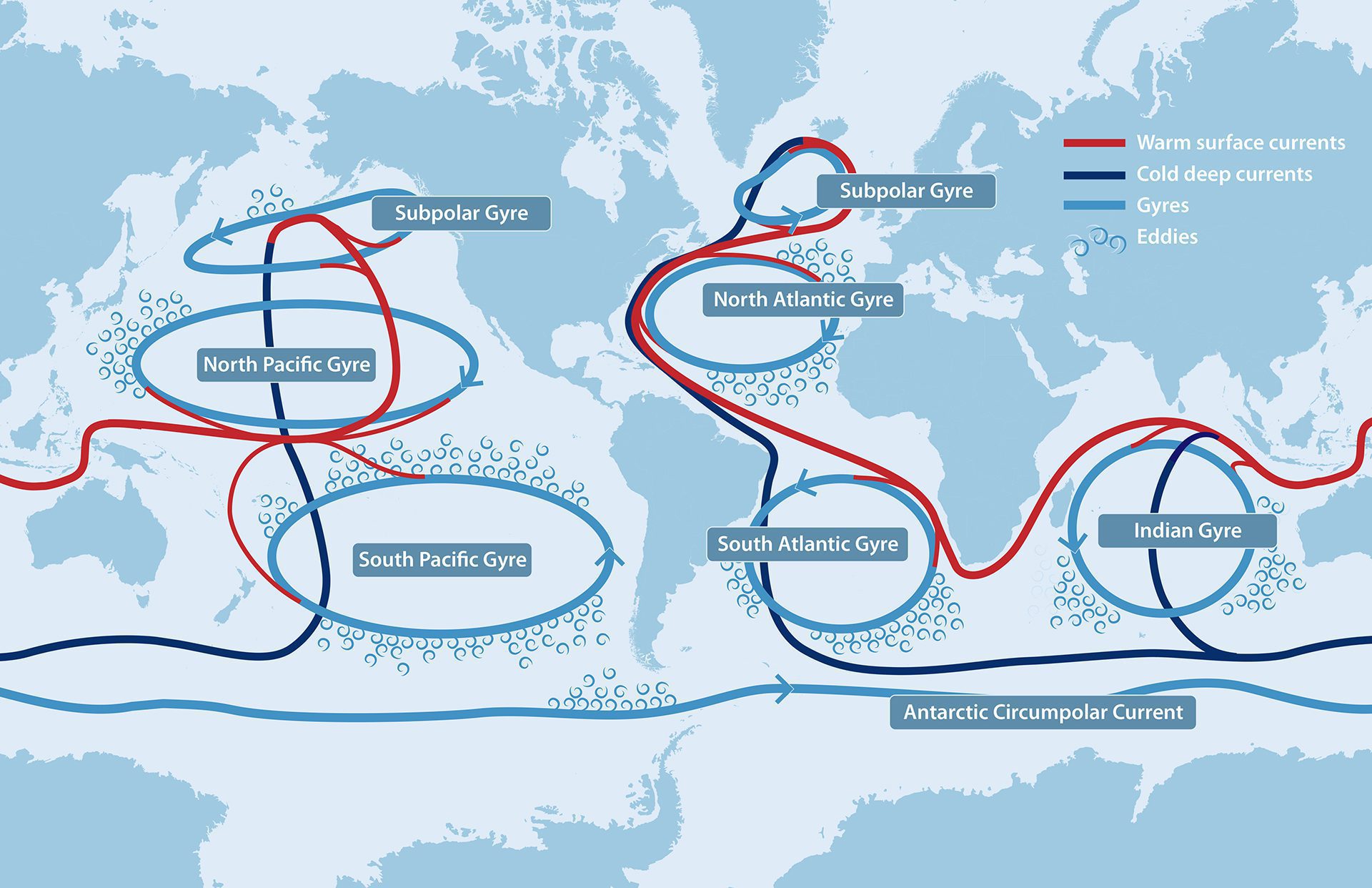
Illustrated roadmap of global ocean circulation, with temperature and flow shown as highways connecting gyre “roundabouts” across the world’s oceans.
Read MoreSea Level Falls and Rises relative to land
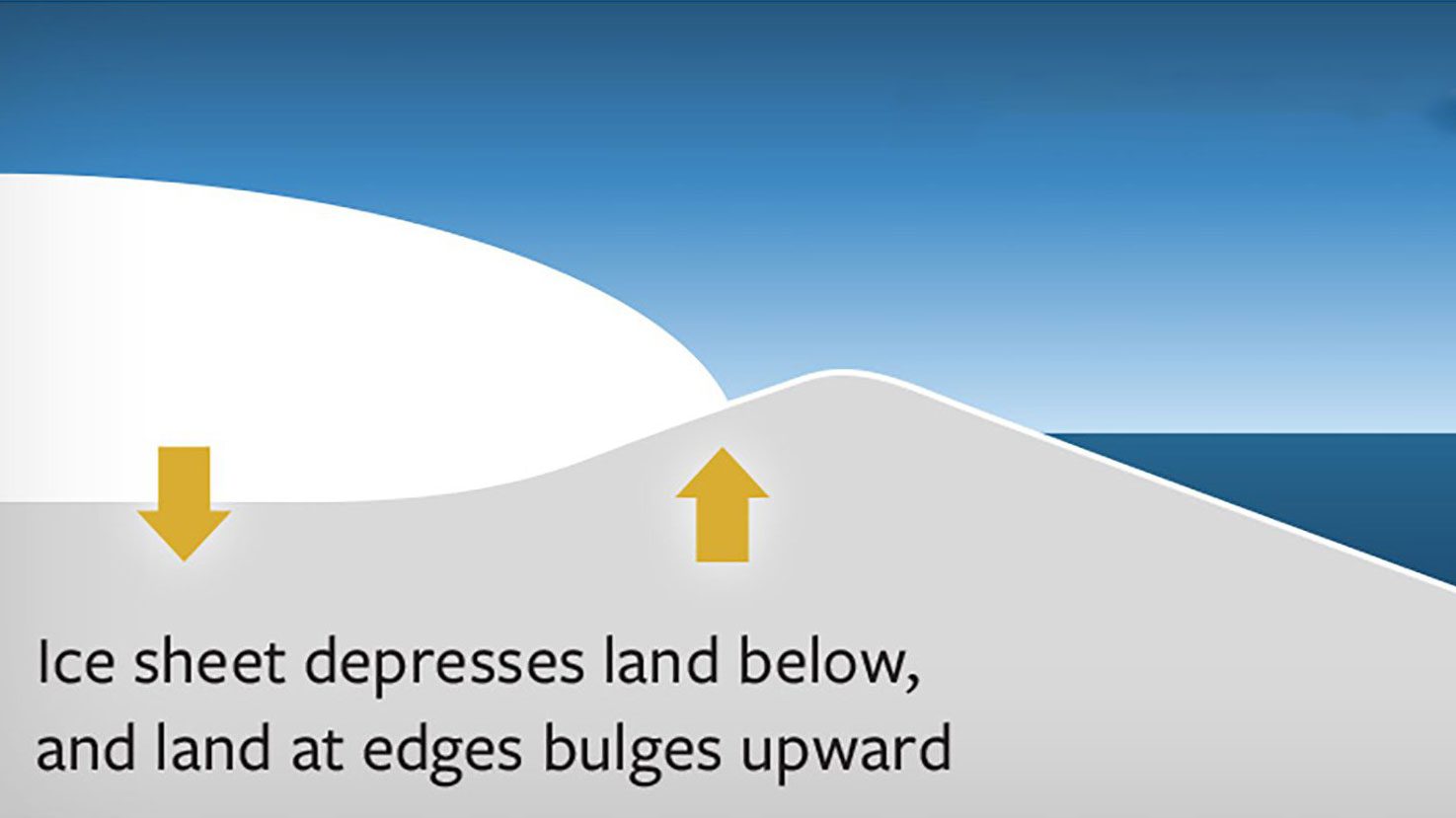
Ice sheets weigh down land, causing it to sink and edges to rise. When they melt, land rebounds and edges collapse, leading to a relative sea level rise.
Read MoreSeafloor topography at the Kermadec Trench
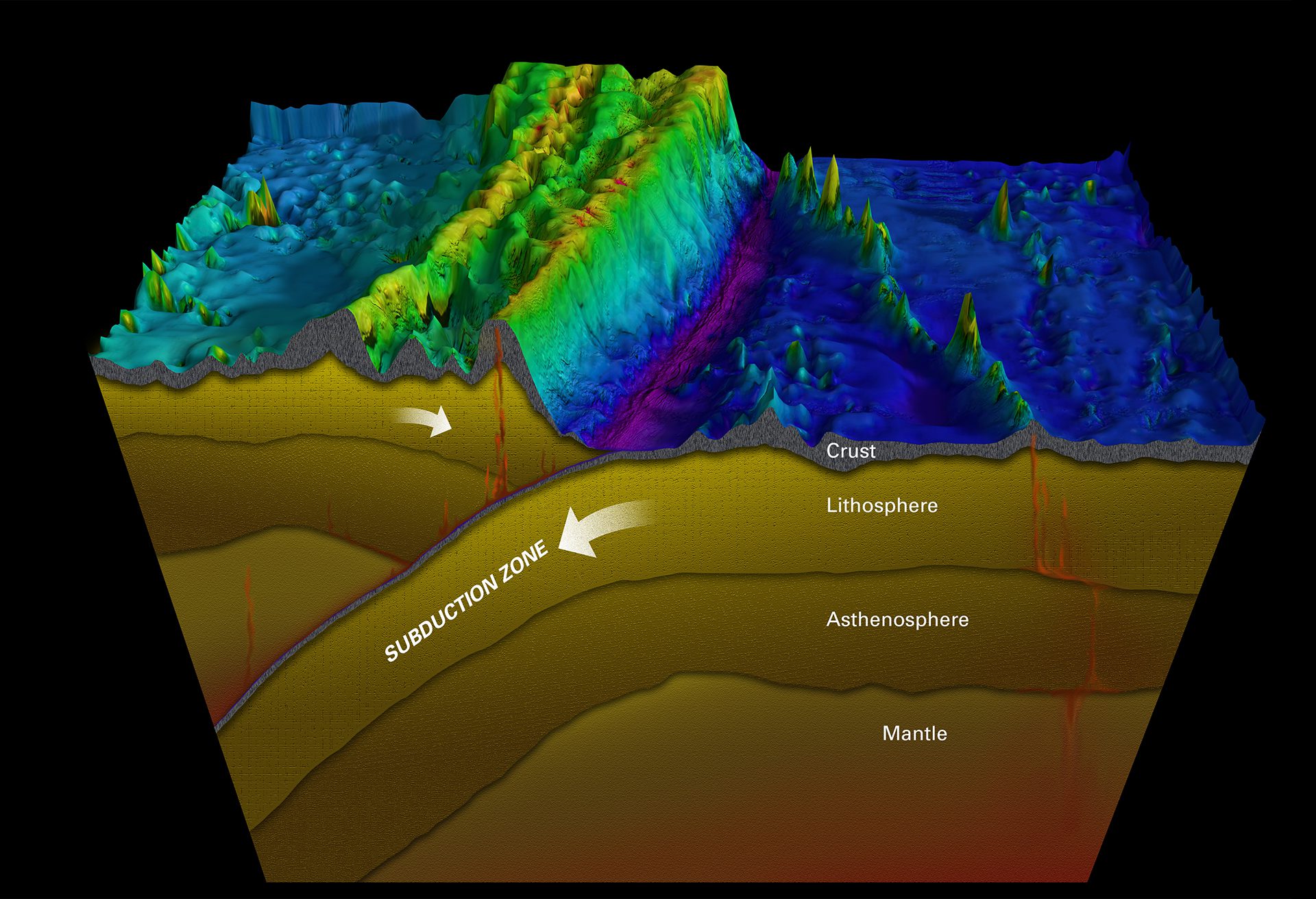
Ocean trenches form where one tectonic plate sinks beneath another, creating deep zones with volcanoes, quakes, and tsunamis—like Japan’s 2011 magnitude 9.0 quake.
Read MoreFjords, glaciers, and sea level rise
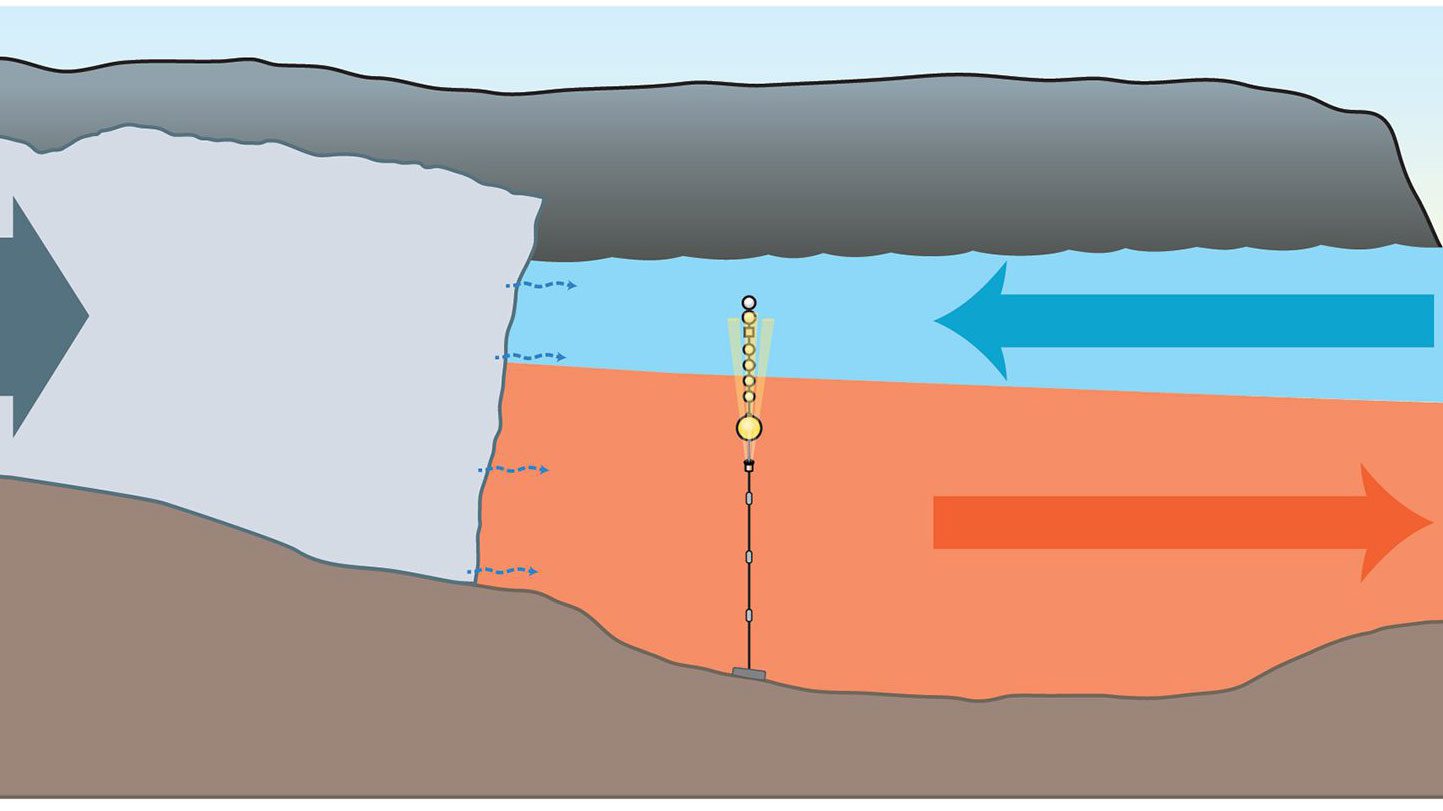
Researchers study how warming ocean waters in fjords like Sermilik drive glacial melt and ice flow, influencing sea level rise through shifting currents and water layers.
Read MoreOcean carbon cycle to twilight zone depth
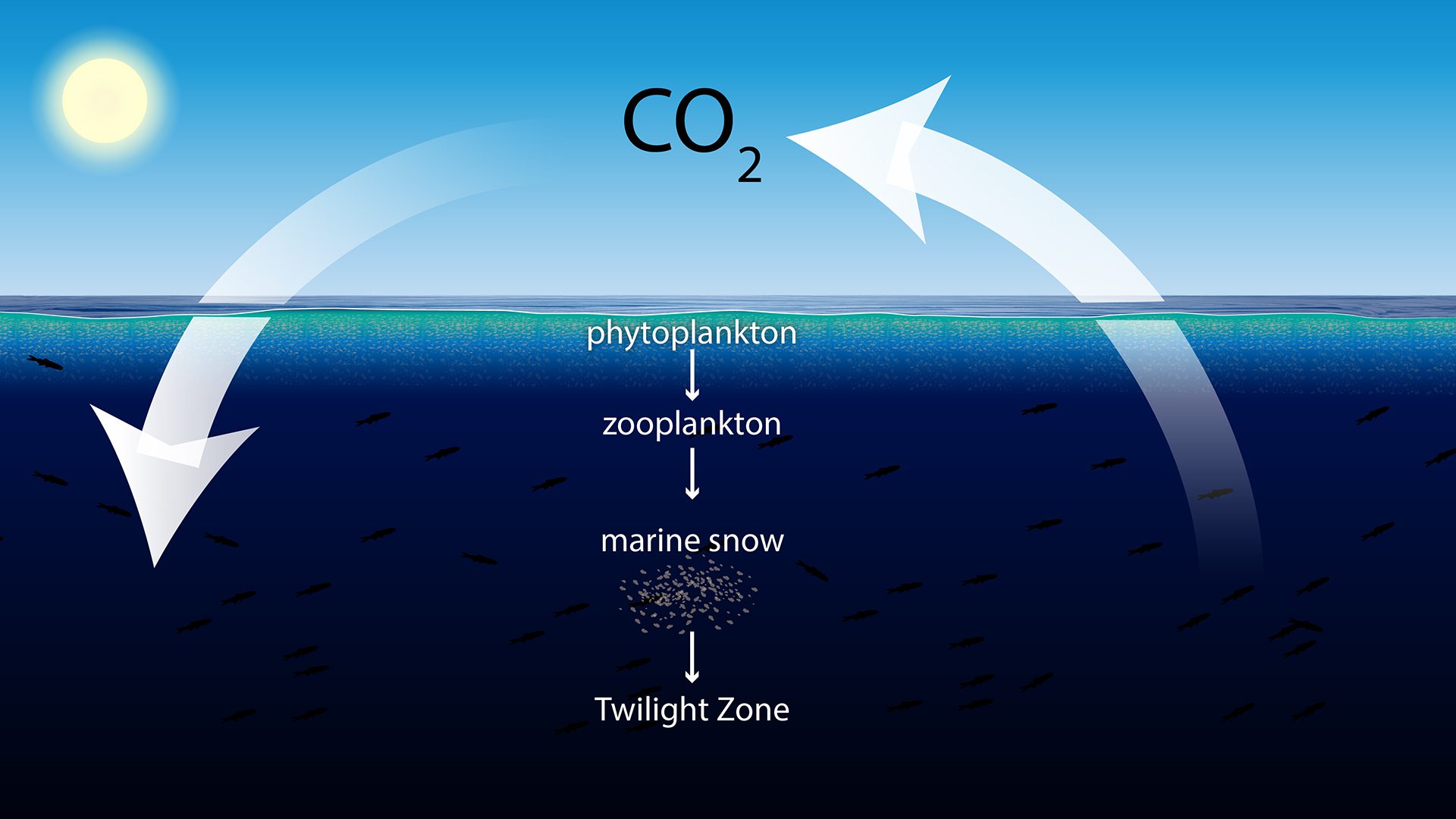
The ocean is a significant carbon sink, absorbing a large amount of CO2 from the atmosphere. This process helps regulate Earth’s climate but can also lead to ocean acidification.
Read More