|
|

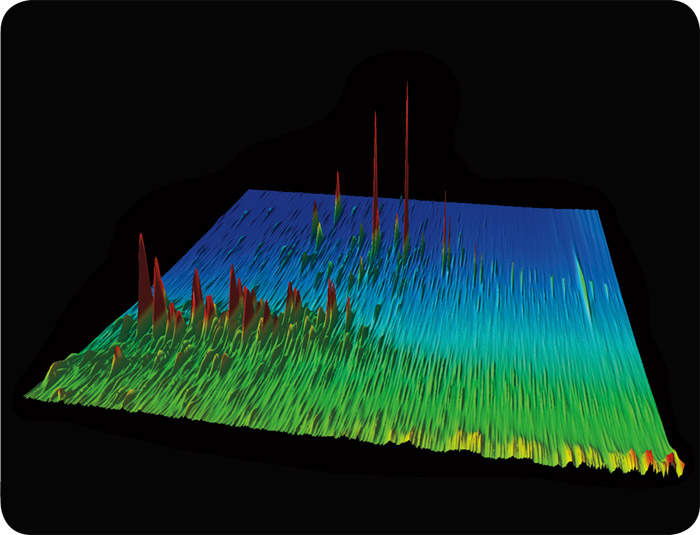
| 1. Gulf of Mexico This a chromatogram of oil that came from the Gulf of Mexico, but you can readily see that it is different from oil that came from Santa Barbara, Calif. (slide 2) or a different reservoir in the Gulf: the Macondo well (slide 3).
(Photos courtesy of Bob Nelson, Woods Hole Oceanographic Institution) | | 2. SANTA BARBARA Specific compounds provide clues to what types of organisms and conditions went into making the oil. Bisnorhopanes show that this oil formed in low-oxygen ocean sediments. But oleanane reveals that some of the oil came from land sources. | | 3. MACONDO WELL The tall peaks on the left are diasteranes: bulky, nonpolar compounds that resist breaking down in the environment. A high fraction of trisnorneohopane indicates that the Macondo oil underwent a lot of heating during its formation. | Last updated: October 12, 2011 |