Please note: You are viewing the unstyled version of this website. Either your browser does not support CSS (cascading style sheets) or it has been disabled. Skip navigation.

WHOI Marine Mammal Center (MMC)

for Research and Conservation

  E-mail    Print    PDF   Change text to small (default) Change text to medium Change text to large

 
    First Previous Pause Next Last
Slideshow speed: 5 seconds
 
Move
  • null
    Marine Research Facility. (Photo by Jayne Doucette, Woods Hole Oceanographic Institution)
  • null
    Necropsy suite in the Marine Research Facility, (Photo by Shelley Dawicki, Woods Hole Oceanographic Institution)
  • Necropsy of a dolphin in the Marine Research Facility necropsy suite.
    Necropsy of a dolphin in the Marine Research Facility necropsy suite. (Photo by Shelley Dawicki, Woods Hole Oceanographic Institution)
  • null
    Researchers from several institutions converged at the new Marine Research Facility at Woods Hole Oceanographic Institution to perform necropsies on common and white-sided dolphins that stranded on Cape Cod in January 2006. Necropsies help scientists investigate the causes of marine mammal strandings. (Photo by Tom Kleindinst, Woods Hole Oceanographic Institution)
  • null
    Darlene Ketten in the necrospy suite in the Marine Research Facility. (Photo by Shelley Dawicki, Woods Hole Oceanographic Institution)
  • null
    Marine mammal specialist Michael Moore and WHOI guest student Colby Moore (from the College of the Atlantic) prepare to examine a white-sided dolphin that had stranded and died on a beach in Wellfleet, Mass., in January 2008. Every year, researchers from around the world come to the specialized facilities at WHOI to perform necropsies and other post-mortem studies of marine creatures. (Photo by Tom Kleindinst, Woods Hole Oceanographic Institution)
  • null
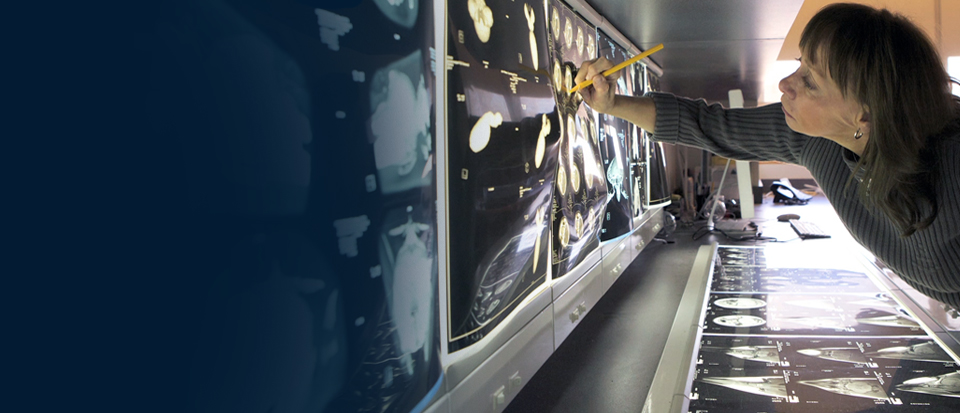
    Julie Arruda at work in CT scan lab in the Marine Research Facility (Photo by Tom Kleindinst, Woods Hole Oceanographic Institution)
  • null
    Scott Cramer preparing the beluga whale head for scanning. (Photo by Tom Kleindinst, Woods Hole Oceanographic Institution)
  • null
    Darlene Ketten watches as a turtle enters the CT scanner. (Photo by Tom Kleindinst, Woods Hole Oceanographic Institution)
  • null
    Biologist Peter Tyack (left) and senior engineer Mark Johnson have been working together to study whale behavior using Johnson's D-tag to record whale movements, depth, and sounds on dives. The tags are harmlessly suctioned on to the skin of whales for several days. Once they fall off and float to the surface, Johnson and colleagues take the tags back to the lab to read the story of the whales' dives—from their swimming behavior to the kinds of vocalizations they use while foraging. (Photo by Tom Kleindinst, Woods Hole Oceanographic Institution)
  • Tagging of a Northern Right Whale in the Bay of Fundy using a cantilever pole. (WHOI, NMFS Permit #981-1707, BOF2001)
    Tagging of a Northern Right Whale in the Bay of Fundy using a cantilever pole. (Research was conducted under permit # 981-1707, BOF2001 issued by NMFS under the authority of the MMPA and the EPA.) (Woods Hole Oceanographic Institution)
  • null
    To learn how right whales feed, WHOI biologist Mark Baumgartner uses an 9-meter (29-foot) aluminum pole to gently place a tag on whales' backs. "After one to three hours, the tag comes off and floats to the surface, and we can pick it out of the water and download the data," he said. "We can then relate the whale's diving behavior to the abundance and depth of copepods," the whales' staple food. (Research was conducted under permit # #775-1600 issued by NMFS under the authority of the MMPA and the EPA.) (Photo by David Wiley, NOAA Stellwagen Bank National Marine Sanctuary)
  • The female finback whale stretched as long as the 60-foot research vessel <em>Tioga</em>. From its length, biologist Michael Moore estimated that the animal was young, between 13 and 16 years old.
    The female finback whale stretched as long as the 60-foot research vessel Tioga. From its length, biologist Michael Moore estimated that the animal was young, between 13 and 16 years old. (Photo by Tim Voorheis, Gulf of Maine Productions)
  • null
    Marine Research Facility. (Photo by Shelley Dawicki, Woods Hole Oceanographic Institution)

null
 
 
The WHOI Marine Mammal Center is a virtual center focusing on issues affecting conservation of marine mammals and various other marine animals such as turtles. Interdisciplinary teams are brought together to address these issues from a variety of scientific and engineering perspectives in order to gain a more comprehensive scientific understanding. Through the Center's collaborations with external parties and academic institutions, and its facilities such as the necropsy facility, it creates a unique environment to pursue new research opportunities that could not be explored prior to its establishment.


The Marine Mammal Center was created with generous support from Pete and Ginny Nicholas and Family.

Learn more
» About the WHOI Marine Mammal Center
» Education
» Facilities
» Research
» Technology
» Workshops & Seminars
» Related Links
» Contact


Listen to Sounds of Marine Mammals
Humpback WhaleHumpback Whale
» Singing while a low frequency sonar is broadcasting
» Singing with no sonar

sperm whaleSperm Whale
» Regular clicks
- A long train of regularly spaced clicks lasting for minutes during deep dives.
» Buzz or creaks - Closely spaced clicks with the rate of clicking accelerating over the course of the creak, which is an indicator of a foraging phase of a dive.
» Codas - A pattern of three to twenty clicks, often made in exchanges with other whales.

Killer WhaleKiller Whale
» Clicks & calls

Photo by Cathy Harlow, Tysfjord Turistsenter

Pilot WhalesPilot Whale
» Clicks & calls

Photo courtesy Bahamas Marine Mammal Research Organization


Last updated: November 9, 2009


whoi logo

Copyright ©2007 Woods Hole Oceanographic Institution, All Rights Reserved.
Mail: Woods Hole Oceanographic Institution, 266 Woods Hole Road, Woods Hole, MA 02543, USA
E-Contact: information@whoi.edu; media relations: media@whoi.edu, tel. (508) 289-2252
Problems or questions about the site, please contact webdev@whoi.edu

Contact | Privacy Policy | Site Map | RSS | Support WHOI Research | Internal