Woods Hole Oceanographic Institution link to Woods Hole Oceanographic Institution Oceanus Home Oceanus Home


Oceanus Topics


Subscribe

current printed issues
 

Institution Receives Surprise Bequest

Students, journalists benefit from other WHOI programs and development activities

Email Print   
Claudia S. Heyman
Enlarge Image
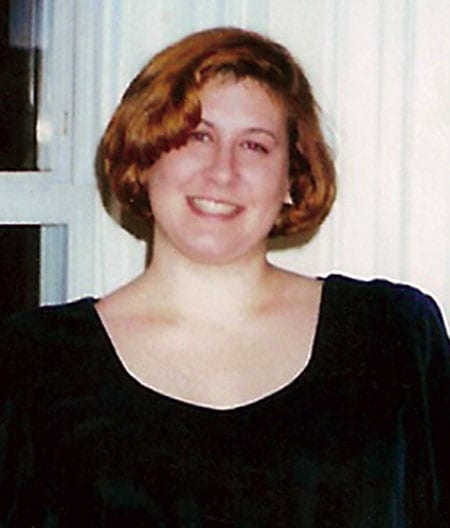
Claudia S. Heyman left a gift that will allow the Institution to endow several new fellowships in coastal, deep ocean, life, and climate sciences.
Related Links

» WHOI Ocean Institutes

» Depth of Leadership Campaign

» WHOI Programs for Journalists

» WHOI Associates Program

» Coastal Research Vessel Tioga

» WHOI Summer Student Fellowships

» Mistaken Identity
from Oceanus magazine

A young woman who had been largely anonymous to the oceanography community has bequeathed a $14.5 million gift to Woods Hole Oceanographic Institution, the second-largest gift in the Institution’s history.

Starting in 2006, four WHOI scientists will be chosen for annual fellowships to be named for Claudia S. Heyman, who listed the Institution in her trust before she died Nov. 13, 2004. She was 35.

The Institution’s largest donation—a $28 million anonymous gift given in 2002—was used in part to establish four Ocean Institutes at WHOI. With the new funding from the Heyman fellowships, the Ocean Life Institute, the Ocean and Climate Change Institute, the Coastal Ocean Institute, and the Deep Ocean Exploration Institute will each select additional scientific fellows based on their leadership, their interest and ability to participate in interdisciplinary research, and their public outreach and communication skills.

Why Heyman left the money to WHOI remains a mystery, said Dan Stuermer, the Institution’s director of development. “We know that at some point she either visited or read about WHOI and did some research about our scientists’ work,” Stuermer said. “We surmise that she was fascinated by the place.”

Heyman, a native of Tulsa, Okla., who was living in Boston when she died, served on the board of her family enterprises and retained interests in several privately held oil and gas corporations, said her friend and attorney, Paul F. Zerola.

Zerola described her as an art enthusiast, avid reader, and a benefactor of animals who owned seven cats and a black Labrador named Hummer. “She cared deeply for her community," Zerola said. "She devoted much of her time and energy to humanitarian and charitable causes, and she constantly urged others to do the same.”


journal fellows


The Write Stuff

For the sixth consecutive year, WHOI hosted a group of journalists for a weeklong fellowship program—more like a 40-hour crash course in ocean science. The September program included lectures, laboratory tours, field trips, and meetings between journalists and scientists. WHOI biologist Heidi Sosik (above left) showed off an instrument called the Imaging Flow Cytobot to (from left) Paul Thacker of Environmental Science & Technology, Mary Hoff (freelance), Lisa Strong-Aufhauser of Strong Mountain Productions, Gerald Rising of The Buffalo News, Jeanna Bryner of Scholastic Science World, and Kathleen Schmitt of Earthwatch Radio.

In October, the Institution awarded its second Ocean Science Journalism Awards, which recognize “journalistic excellence that advances public understanding of the oceans.” Beth Daley and Gareth Cook of The Boston Globe were honored for their four-part series “Sea Change: The New England Fishing Crisis.” Paul Kennedy of the Canadian Broadcasting Corporation won for his eight-part radio series “Learning from the Oceans.”


schwarm family


Donors Establish Fund to Train Graduate Students

Learning to use instruments to collect samples and to make measurements at sea is an essential part of an oceanographer’s basic training. But finding ships and tools for practice is neither easy nor cheap. Graduate students often grab experience on the job, wherever and whenever they can.

To remedy this, two WHOI Associates established the Edward and Erla Schwarm Family Fund before they died earlier this year. The fund provides ship time for students in the MIT/WHOI Joint Program to get hands-on instrument training aboard WHOI’s research vessel Tioga.

“My father was an electrical engineer, a sailor, and a scientist,” said Tom Schwarm, their son. Working at the MIT Instrumentation Laboratory, Ed Schwarm played a central role in developing the lunar module that landed the first men on the moon. He later built a successful electronics consulting business, Edward G. Schwarm Associates and earned 11 patents along the way.

The Schwarms lived on Cape Cod and were longtime WHOI Associates, regularly attending lectures at the Institution and participating in several WHOI-sponsored educational travel expeditions.

When Erla died in March 2005, Ed wanted to create a scholarship in memory of his wife of 62 years. “The idea of launching students on ship-based expeditions was something that pleased him,” said Tom Schwarm. Ed died two months later, in May 2005.


Distilling an Education

Byron Pedler (left) spent long hours this summer extracting and purifying compounds from dolphin fat, like a laborer in an 18th-century tryworks. Instead of boiling vats and flensing knives, his tools were glassware, solvents, and mass spectrometers. His end product was tiny amounts of hydrocarbons, rather than whale oil.

Pedler, a 2005 summer student fellow, worked with postdoctoral fellow Emma Teuten and Associate Scientist Chris Reddy of the Marine Chemistry and Geochemistry Department to determine concentrations of a brominated hydrocarbon compound in dolphin blubber. Once thought to be a contaminant, the hydrocarbon is now believed to be a natural component of dolphin food.

Since the late 1950s, the WHOI Summer Student Fellowship Program has provided a rich opportunity for research experiences to talented undergraduates interested in the ocean. Fellows in the program pursue an independent research project under the guidance of a member of the scientific or senior technical staff. To date, 984 students have participated in this program.


Posted: December 21, 2005

[top]


Letters to the Editor | Subscribe | Contact Us | Feedback | Privacy Policy | RSS Headlines | About Oceanus | WHOI Home
© Woods Hole Oceanographic Institution. Online edition: ISSN 1559-1263. All rights reserved